
The Abu Dhabi government has developed a framework for companies to conduct public tastings of novel foods like cultivated meat and precision-fermented proteins before securing full UAE approval.
The UAE’s capital has taken a major leap in its efforts to become a future food leader.
Alternative protein companies can now conduct public tasting events for their innovations, including cultivated meat and precision-fermented foods, in Abu Dhabi before they receive full approval for sale.
The Abu Dhabi government has created an integrated framework for hosting sensory evaluation and tasting events of novel foods, opening up opportunities for scientific research, innovation and investment in the region’s food tech sector.
The guidelines were developed by the Abu Dhabi Quality and Conformity Council (ADQCC), in collaboration with the city’s Agriculture and Food Safety Authority (ADAFSA) and the Abu Dhabi Investment Office (ADIO). These agencies worked closely with international food tech startups, academic institutions, experts, and regulators.
They were unveiled at the PALT 2026 Conference during this year’s Global Food Week UAE, where government leaders, food companies, investors, regulators and innovators convened to explore the conditions required to move next-gen food technologies from innovation to commercial scale.
“The future of food will be determined not by innovation alone, but by our ability to turn scientific discoveries into solutions that are safe, reliable and commercially viable,” said Abdulla Al Yazeedi, acting secretary-general of the ADQCC. “Through this initiative, we are creating an environment where new food technologies can be developed and evaluated with confidence.”
Abu Dhabi touts cultural diversity as ideal food tech testbed

The ADIO’s contribution to the guidelines came via Abu Dhabi’s AgriFood Growth and Water Abundance (AGWA) cluster, which aims to bolster food and water security with advanced technologies.
The investment office invited novel food companies to join the working group, forming part of its efforts to attract innovative food tech companies to the city, connect them with regulators, and provide an environment that makes it easier for them to establish and grow their businesses in the region.
Under the new framework, companies can conduct tastings and sensory evaluation studies within controlled research environments, addressing an important gap between early-stage product development and commercial market entry. This enables companies to advance their research, refine their products, and gather data that can inform investment decisions and future commercialisation plans.
The city’s population and cultural diversity give businesses a strategic advantage when conducting these studies in the UAE, with access to participants from many nationalities, cultural backgrounds, and demographic groups.
They can leverage this to gauge consumer acceptance, understand how preferences change among different groups, and generate research data for developing products aimed at both regional and global markets.
“By bringing together scientific excellence, advanced testing capabilities and regulatory expertise, we are strengthening the quality infrastructure that enables innovation, attracts international investment and supports the development of future industries,” said Al Yazeedi.
“In this way, quality infrastructure becomes a strategic enabler of economic diversification, industrial competitiveness and long-term food security,” he added.
The city said the initiative will stimulate research partnerships, boost demand for specialised lab testing services, attract advanced food tech companies, and support investment in emerging industries, while also strengthening the UAE’s position in the global future food value chain.
Novel food tastings would boost Abu Dhabi’s appeal to investors
The framework sets out clear requirements for product safety assessment, laboratory testing, regulatory oversight and the protection of participants in tasting trials. The ADQCC’s Central Testing Laboratory will play a key role in providing lab verification and technical evaluation services, and the ADAFSA will review trial applications and issue the approvals needed to conduct these events.
“This initiative provides a clear and responsible pathway for developing novel foods, supporting a more diverse, resilient and sustainable food system,” said Tariq Ahmed Al Ameri, acting director-general of the ADAFSA. “It also affirms Abu Dhabi’s commitment to advancing innovation while keeping consumer safety at the heart of food technology development.”
The development of the guidelines isn’t just about delivering scientific and regulatory value, according to the city. It will also raise Abu Dhabi’s appeal to international investors, while giving greater clarity on the regulatory requirements for early-stage research, making it easier for innovators to work with regulators, and opening new opportunities for food tech firms to set up R&D operations in the UAE.
The move comes a year after the three agencies behind these guidelines began work on developing a regulatory framework to clear the sale of alternative proteins in Abu Dhabi, aiming to reduce approval timelines by six to nine months and accelerate the market entry of novel foods.
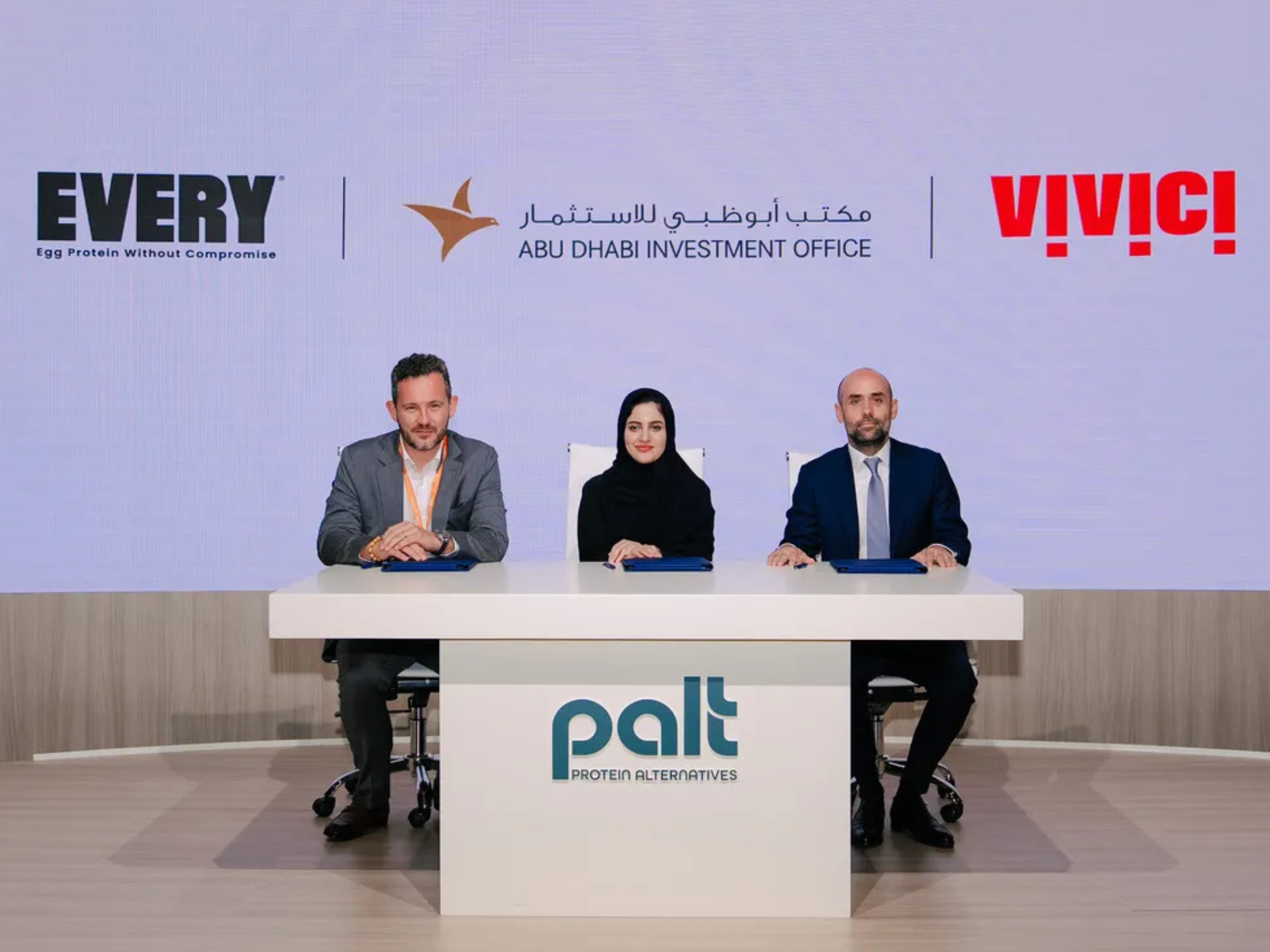
The ADIO has also teamed up with Vivici and The Every Company to explore the establishment of a four-million-litre precision fermentation facility, which was said to support the creation of a regulatory pathway for these animal-free proteins.
“Through the AGWA cluster, and in collaboration with regulatory authorities, we are developing an integrated ecosystem in Abu Dhabi that supports the growth of innovative food companies, enabling them to advance their research towards commercial application,” said Badr Salim Sultan Al-Olama, director-general of the ADIO.
The AGWA cluster, established in 2024, is set to contribute Dhs 90 billion ($24.5B) in additional GDP to Abu Dhabi’s economy and create 60,000 new jobs by 2045, with an expected investment of Dhs 128 billion ($34.8B).
“The new guideline represents an important addition to this ecosystem, providing a clear and structured pathway for testing and developing products in line with international best practices,” he added.