
Danish biotech startup Algiecel has established an industrial-scale plant at Novonesis’s facility in Kalundborg, Denmark to make microalgae-based fish oil alternatives for pet food and cosmetics.
Thanks to El Niño and continued overfishing, global supplies of fish oil are under tremendous pressure, causing potential supply issues for industries like pet food and cosmetics.
By early June, fish oil supply across the leading producer regions was running around 31% below the levels seen 12 months prior. And the ongoing “super El Niño”, set to persist into early 2027, is set to push prices to record highs, as it has in previous cases.
In fact, one study suggests that we could be heading towards a complete collapse of ocean life by 2048, driven primarily by overfishing for human consumption. It’s why 75% of consumers are interested in new sources of omega-3.
That has spurred companies to come up with alternatives that are friendlier to the planet and more resilient to the climate crisis. Among them is Algiecel, a Danish startup that has just opened a new facility to produce microalgae-based fish oil alternatives.
It’s located inside pharmaceutical giant Novonesis’s Kalundborg site, one of the world’s largest enzyme manufacturing plants, enabling Algiecel’s move from pilot-scale testing to industrial supply of its fish-free marine ingredients.
Using captured CO2 to produce microalgae ingredients
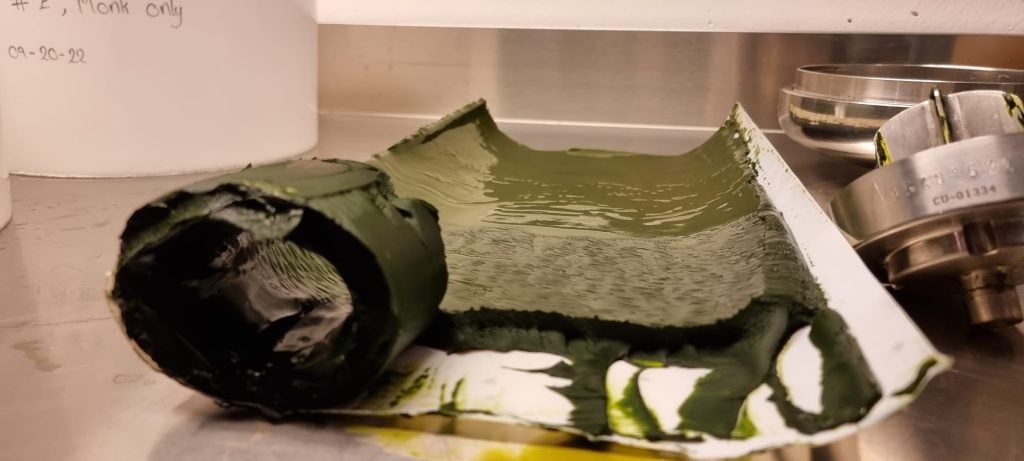
Founded by Henrik Busch-Larsen in 2021, Algiecel uses microalgae to make sustainable alternatives to fish-dependent supply chains for food, feed and personal care, including whole-cell biomass, algae oil, and protein fractions.
It leverages captured CO2 to cultivate microalgae in compact, modular artificial light photobioreactors, which produce phototrophic algal ingredients with predictable and stable properties. The tech enables low land, water and climate impacts without compromising on nutritional and functional performance.
Algiecel’s microalgae-based ingredients can be used for functional foods and dietary supplements, pet food, and personal care products, replacing fish oil and meal in human and pet nutrition and championing the use of natural alternatives in cosmetics.
The new facility in Kalundborg boosts the startup’s production capacity nearly fivefold. Its bioreactor now has a total volume of 5,500 litres, 3,240 of which is used to actively grow the microalgae, compared to 700 litres in its pilot system.
The CO2 it runs on is captured from an operational biogas plant on site, rather than commercially bottled gas, proving that the company’s process works with real-world industrial-grade inputs and not just under controlled lab conditions.
Since the design scales by adding identical modular units, instead of re-engineering a single, larger system, Algiecel has a predictable, repeatable path to further capacity as customer demand grows.
The firm, which raised 60 million kroner ($9M) in 2024, expects to churn out 12 tonnes of microalgal biomass annually starting next year, marking its transition from sample volumes to recurring commercial supply for the pet food and cosmetics sectors.
New facility a ‘starting platform’ for further scale-up
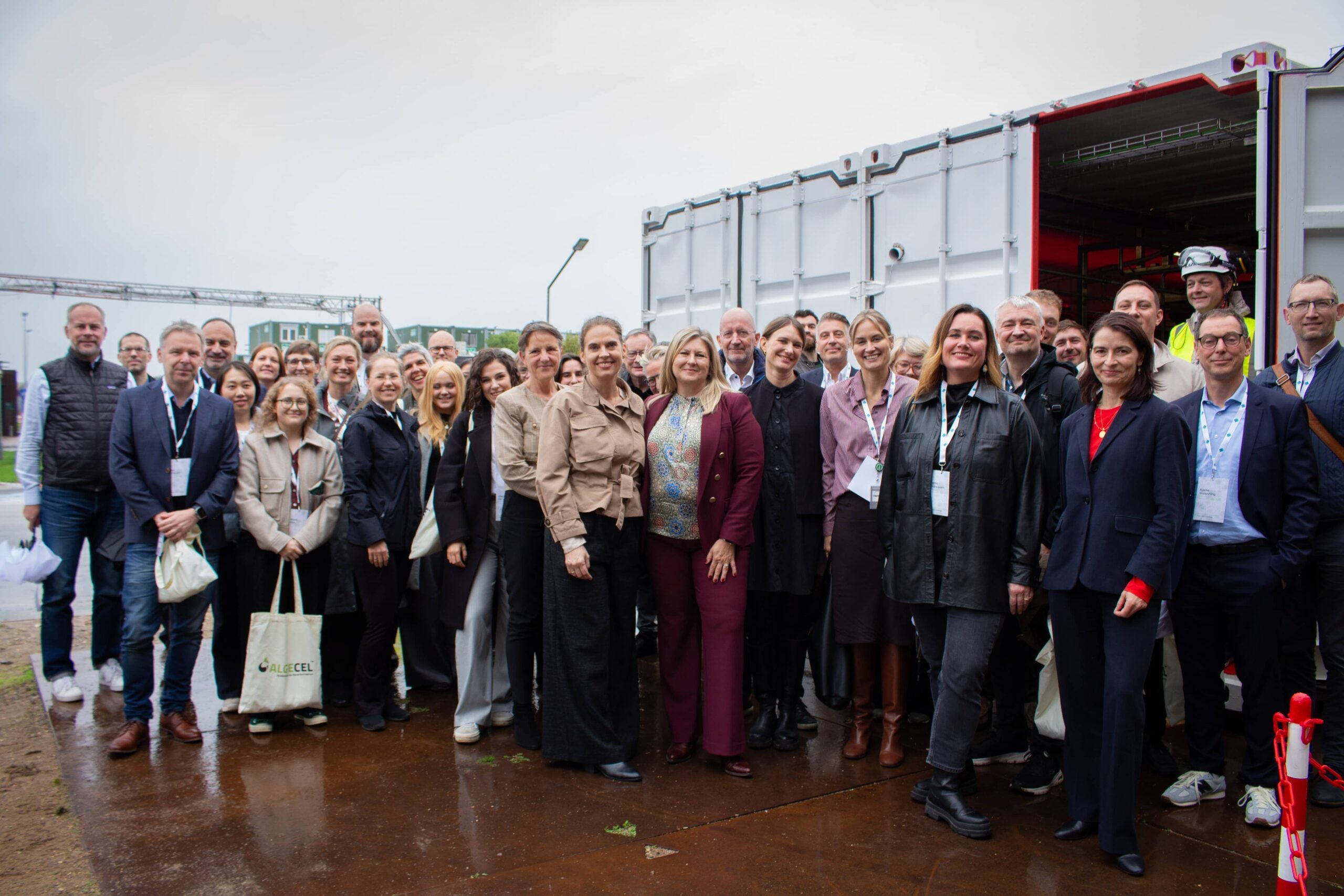
“Our customers are looking for a scalable, high-quality and sustainable alternative to the fish oil they are sourcing today. Algiecel is on a path to deliver just that,” said Algiecel CEO Susanne Palsten Buchardt.
“We’ve run our pilot reactor for more than 10,000 operational hours, and the biology performs as we designed it to. At a moment when fish oil supply is under real pressure, this facility is where we prove we can deliver a reliable alternative, produced under industrial conditions, at the volumes our customers need. It’s the starting platform we’ll use to scale further as demand grows.”
The global omega-3 market is valued at $3.3B today and set to reach $5.4B by 2033, and it’s a space increasingly on the hunt for marine sources decoupled from the volatility of wild catch. Algiecel said its captured CO2 and controlled growing conditions provide European clients a supply chain insulated from those pressures.
“Kalundborg shows what happens when companies work together to get more value from shared infrastructure, sidestreams and industrial expertise. It creates the conditions for new technologies to scale faster than they could alone. Algiecel’s new facility is a strong example of that,” said Ghita Hansen, VP of Novonesis’s enzyme production in Denmark.
Jan Lysgaard Thomsen, municipal director at Kalundborg Municipality, added: “Algiecel’s investment in Kalundborg shows what happens when a small country backs big ideas. Denmark’s strength in biosolutions and our circular-economy approach are coming together here – good news for jobs and for Denmark’s place in the industries of the future.”
Algiecel is among a crop of startups championing fish-free omega-3 alternatives. Scottish biotech player MiAlgae has begun construction of a commercial-scale facility to recycle whisky waste into algal omega-3, with a £3M investment from the UK government. And Canada’s Mara Renewables recently raised $9.1M to expand production of its algae-based omega-3 DHA.