
As sales expand, Danone’s Kate Farms has launched a new flavour of its plant-based nutrition shake and broadened its distribution to reach more GLP-1 users across the US.
A year after being acquired by Danone, Kate Farms is aggressively expanding the footprint of its plant-based nutrition shakes to keep up with America’s explosive demand for protein.
The product range’s distribution has grown sevenfold since its launch in Walmart in Q4 2025. The retailer’s stores are within 10 miles of 90% of Americans, enabling widespread access to clinically designed nutrition products and boosting food security.
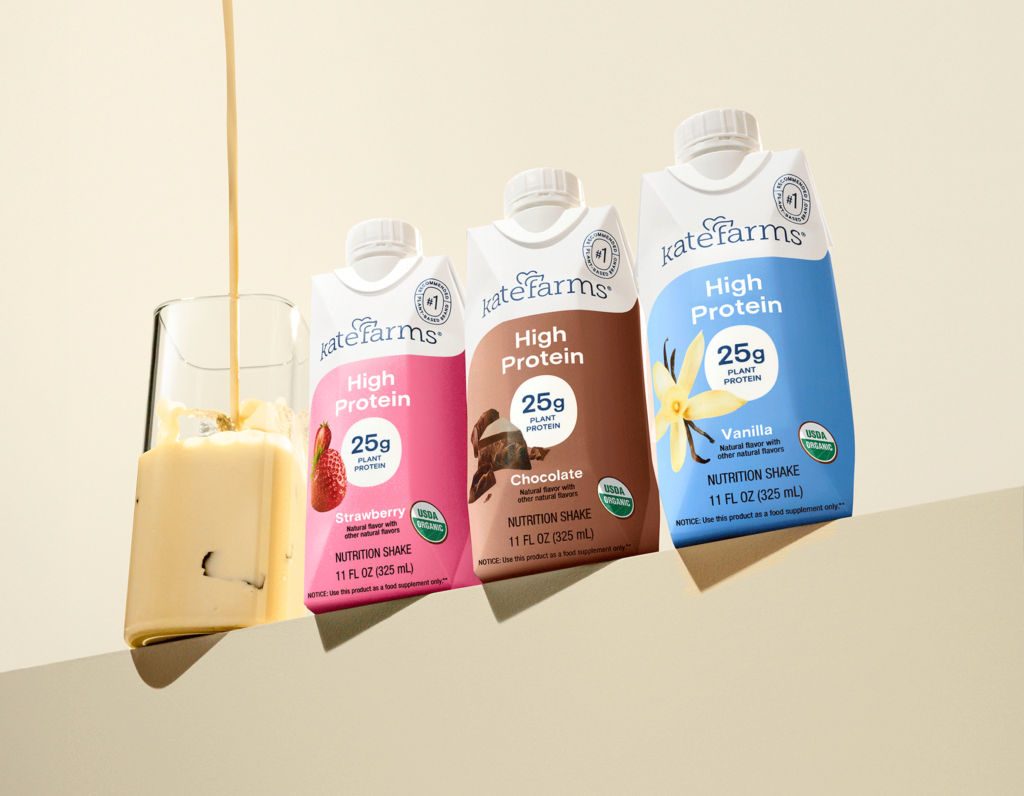
Now, the high-protein nutrition shakes’ presence at Walmart is growing, and they’re also being stocked at CVS, totalling more than 6,800 locations between the two. Alongside the distribution gains, Kate Farms has unveiled a vanilla flavour for the shakes, joining the existing range of chocolate and strawberry variants.
Originally developed for people with medical nutrition needs, the brand is now hoping to target the fast-growing market for GLP-1 drugs in the US, which has changed the way people eat and view nutrition.
“The expansion is really the result of demand rather than the cause of it. We spent years building trust in the medical channel, and all along we kept hearing the same question, which was: ‘When are you going to be more widely available?’ So the retail growth is us answering that,” Catherine Hayden, chief marketing officer at Kate Farms, told Green Queen.
“Where we see uptake most clearly is in the loyalty. Between 70 and 80% of our purchases on KateFarms.com are repeat, and we have one of the highest Subscribe & Save rates on Amazon, where the business is growing 50% year over year,” she added.
“Those are the leading indicators that matter to us, because they tell us people aren’t just trying the shake once, they’re building it into their routine and coming back. Retailers responded to that. They didn’t bet on an unproven idea, they responded to demand we’d already built directly with consumers.”
Protein and fibre firmly in the GLP-1 spotlight
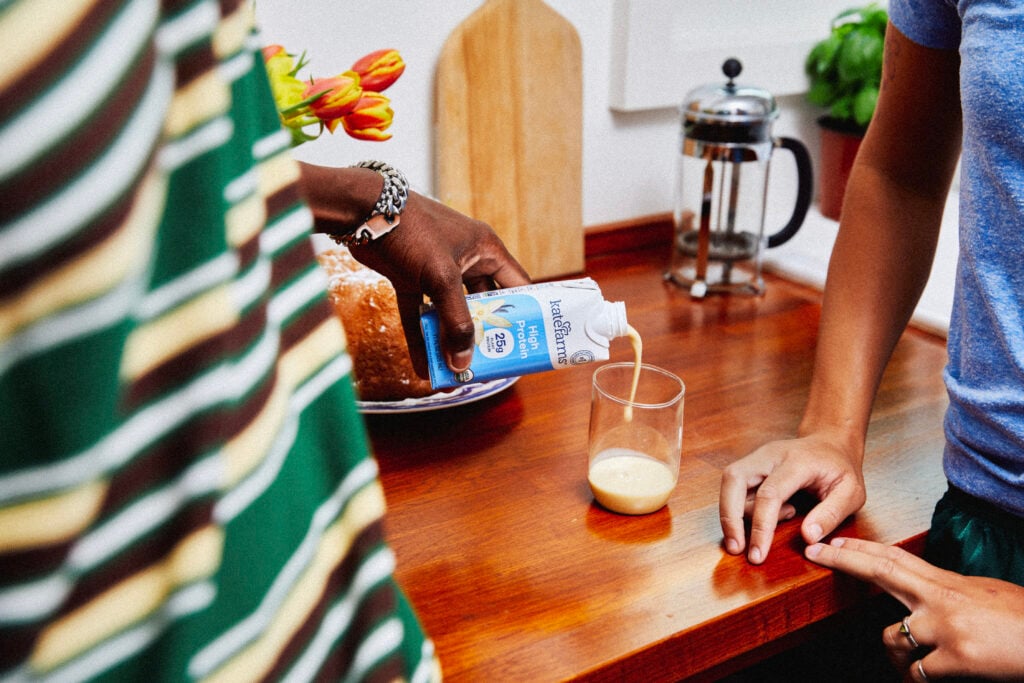
Kate Farms unveiled the nutrition shakes last year, delivering 25g of pea protein, 6g of fibre and 27 essential vitamins and minerals in 325ml cartons. They are free from sugar, instead relying on monk fruit and stevia leaf extracts for sweetening.
The products contain Spectra, a plant-based phytonutrient blend shown to stimulate antioxidant activity and inhibit free radical production, and provide all nine essential amino acids.
They were the result of 18 months of R&D and hundreds of rounds of iteration, nutrient refinement, and quality assurance. Kate Farms studied the nutritional shortcomings of existing options on the market and consulted with leading healthcare experts and GLP-1 users.
The brand specifically designed the shakes to support muscle health, manage weight, and navigate GLP-1 treatment. Hayden said that while drugs like Ozempic and Mounjaro can be very effective for weight loss, the appetite suppression also means people often eat far less, leading to unintentional muscle loss (much greater than non-medicated weight loss approaches or age-related causes) and “real nutrient gaps”.
“We heard that consistently from healthcare professionals and GLP-1 users, and we formulated with their input directly. The goal is simple, which is to help people come through a health change stronger, rather than more depleted,” she noted.
According to Innova Market Insights, the share of Americans who have used a GLP-1 medication rose from 10% in 2024 to 18% in 2025. A recent poll by Gallup, meanwhile, suggests that 11% of US adults are actively using weight-loss drugs this year, reaching a new high.
The boom in GLP-1 use has prompted the food industry to reformulate products and come up with new innovations that can complement these drugs. This includes amping up their focus on protein and fibre, which these consumers eat 40% and 30% more of, respectively.
More broadly, nearly three in five (57%) Americans plan to prioritise protein this year. Most of them are also fibre-deficient, a dietary gap that online trends like fibermaxxing are looking to fill. Kate Farms’s nutrition shakes fit neatly into these trends.
There’s also a longevity overlap. “The fundamentals of healthy ageing, preserving lean muscle, getting enough high-quality protein, and avoiding nutrient deficiency, are exactly what this product was built to support,” said Hayden.
“So while our focus stays on clinically grounded, everyday nutrition, the same science that serves a GLP-1 user serves anyone thinking about staying strong and well over the long term.”
Discerning consumers have ‘raised the bar for the whole category’
Kate Farms’s products are also used in more than 1,500 hospitals and medical settings nationwide, with nine in 10 healthcare patients preferring to rely more on healthy eating than on medications to manage their conditions.
The market for plant-based ready-to-drink beverages is outpacing the overall vegan food industry, whose retail sales dipped by 2% in the US last year. In contrast, the former is the second fastest-growing segment in this space, with dollar sales rising by 12% to reach nearly $300M.
“People are paying closer attention to protein and muscle health than they ever have, whether that’s tied to a weight loss journey, GLP-1 use, healthy ageing, or their own personal health goals. At the same time, they want that nutrition to fit into a busy life, and a shake does that better than almost anything,” said Hayden.
“The deeper shift is that consumers have become far more discerning. Protein may have been the stopping power, but people want the fibre, and they want to understand the science and research behind what they’re drinking. That has raised the bar for the whole category and is separating clinically grounded nutrition from products that are simply better-for-you on the front of the pack,” she added.
“Taste is a big part of that discernment, which is where our new vanilla comes,” explained Hayden. “We held it back for nearly a year, through more than 800 flavour variations and 611 taste tests, because the taste was good but not yet exceptional.
“We ran sensory panels with GLP-1 users, who can become more sensitive to sweetness on these medications, alongside panellists who weren’t, so the flavour delights either way. Clinical quality only matters if people genuinely want to drink it every day, and that was the bar we set for vanilla before we launched.
Danone bets big on plant-based protein
Danone has been widening its stake in the plant protein portfolio over the last year. Having already acquired Kate Farms last year, it agreed to purchase fellow plant-based nutrition brand Huel in a $1.15B deal.
Both brands notably shy away from using ‘plant-based’ as the defining label for their products, instead opting for protein as the headline. “It isn’t a choice between the two, and plant-based is core to who we are,” said Hayden, pointing to the brand’s ingredient base. “That foundation isn’t going anywhere.”
She noted that the name ‘high-protein nutrition shake’ simply “describes the job the product does for the person reaching for it”: “For someone managing weight or using a GLP-1 medication, protein and muscle preservation are the immediate need, so we lead with the benefit that’s most useful to them. But for us, it has never been about protein alone.
“What sets us apart is that we built this from the ground up for a purpose, rather than taking an existing formulation, making no modification, and relabelling it, which is what we saw others doing. Plant-based is how we deliver nutrition, and it’s an advantage.
“Consumers increasingly want more plant-based options without compromising on protein, taste, or nutrition. We believe they shouldn’t have to choose, which is why we deliver clinically developed nutrition with high-quality plant-based protein.”
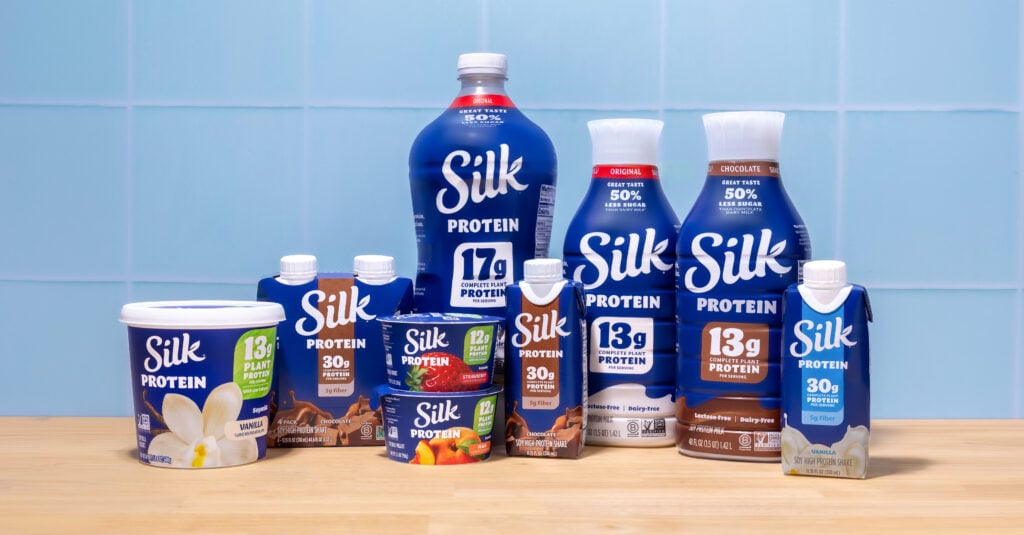
Simultaneously, it has launched high-protein versions of its soy milks and yoghurts under the Silk brand, alongside a range of dairy-free protein shakes.
The French dairy giant launched a version of Silk Protein soy milk in Canada, too, with a different formulation that amps up the protein content to 18g per 250ml serving. And at the start of the year, it rolled out the Meal to Go range of meal replacement shakes under the Alpro brand in Europe, packing 20g of plant protein in each 500ml bottle.