
Californian agtech startup NuCicer has introduced Nuchi, a new class of chickpeas with 50% more protein and 25% less fat than conventional varieties.
The protein craze has birthed its newest tech-led innovation: ultra-high-protein chickpeas.
Californian startup NuCicer, which uses artificial-intelligence-assisted (AI) technologies to design crops with enhanced functionalities, has launched a new range of chickpeas that contain 50% more protein and 25% less fat than conventional varieties of the bean.
Called Nuchi (a portmanteau of ‘new’ and ‘chickpeas’), the range is designed to fill the demand for minimally processed, clean-label protein options in the US.
The non-GMO ingredient is said to outperform conventional chickpeas across the dimensions most important to manufacturers, delivering a flavour, nutritional profile, and functionality that can compete at the centre of the plate as a staple food crop.
“This is not your average chickpea,” said NuCicer co-founder and CEO Kathryn Cook. “The food industry has spent years processing around the limitations of standard chickpeas and compensating for what it couldn’t deliver. We tapped into the natural genetic potential of this crop to create a better starting ingredient. Better food starts with better crops.”
Nuchi available in four formats with broad use cases

NuCicer builds on foundational plant genetics research with AI-driven genomic modelling and speed-breeding technology to solve the processing problems that keep chickpeas from “competing at the highest tier of plant-based ingredients”.
Its crop design platform entails rapid phenotyping, genotyping, and genomic models, and a chickpea library with 40 times more variety. The AI intelligence engine decodes genetic potential and is optimised for growers, processors and brands, and the speed-breeding infrastructure enables year-round rapid generation cycling.
By mining the natural diversity of ancient wild varieties, the startup has developed a process that eliminates the costly defatting step that makes chickpea protein processing difficult and expensive.
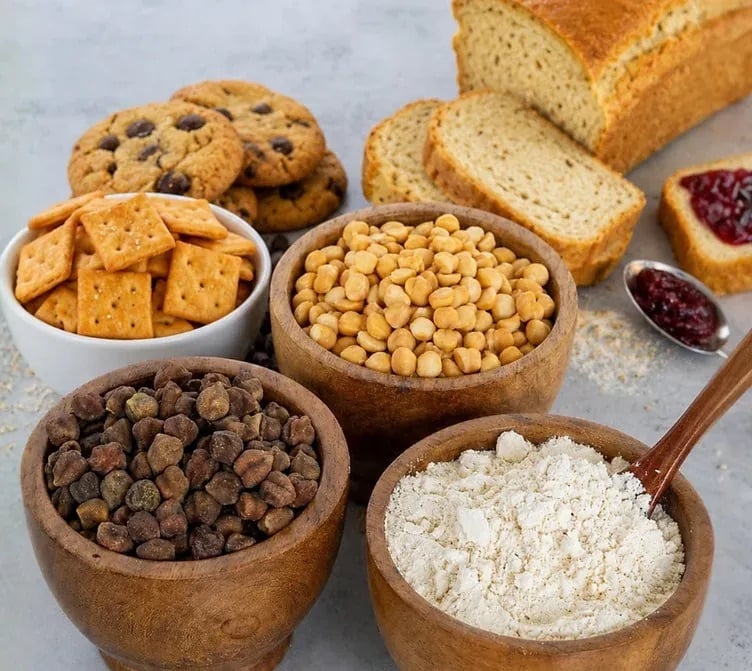
The improved protein-to-fat ratio is complemented with a mild, neutral flavour that reduces the need for masking agents and can perform across a wide array of applications, including crackers, pancakes, waffles, pasta, snacks, and cereals.
The chickpeas are available in four ingredient formats: a high-protein flour with improved flavour, a low-fat flour suitable for texture and expansion applications, a solvent-free, fibre-rich protein concentrate, and a protein isolate with precise functionality.
The Nuchi range is also compatible with existing pea protein processing infrastructure, reducing the capital investment manufacturers require to transition to these ingredients
“Nuchi proves we can deliver elite nutritional traits directly into the seed and at speeds traditional methods can’t match,” said NuCicer CTO Sean MacEachern.
NuCicer targets rising protein demand and instability with new chickpeas
Nuchi is the first commercial output of NuCicer’s speed-breeding platform, which runs five generations of chickpeas a year and compresses a decade of breeding into four years or less.
According to the startup, this enables it to bring new crop varieties to market faster than any conventional breeding programme and address complex, multi-gene traits that gene editing and marker-assisted selection can’t reach.
“By pairing our proprietary genetic library with our AI-guided breeding platform, we are engineering a climate-resilient crop designed to drop directly into existing processing infrastructure,” said MacEachern.
Its chickpeas are grown by partners in North America, with 10,000 acres planted for 2026. As a legume, chickpeas draw nitrogen from the air and replenish its stocks in the soil, naturally providing the benefits of fertilisers at a fraction of the financial and environmental costs.
NuCicer, which raised $11.5M in Series A funding last year, is working with ingredient processors and food manufacturers to establish commercial partnerships, at a time when the protein supply chain is succumbing to unprecedented demand in the US.
Contracts for whey protein have been sold well into 2026, and some supplies are sold out for the rest of the year. Whey prices broke records in 2025, and have kept on surging since. Over the last two years, the cost of whey protein concentrate has risen by 108%, and whey protein isolate has nearly doubled in price.
Nearly three in five (57%) Americans plan to prioritise protein this year. Most of them are also fibre-deficient, a dietary gap that online trends like fibermaxxing are looking to fill. The rise of GLP-1 users from 10% in 2024 to 18% in 2025 has contributed to this boom, with 40% of them eating more protein and 30% consuming more fibre.
Meanwhile, the government is at war with ultra-processed foods, and has been pushing citizens to eat minimally processed proteins. Its mandate for hospitals emphasises plant-based whole foods, just as a coalition of over 100 food, farming and nutrition groups calls on the USDA to expand access to pulse-based ingredients in schools.