Californian sweet protein pioneer Oobli has agreed to an acquisition by Amyris, a biotech firm specialising in precision fermentation, to expand the scale of its sugar reduction portfolio.
US biomanufacturing company Amyris has announced it will acquire Oobli, a California-based producer of precision-fermented sweet proteins.
The transaction amount is undisclosed. It combines the former’s strain engineering and biomanufacturing capabilities with the latter’s industry-leading protein production platform, which helps food and drink brands reduce sugar without compromising on taste.
Oobli’s sweet proteins are inspired by fruits grown on the African continent, including the namesake Oubli fruit, serendipity berries, katemfe fruit, and miracle fruit. They taste like sugar but are thousands of times sweeter and digested as proteins, with lower calories and no impact on blood glucose or gut health.
“Joining forces with Amyris gives us the scale and resources to realise our ambition of making sweet proteins the global standard in sweetness solutions. Sweet proteins are an idea whose time is now,” says Oobli CEO Ali Wing.
The acquisition is set to close in the coming weeks, and comes more than two years after Amyris filed for bankruptcy protection, entering a period of restructuring that saw it sell off its consumer brands like Biossance, Pipette and MenoLabs, and fully pivot to a B2B model.
Oobli’s sweet protein supply to continue uninterrupted
Both Amyris and Oobli specialise in precision fermentation, a technology that involves inserting a specific DNA sequence into microbes to teach them to produce desired molecules – like proteins, fats, vitamins, pigments and flavours – when fermented.
Amyris, a synbio pioneer, operates a vertically integrated biomanufacturing setup that combines advanced production strains, fermentation processes, and operational capabilities to turn renewable raw materials into high-value ingredients for use in food and beverages, fragrances, beauty and personal care products, and specialty chemicals.
Oobli, meanwhile, leverages precision fermentation to recreate sweet proteins that are otherwise hard to extract for commercial-scale purposes. It inserts the DNA sequence of these proteins into Komagataella phaffii (a yeast strain with a long history of use in food). The microbes are added to a fermentation tank, where they are fed sugars and a nutrient-rich broth to produce the proteins, which are then filtered out and purified.
Its brazzein ingredients (inspired by Oubli fruit) are up to 1,000 times sweeter than sucrose, and its monellin (inspired by serendipity berries) is even sweeter. These proteins have secured ‘no questions’ letters from the US Food and Drug Administration (FDA), enabling the startup to sell them for use in everything from granola, gummy bears, and smoothies to non-dairy alternatives, sodas, and chocolate.
Oobli has also self-determined its thaumatin ingredient as Generally Recognized as Safe (GRAS) and is awaiting the FDA’s letter. This is a recreation of the sweet protein found in the katemfe fruit, and is up to 3,000 times sweeter than sugar. Its portfolio additionally includes miraculin, inspired by the miracle fruit, which makes sour flavours taste intensely sweet.
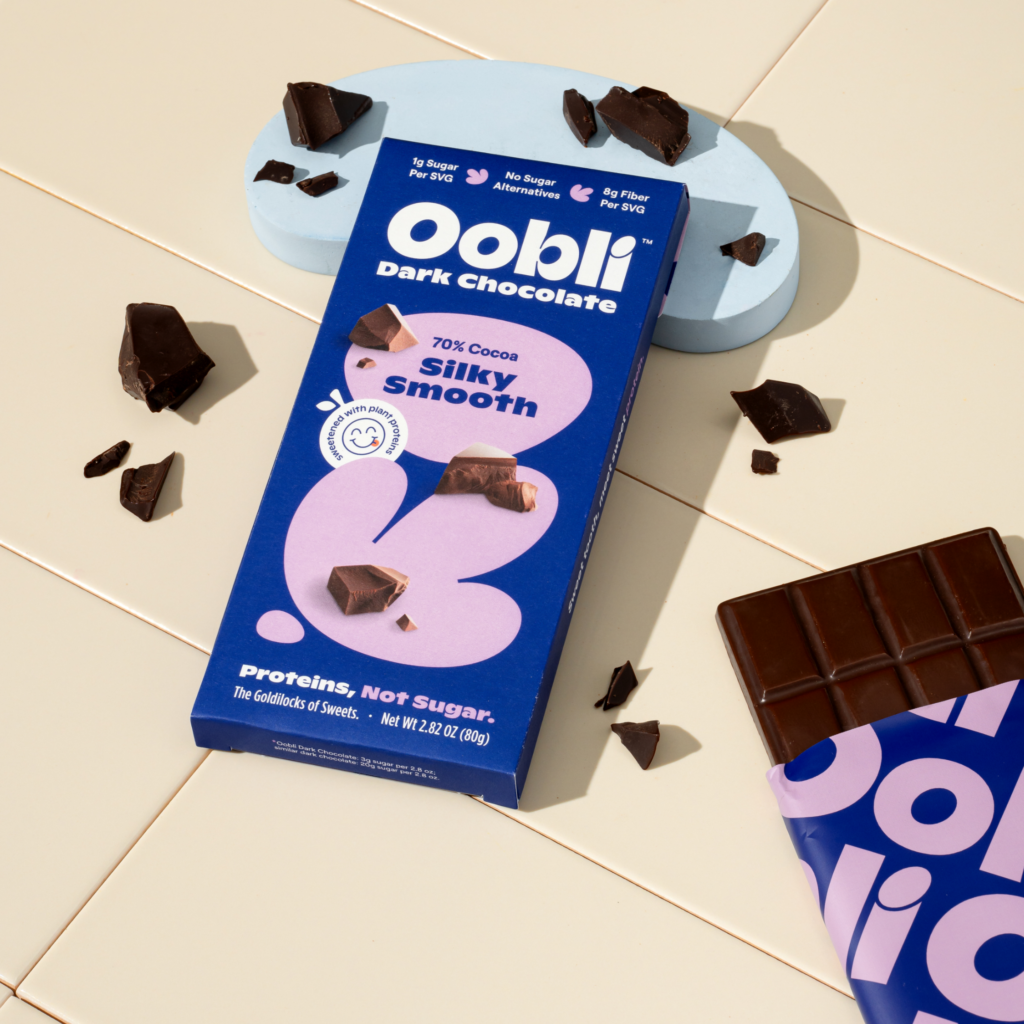
The startup, which has raised nearly $50M, sells chocolates made from its sweet proteins under its own brand. Plus, it’s working with food and beverage manufacturers (including Ingredion, Grupo Bimbo and Cosun Ingredients) to incorporate its sugar reduction solutions into different products.
Moreover, it has partnered with the National Football League (NFL) Alumni Association to drive wider adoption of sweet proteins as a healthier alternative to sugars.
Following the acquisition, its sweet proteins will continue to advance under the Amyris portfolio, and all existing customer commitments and brand partnerships will be honoured uninterrupted.
Acquisition marks commercial and tech expansion for Amyris

The acquisition agreement comes months after Amyris boosted its manufacturing capacity by installing a 2x80m³ production line at its facility in Barra Bonita, Brazil. This is its fourth independent operational production line, adding to the existing 2x200m³ configurations at the plant.
The newest line is equipped with advanced instrumentation, process controls, and “unmatched” automation, supporting clients at different stages of the commercialisation life cycle. “It maximises efficiency, flexibility, and reliability through advanced engineering solutions and in-depth analysis of process performance.”
The decision to snap up Oobli marks a strategic commercial and technology expansion for the company, widening its footprint in the protein- and peptide-based solution space across end markets.
“In Oobli, we see a commercial and technology platform that is a great complement to our own,” said Amyris CEO Kathy Fortmann. “Oobli is poised to transform how sweetness makes it to market, and we are thrilled to bring our commercial scale and resources to further accelerate the sweet revolution.
“Further, by bringing Oobli’s protein expertise together with our strain engineering, manufacturing scale, and commercial capabilities, we see the potential to broaden our capabilities in food and beverage, personal care, flavour and fragrances, agriculture, and beyond, expanding the ways we can help customers innovate.”
Americans eat 17 teaspoons of sugar every day, much higher than the recommended amount. The calorie-rich ingredient has been a major contributor to the country’s obesity epidemic, which plagues 42% of its citizens. Plus, over 11% of consumers have type 2 diabetes. It’s why their top response when asked what they wanted to consume less of this year was sugar, cited by 45%.
“We’ve seen that biomanufactured solutions win when they align with consumer demand and market needs,” said Fortmann. “Oobli’s sweet protein platform does exactly that – giving brands a new way to deliver on sweet taste, sugar reduction, and clean label all at the same time.”
The transaction is the latest in the long list of consolidatory moves in the alternative protein space. Since September 2024, more than 90 companies in this space have been acquired, merged, fallen into insolvency, or shut down altogether.