In a blind taste test, a blended burger made with 42% beef and a clean-label pea protein by Israeli food tech startup Meala showed no difference from a 100% beef burger in flavour.
With blended meat firmly established in the alternative protein category, manufacturers are looking for ways to improve formulations to move away from the ultra-processed tag.
Most products combining beef with plant-based ingredients, for instance, typically contain additives to help bind the components, enhance the shelf life, or improve the overall texture.
Lidl’s blended burger in the UK, for instance, contains sodium metabisulphite as a preservative, Rewe’s patty in Germany has sodium alginate as a thickener, and Albert Heijn’s hybrid meat features sugar beet fibre, potato starch, sodium ascorbate, and more in the Netherlands.
But consumers want clean-label products with short, recognisable ingredients and minimal processing and no compromise on flavour or texture. It’s a tall order, but one that Israeli startup Meala believes it has solved with its one-ingredient texturising pea protein.
The company conducted a blind taste test, pitting a burger made with 42% beef and its pea protein as a binder against an all-beef patty. The sensory panel found no significant difference in terms of beef flavour, prompting Meala to announce that its tech can replace conventional binders in blended meat products with a single ingredient.
It comes shortly after the firm entered full-scale production of its texturising pea proteins at two sites in France and Germany, which will enable it to produce enough pea protein to replace 1,400 tonnes of eggs annually, or 82,000 eggs a day, starting next year.
Meala’s pea protein outperforms methylcellulose
Founded in 2021 by Ekhoiz-Razmovich, CTO Liran Gruda, and chief business officer Tali Feldman-Sivan, Meala’s pea proteins are designed to simplify formulations and enhance the texture, nutritional value, and overall sensory performance.
Its process combines physical and enzymatic treatments to unlock the functional potential of plant proteins, which are transformed into texturising ingredients that bind, gel, foam, emulsify, and hold water. That enables them to replace the functionality provided by eggs or hydrocolloids.
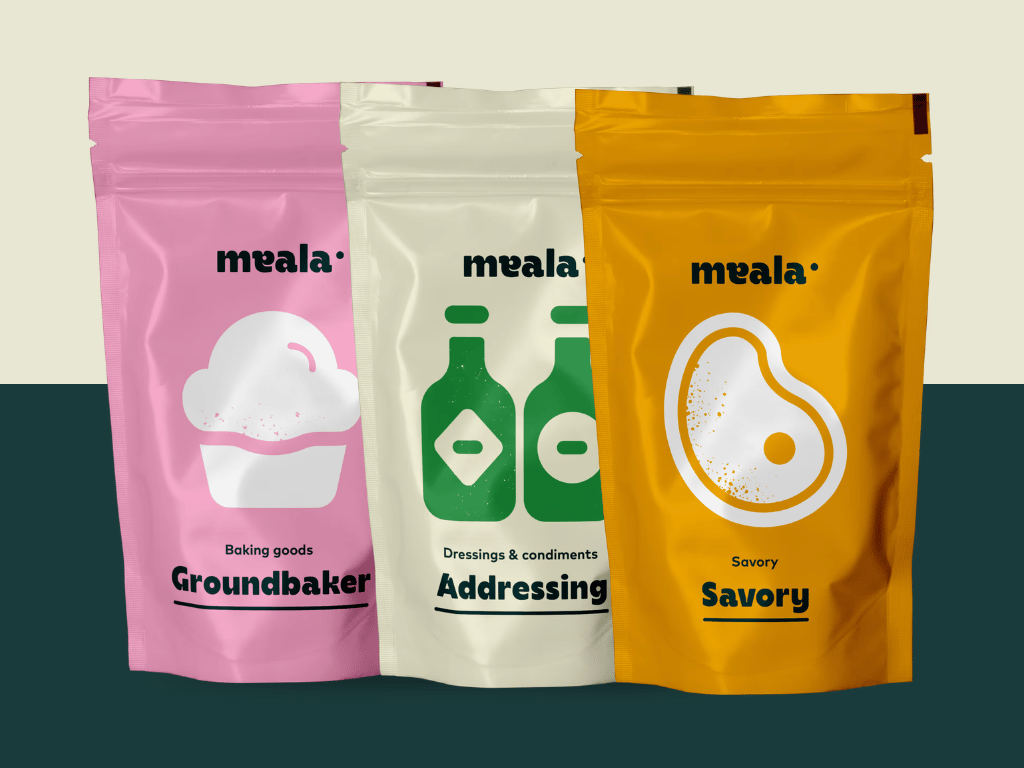
Meala’s portfolio spans three products. Groundbaker is a clean-label, allergen-free egg replacer that offers the same gelling, binding, emulsifying and foaming attributes, and can be used in baked goods like cakes, muffins, waffles, brioches, and pancakes. Addressing replaces stabilisers, emulsifiers, and thickeners in sauces to enhance the smoothness and stability.
And Savory can replace binders, gelling agents, and stabilisers with a single-ingredient solution to give meat alternatives a superior structure, texture, and bite. This ingredient has already been commercialised in Europe through a partnership with DSM-Firmenich, which sells it as Vertis PB Pea, and the first plant-based meat products made using this protein are already available in the region.
This is also what Meala used in the blended burger trials. In these applications, Savory can help maintain the structure, texture and sensory qualities people expect from meat.
To test that, sensory research firm New Sense served 120g patties with no bun, sauce or spices to 10 trained super-tasters, who compared 100% beef burgers with two blends featuring 58% of the pea-based extender.
The Meala blended burger showed no statistically significant difference in overall flavour intensity, bitterness, and sourness, and its non-meat off-notes were significantly lower than a blend based on methylcellulose. Its chew was also closer to beef, and it was the most liked of the blended formulations tested.
That said, the pea-protein-boosted burger did exhibit significantly darker browning and internal colour than the all-beef patty, as well as lower juiciness and fatty texture.
Blended meat ‘only works’ if taste and texture aren’t compromised
Blended meat has a host of advantages. By cutting an amount of animal protein with plants, manufacturers can lower saturated fat and cholesterol content, add fibre, as well as significantly reduce emissions.
Meala’s texturising pea protein, for instance, generates 63% lower carbon emissions and uses 96% less water per kg of protein than egg powder (which companies like Quorn use in some products).
But for blended meat to be truly successful, taste is the deciding factor. “Blended meat only works if consumers cannot detect the reduction, without compromising on taste and texture,” said Meala co-founder and CEO Hadar Ekhoiz-Razmovich.
“Processors who are already reducing the meat in their products should be able to give them a cleaner label as well. In the New Sense panel, a single texturised protein did the binding and kept the burger close to beef in flavour and in chew.”
Blended meat has taken European supermarkets by storm, with Lidl, Aldi, Albert Heijn and Colruyt Group selling own-label versions in markets including the Netherlands, Germany, Belgium, and the UK. And Sweden’s largest supermarket, ICA Gruppen, recently began stocking meatballs made from a beef-mycoprotein blend by Smaqo.
In fact, in the Netherlands, these blended proteins are, on average, 4.4% cheaper. And research shows that blended meat products are more likely to attract omnivores, 74% of whom are interested in the concept, than plant-based meat (57%) in the US.
In a large taste test by Nectar, more than half of American meat-eaters found 11 of 22 blended protein products as good or better-tasting than conventional meat. Three were even ranked as better-tasting than 100% meat by a majority of participants, and one was preferred equally to beef.
“More and more retailers and foodservice providers in Europe are enriching their meat offerings with plant-based proteins and fibres,” said Nir Goldstein, CEO of the Good Food Institute Israel. “Competitive taste, price and nutritional offerings are key for this trend to scale. Plant proteins that bind, taste and perform like meat on a production line are much needed. Collaboration across the industry will get us there faster.”