Contaminants Committee Meets in Cairo as Egypt Co-Hosts
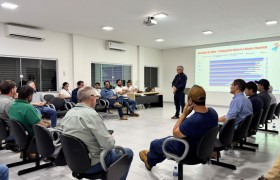
22 October 2026, Egypt: The 19th Session of the Codex Committee on Contaminants in Foods (CCCF) has opened in Cairo, Egypt with opening remarks from the Egyptian co-hosts, the Codex Alimentarius Commission Chairperson, Codex Secretary and FAO and WHO representatives. Sally Hoffer, CCCF Chairperson and master of ceremonies at the opening ceremony, commented on the value of co-hosting with Egypt: “It provides a valuable opportunity to strengthen our engagement with the countries across the region and to involve them closely in the important work of the Codex Committee on Contaminants in Food. We firmly believe that bringing countries together, sharing expertise and learning from one another are essential to advancing our common objectives in food safety,” she said.
Khalid Soufi, Chairperson of the Egyptian Organization for Standardization and Quality, took the floor and underlined Egypt’s longstanding commitment to the work of Codex. “Egypt takes great pride in having been an active Member of the Codex Alimentarius Commission since 1973, and for more than 50 years, Egypt has not merely participated, in this important work, we have been a committed partner in shaping and advancing food safety standards,” he said. He described the multisectoral approach to national Codex work in Egypt. Rana Gamali, Vice-Chairperson of the Egyptian Chamber of Food Industries developed this topic by noting that the co-hosting “presents a key opportunity to extend regional cooperation across Africa and the Arab region by sharing knowledge expanding laboratory capacity and ensuring that the experiences of developing regions actively shape international standard setting.”
Eman Helmy, Governmental Affairs and International Cooperation Consultant for the National Food Safety Authority, also focused on the regional and international importance of Codex standard setting. “Food safety is no longer purely local matter or the sole responsibility of any single nation,” she said, “rather it has become fundamental to protecting public health, enhancing food security and achieving sustainable development.” She went on to describe the challenges in developing standards for contaminants in food. Stressing the need to “strike a balance between the necessary level of consumer protection and the practical visibility of recommended measures, all while accounting for the drivers of environmental and agricultural conditions, as well as varying technical capacities of different nations.”
Tycho Vermeulin, Agriculture Councillor at the Embassy of the Kingdom of the Netherlands in Egypt thanked the Government an Egypt for choosing to co-host this meeting in the Egyptian capital. The Agriculture Councillor underlined the importance of the food trade and the relationship between Egypt and the Kingdom of the Netherlands and emphasized the vital role of CCCF work: “it is in our common interest to develop clear international food safety standards, to create awareness among the partners in the food chain and have reliable control and inspection systems.” He highlighted this week’s agenda item on acrylamides to confirm the direct connection between CCCF19’s work this week and the trade in potatoes between the two nations.
(function() { var grid = document.getElementById(‘hln-grid’); if (!grid) return; fetch(‘https://www.global-agriculture.com/wp-json/wp/v2/posts?per_page=4&_fields=title,link,date’) .then(function(res) { return res.json(); }) .then(function(posts) { if (!Array.isArray(posts) || posts.length === 0) { grid.innerHTML = ”; return; } grid.innerHTML = posts.map(function(p) { var d = new Date(p.date); var dateStr = d.toLocaleDateString(‘en-GB’, { day: ‘numeric’, month: ‘short’ }); var title = p.title && p.title.rendered ? p.title.rendered : ”; return ‘
‘; }).join(”); }) .catch(function() { grid.innerHTML = ”; }); })();
Allan Azegele, Codex Chairperson, who joined virtually, welcomed delegates and thank the government of Egypt for co-hosting. He stressed the importance of contaminants work in Codex and expressed his hope that CCCF texts will be adopted next year, when Members will celebrate the fiftieth Commission session: “as we celebrate CAC50, CCCF19 is a timely opportunity to demonstrate the continued relevance of advancing sound evidence-based texts that respond to current contaminants and future expectations.” The Chairperson, who made his presentation in his traditional dress, called on delegates to think about the fiftieth CAC celebrations and consider attending the meeting next year in their traditional attire to reflect the diversity of cultures that come together in the Codex Alimentarius for safe food for all. He took the time also to thank Sally Hoffer as she steps down as Chairperson of CCCF at the end of this Session, and welcomed the new Chairperson, Susanne Sütterlin.
Codex Secretary, Sarah Cahill also paid tribute to Sally Hoffer’s work as the Committee Chairperson and welcomed Susanne Sütterlin. Regarding CCCF work this week, she said that “as climatic and environmental conditions change, new risks can emerge and long-standing challenges take on new dimensions. The scientific rigour and collaborative spirit that characterize CCCF are therefore more important than ever.” The Codex Secretary also reminded delegates of the need for efficiencies in how Codex works: “we need to ensure our ways of working make the best possible use of expertise time and resources available to us by preserving the values at the heart of Codex. They are inclusiveness, collaboration, transparency and consensus building. This Committee has a history of adaptation to changing circumstances and I’m sure it will continue to do so in the face of every evolving challenge.”
FAO and WHO representatives Osama Maher and Abdulhakim El Wa’er, respectively, also spoke, emphasizing their work at the regional level. Maher emphasized FAO’s support to countries of the region in building food control capacities, while El Wa’er spoke of the burden of foodborne illness in the region and highlighted the role of contaminants in that burden. “Chemical hazards account for about 30 percent of the region’s entire foodborne disease burden,” he said.
Also Read: New US Manufacturer Viriterra Launches Perseus Herbicide Built on In-House Pyroxasulfone
Global Agriculture is an independent international media platform covering agri-business, policy, technology, and sustainability. For editorial collaborations, thought leadership, and strategic communications, write to pr@global-agriculture.com