Israeli startup Brevel and Indian conglomerate The Wave Group are building an illuminated fermentation factory in Uttar Pradesh to make microalgae ingredients and help plant cell culture firms scale up production.
Brevel, an Israeli biotech startup producing microalgae with a light-based fermentation process, has formed a joint venture with Indian business conglomerate The Wave Group to construct a large-scale biomanufacturing facility.
The factory, funded by The Wave Group, will be based in Uttar Pradesh and have a capacity of 300,000 litres. It’s designed as a comprehensive illuminated fermentation platform for Brevel’s microalgae ingredients and will be capable of producing additional products and organisms that benefit from light-based systems.
The initial focus will be on Purallis, Brevel’s clean-label microalgae powder for use in food and supplements. But the facility will also serve the needs of companies producing ingredients via plant cell culture technology.
Construction of the plant will begin later this year, with production expected to start within 18 months. The total investment in the joint venture facility is set to hit $10-15M.
Pairing light with sugar to supercharge microalgae nutrition
Traditional fermentation can produce microalgae at high yields and low cost. But it’s limited to dark environments and lacks light-dependent nutrients, functionalities and overall commercial value.
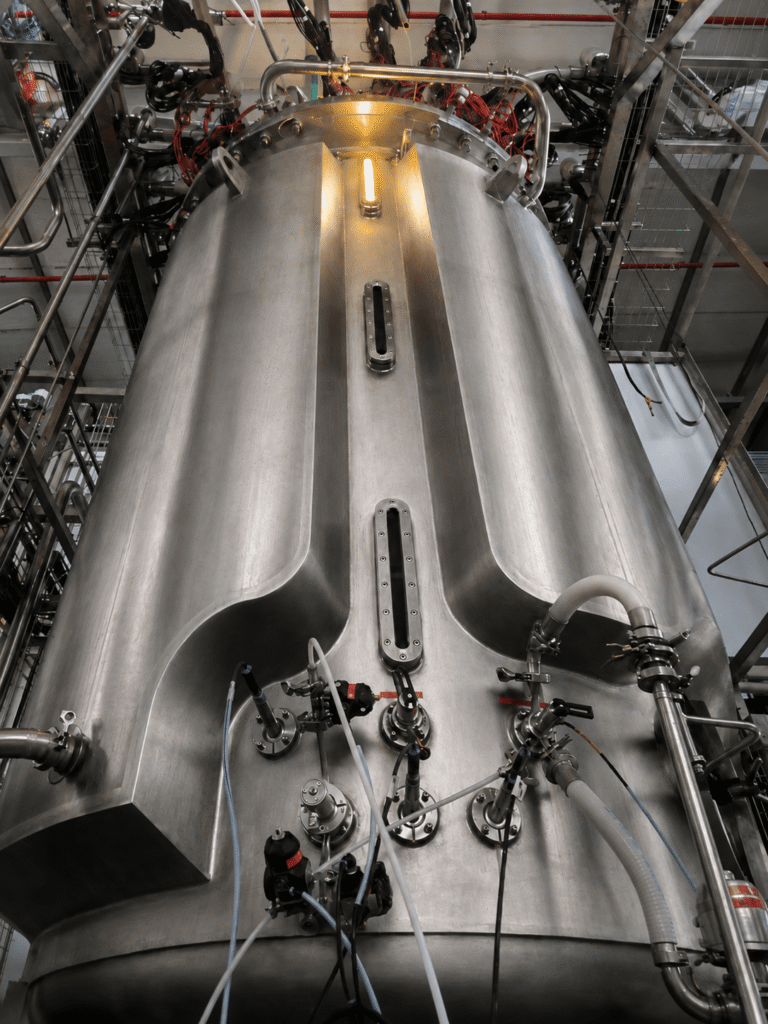
Brevel’s patented tech takes fermentation “out of the dark” by combining light with sugar fermentation in indoor bioreactors to produce nutrient-rich microalgae without any need for genetic modification. This platform enables the company to manufacture bioactives that rely on light-driven metabolism for growth.
The sugar provides the energy and nutrients needed for efficient fermentation, and light enables photosynthetic microorganisms like chlorella to produce valuable compounds, including chlorophyll and carotenoids. Brevel co-founder and CEO Yonatan Golan has previously described the tech as akin to “putting an electric motor into a Tesla car”.
Microalgae’s natural makeup of nutrients depends on photosynthesis for their development and growth. Brevel uses a strain from the Chlorella family, a widely commercialised source of single-cell protein already classed as safe for human consumption in the US and the EU.
Its platform can produce proteins and lipids as well, but the current focus of the Indian factory will be on the single-cell Purallis ingredient. It’s a deep-green powder rich in protein, vitamins, minerals, antioxidants and chlorophyll, and can be used across the supplements, food and drink, functional nutrition, wellness, pharma, biomaterials, and beauty sectors.’
The startup opened its own 27,000 sq ft commercial factory in southern Israel in 2024, which operates illuminated fermenters at scales of 50, 500 and 5,000 litres, churning out hundreds of tonnes of microalgae ingredients every year. The joint venture factory in India represents a significant expansion in capacity.
“We’re excited to partner with The Wave Group to bring illuminated fermentation to industrial scale,” said Golan, who founded Brevel with his brothers Ido and Matan in 2017. “This partnership marks a major step forward in our ability to serve global markets, opening new opportunities across microalgae, plant cell culture and beyond.”
Brevel establishes circular economy model with sugar waste
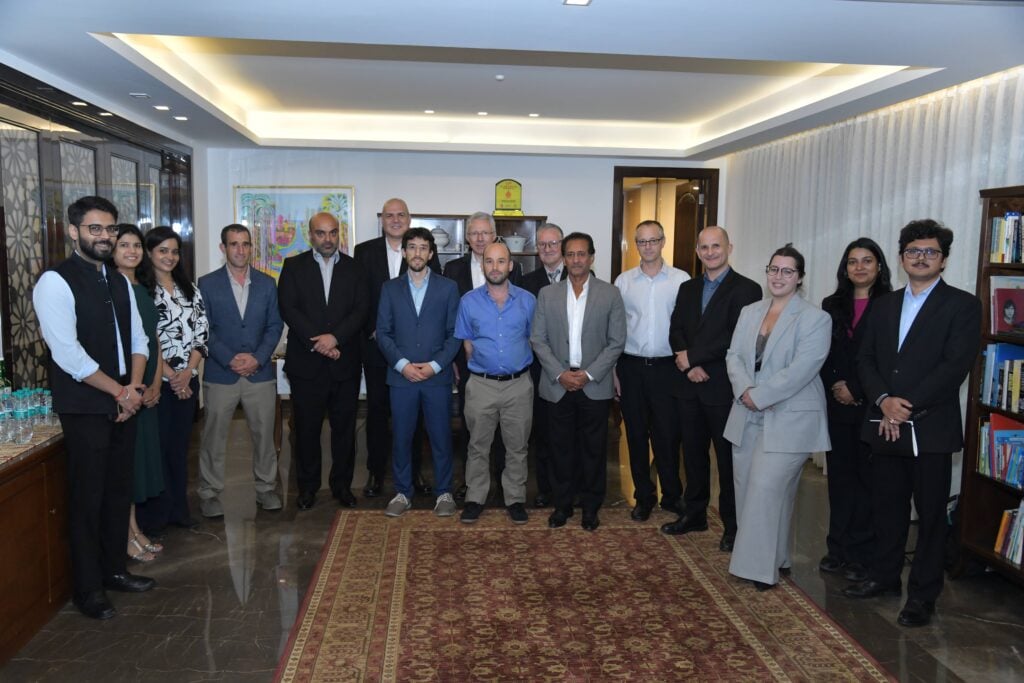
Through the 50/50 joint venture, Brevel will utilise sugar production sidestreams from The Wave Group’s sugar mills, enabling a circular economy model as part of a zero-waste strategy. The upcoming factory is located close to this sugar production hub, helping cut transportation expenses and emissions.
Initial trials from various byproducts from The Wave Group’s mills have yielded “excellent” results in Brevel’s bioreactors, according to the companies, both of which are currently working to further optimise the system’s performance.
“This collaboration expands our portfolio of food processing and product innovation businesses. Brevel’s illuminated fermentation, combined with our deep expertise in sugar manufacturing, defines a new era in biomanufacturing,” said The Wave Group chairman Manpreet Singh Chadha.
“We look forward to playing a pioneering role in the future of food ingredients and nutraceuticals in a world of limited resources. This strategic alliance with Brevel also positions The Wave Group as an important production hub serving the global food and supplement markets.”
Brevel raised $5M in a seed extension round in early 2025 to develop new ingredients, secure joint venture manufacturing deals, and sign offtake agreements. This was followed by a $1M investment from the Israeli Innovation Authority to help expand its light-based fermentation technology platform for plant cell culture companies.
The firm is already working with the likes of US startup Ayana Bio, which makes cell-cultured botanicals, and Israel’s Coffeesai, whose 3D cell expansion technology can grow coffee in bioreactors. Meanwhile, it’s working with the Central Bottling Company, Israel’s largest beverage manufacturer and the national distributor of Coca-Cola, to develop microalgae-based functional drinks and dairy alternatives.
“Our work with partners such as Ayana Bio, a US leader in plant cell technology, already demonstrates the broad potential of our platform. Together with The Wave Group, we can turn that potential into commercial-scale manufacturing,” said Golan.