
1
Talk of an existential crisis? The erratic rains and prolonged dry spells that African farmers have experienced for decades are surely enough for it to be called one.
For generations, farmers have planted with their eyes on the sky. They have trusted the rains to arrive on time and return the next season. That trust is wearing thin. Seasons now start late and end early, and rivers that once fed the fields run lower each year.
A farm without water has no future, and a continent that cannot water its farms cannot feed its people. Beyond the rains, it is imperative for Africa to secure the needed water its harvests depend on.
What Happens When the Rain Fails or Floods?
When the rains fail, the consequences do not end with a poor harvest. For communities that depend on agriculture, a prolonged drought can threaten an entire season’s livelihood and leave households with little to sustain themselves.
Between 2020 and 2023, the Horn of Africa experienced one of its worst droughts in decades. Millions of people faced severe food insecurity as families lost the means to sustain themselves. The situation was no different in Southern Africa. During the 2023–2024 agricultural season, Zambia suffered a severe drought that damaged crop production and contributed to a national disaster declaration in February 2024.
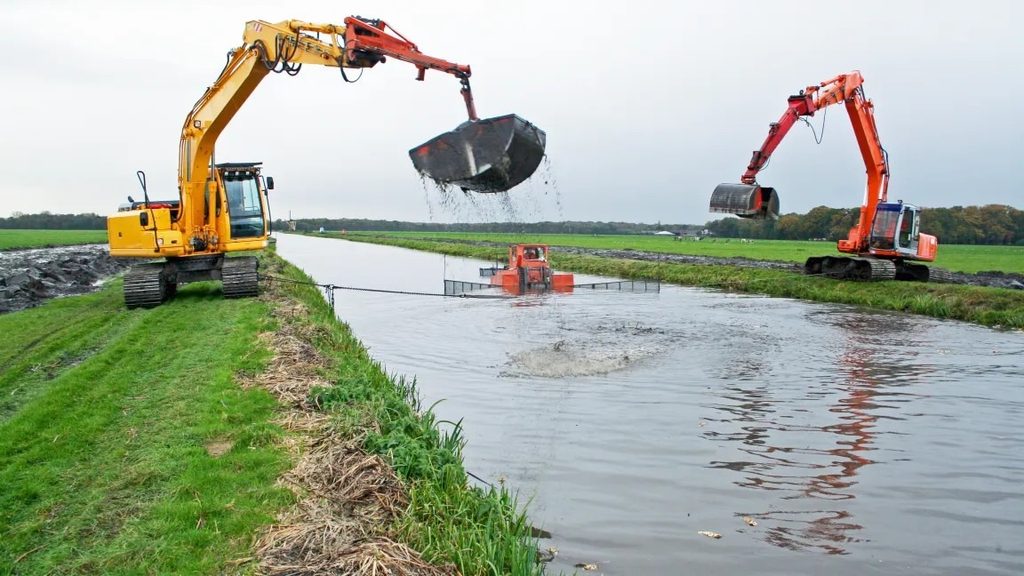
At the same time, extreme rainfall events in other parts of Africa—most recently across Nigeria, Chad, Mali, Mozambique, and Kenya have caused devastating floods that destroy hundreds of thousands of hectares of farmland. Meaning rain can threaten farms from both directions, when it stays away and when it arrives all at once.

We are excited to share with you
This FREE E-Book of 50 Agritech Pioneers & Their Game Changing Innovations.
Download the Ebook now
These events expose more weakness in Africa’s agricultural system. In its 2025 report, Tackling Irrigation Development and Water Management Crises in Africa, the International Water Management Institute (IWMI) revealed that only 6% of cultivated land is formally equipped for irrigation, despite the continent having an estimated 39 million hectares of land suitable for irrigation.
Such dependence on rainfall leaves farmers with little control over when their crops receive water. Africa cannot prevent every drought or flood, but can ensure that either does not automatically become an agricultural disaster.
Why Has Africa Struggled to Expand its Irrigation?
Africa has not been short of irrigation ambitions. Dams have been constructed, canals excavated and irrigation schemes launched with the promise of bringing more farmland under reliable water supply. The difficulty has been turning those investments into systems that work at the scale farmers need.
Of the 39 million hectares suitable for irrigation, much remains undeveloped. A review of 79 irrigation schemes, cited in the International Water Management Institute’s 2025 report, found that projects consistently fell short of their planned irrigated areas. It is a telling indication of the distance between project targets and what farmers eventually receive.
Several obstacles explain this gap:
- High development costs: Dams, canals and pumping systems require substantial investment, especially in remote farming communities.
- Poor maintenance: Broken pumps, blocked canals and unreliable energy supplies leave irrigation schemes underused.
- Limited farmer access: Many smallholders cannot afford the equipment and energy needed to irrigate their farms.
There is also the question of what happens after construction. A scheme may be commissioned with considerable investment, but its usefulness depends on whether it can deliver water reliably through successive farming seasons.
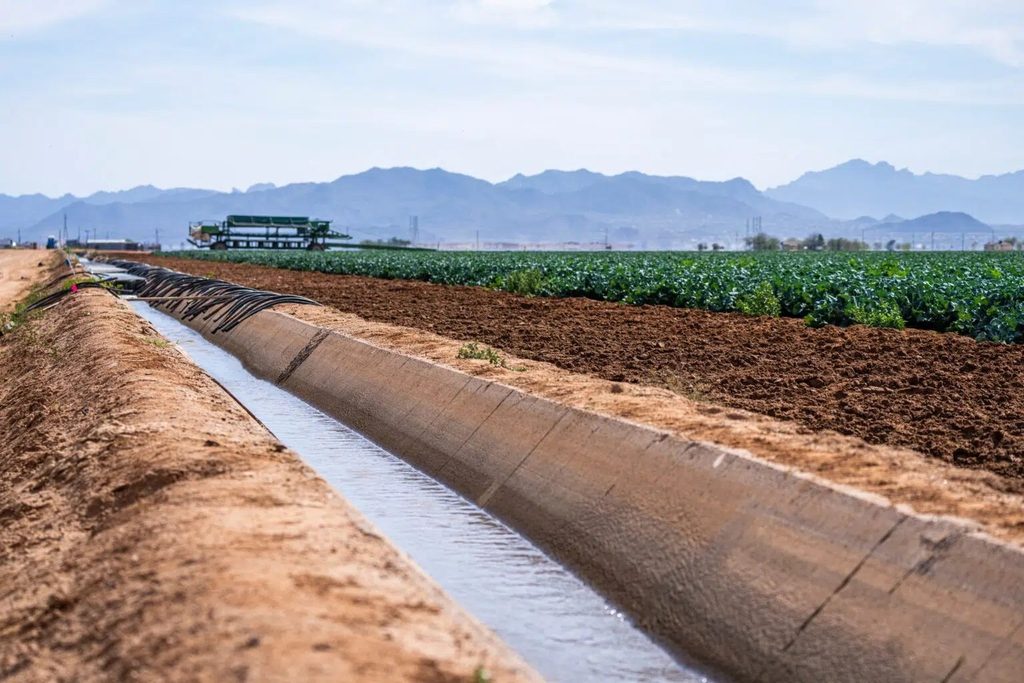
The cost of irrigation, therefore, does not end when the canals are completed. It continues for as long as farmers depend on them. And unless that cost is accounted for, Africa risks constructing more irrigation infrastructure without bringing much more farmland under dependable water supply.
Is Africa’s Irrigation Gap a Policy or Investment Issue?
It’s both. Africa needs more investment in irrigation, but money alone cannot guarantee that water reaches the farms that need it.
Closing the gap requires action on four fronts:
- Public investment: Governments must finance large-scale infrastructure such as dams, reservoirs and irrigation networks that individual farmers cannot afford.
- Private financing: Affordable credit, equipment leasing and pay-as-you-go solar pumps can help smallholder farmers invest in their own irrigation systems.
- Water governance: Clear rules for water allocation, maintenance and use are necessary to prevent waste and competing demands from undermining agricultural production.
- Regional cooperation: Shared rivers require shared responsibility. The Senegal River Basin Development Organisation (OMVS), for example, brings together Senegal, Mali, Mauritania and Guinea to coordinate water-resource development.
A dam may be built with public funds, while a farmer depends on private financing to purchase a pump. Both investments can fail to deliver their full value without effective management.
Africa’s irrigation future will depend on how well these responsibilities work together.
Making Water Work for African Agriculture
Major infrastructure projects have their place, but smaller and more accessible solutions can help farmers make better use of the water already available to them.
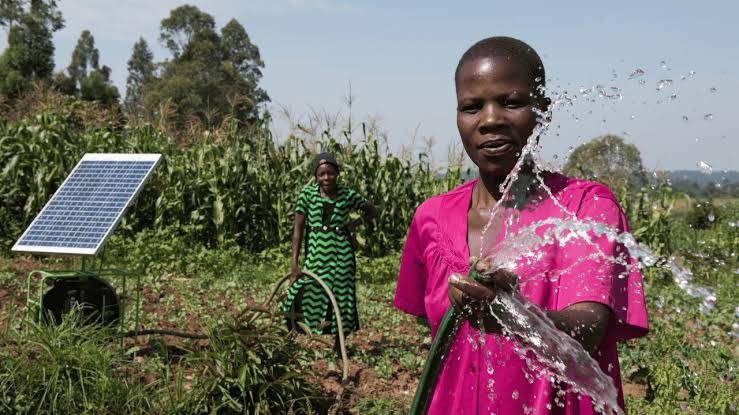
Some of these solutions are neither new nor complicated:
- Farmer-led irrigation: Smallholders use pumps, wells and simple distribution systems to irrigate their crops. KickStart International, for example, provides affordable MoneyMaker irrigation pumps to farmers in African countries.
- Solar-powered irrigation: Solar pumps reduce dependence on diesel and can lower operating costs. Kenya’s SunCulture is one company providing solar irrigation systems with flexible payment options.
- Rainwater harvesting and storage: Farm ponds, small reservoirs and storage tanks can capture water during wet periods for use when rainfall becomes scarce.
- Water and climate intelligence: Tools such as the International Water Management Institute’s AWARE platform can support better decisions through climate information, drought monitoring and early-warning systems.
These approaches are not without limitations. Groundwater extraction must be managed to prevent depletion, while storage facilities and pumps require maintenance. Farmers also need access to reliable information to know when and how much water their crops require.
The opportunity is to make irrigation practical for more farmers, whether through a shared community reservoir or a small solar pump.
Irrigating African Farms, Beyond the Rains
The time to secure water for African agriculture is now. Not by waiting for the skies to be generous, but through deliberate investment and action.
The measure of that commitment will be found not in the number of dams built or projects announced, but in the number of farmers who can grow their crops long after the rains have ceased.