
US minority- and women-owned startup Bare Beans has secured $2.8M in seed funding and rolled out ready-to-eat packs of beans in the retail channel, tapping into the appetite for minimally processed proteins.
The legume renaissance continues with the arrival of Bare Beans’s kettle-cooked beans in the US retail market.
The female-led startup has launched five varieties of preservative-free, ready-to-eat beans on its website, aided by a $2.79M seed investment from Raven Indigenous Capital Partners, North America’s first Indigenous-owned VC fund.
The firm was founded in 2018 by CEO Michelle Huff, a member of the Turtle Mountain Chippewa tribe. It will use the capital to fuel its direct-to-consumer push, with expansion into supermarkets to follow.
“Indigenous founders receive roughly 0.05% of US venture capital, which makes a venture-backed, Native woman-owned food company one of the rarest things in American business,” Paul Lacerte, co-founder and chief purpose officer of Raven Indigenous Capital Partners, pointed out.
“We invested in Bare Beans because Michelle had already done the hard part. She built a strong revenue stream and national distribution from her family’s own farm, bringing a truly unique product to market.”
According to Pitchbook, startups founded solely by women received just 0.6% of all VC funding in the US this year, down from 2% in 2024. That low share has been a consistent trend since 2008 (when the figure was 1.7%).
Bare Beans’s vertically integrated model elevates bean quality
Huff is a produce industry veteran who set out to create a cooked bean brand that didn’t rely on tins. “For as long as beans have been sold in stores, you had two choices: dry beans that are time-consuming to prepare, or canned beans cooked inside the tin cans you buy them in,” she said. “We developed the third option.”
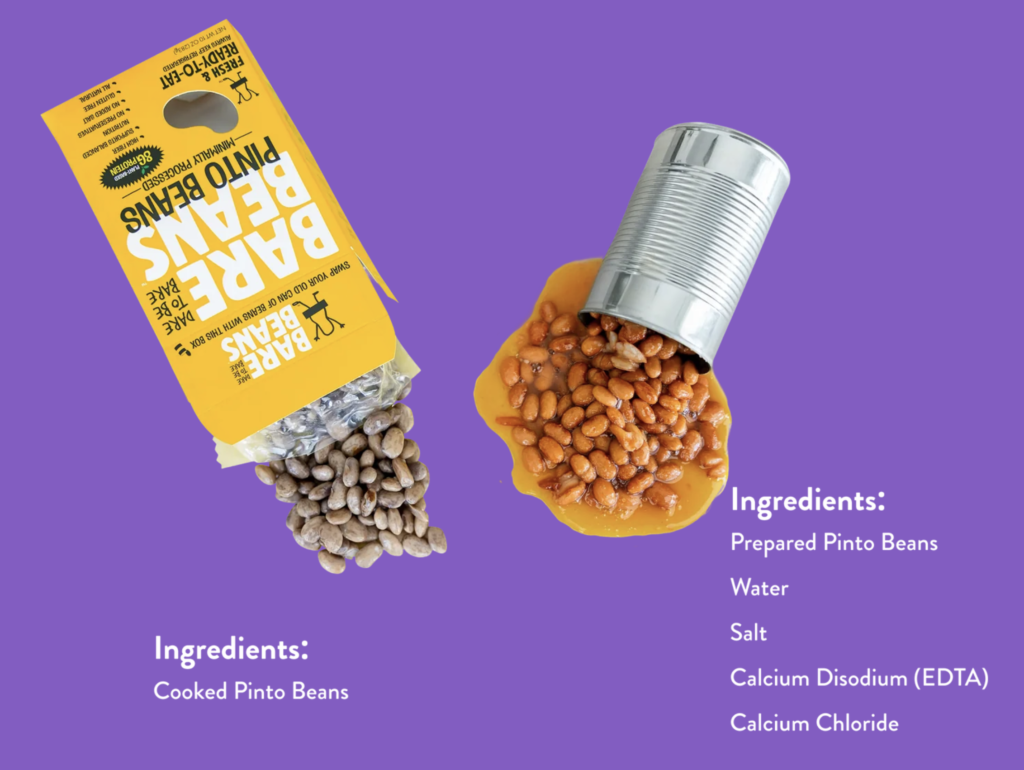
The company argues that most consumers are unaware that canned beans are cooked inside sealed tins together with salt, firming agents, and preservatives, then stored at room temperature (often for a year or more) before reaching their grocery carts.
Bare Beans, which sells chickpeas, black, gravy, navy and red beans, takes a different approach. “We grow the beans on our farm, we cook them fresh daily, and we pack them cold. Restaurants and professional chefs have been using them for years. Now the home cook can too,” said Huff.
Its beans are cooked the same way you would at home: they’re rehydrated overnight, cooked in kettles, rinsed, drained and packed cold in vacuum-sealed packages, eschewing any seasonings, preservatives or other additives. This helps the beans hold their shape and smell like they’re freshly cooked, and it gives them a 90-day shelf life in the fridge and a year in the freezer.
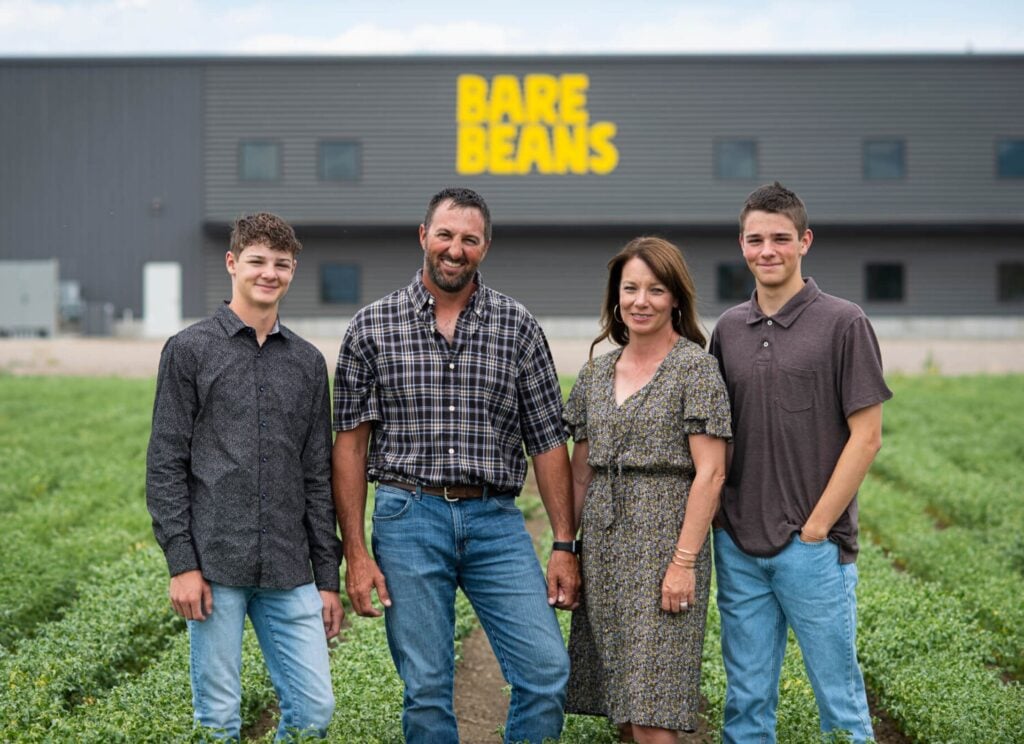
The company operates a vertically integrated model, with Huff’s husband – a fourth-generation farmer – growing the majority of Bare Beans’s legumes at the family’s Idaho farm, alongside local partners. The firm also owns and manages the production facility that cooks and packs the beans.
The family selects the exact bean varieties to grow based on their taste and texture, decides what goes into the soil, and runs its own food safety protocols rather than relying on a co-packer.
With protein and fibre in and UPFs out, can beans capitalise?
Bare Beans had previously test-launched a range of beans in retail, but these were pillow-packed and had a shorter shelf life, according to trade publication Nosh. Investment in vacuum-sealing equipment helped extend the lifespan of its beans and enhance their quality.
In the meantime, it has found success in the foodservice channel, where it supplies restaurants and institutional partners across North America via Sysco’s Cutting Edge Solutions programme and US Foods. Its beans can be found on the menu of Sizzler restaurants, and it’s supplying pinto beans for Bitchin’ Sauce’s new dip range in Costco.
Huff told Nosh that the company began to get its foodservice sales going once the pandemic faded out, growing by 300% in its first year in the channel, and by 20-25% each year after.
The e-commerce launch comes at a time when protein and fibre reign supreme in American dietary choices, while ultra-processed foods (UPFs), including plant-based meat, lose favour. Nearly three in five (57%) Americans plan to prioritise protein this year. Most of them are fibre-deficient, too, a dietary gap that online trends like fibermaxxing are looking to fill.
The boom in GLP-1 drugs has accelerated this demand. According to Innova Market Insights, the share of Americans who have used a weight-loss medication rose from 10% in 2024 to 18% in 2025, and these consumers are eating 40% more protein and 30% more fibre. And 79% of consumers find UPFs a “significant threat” to public health.
Swapping out meat for plant-based sources like legumes, nuts, and seeds is one of the key recommendations in the American Heart Association’s latest dietary guidelines. Around three in five US shoppers are willing to eat less meat (62%) or open to replacing it with beans (57%) at least once a week, citing the latter’s health benefits, cost advantage, and minimally processed nature.
These trends make it the perfect time for launches like Bare Beans’s. “This is an exciting milestone, but it is also the beginning of our next chapter,” said Huff. “Our e-commerce launch will help us connect directly with consumers, grow awareness of the Bare Beans brand, and build momentum toward future retail partnerships.”