
At the World Agri-Food Innovation conference in Beijing, Chinese government officials published a declaration of six consensus objectives agreed by the participants to fuel the green transition of the agrifood system.
China has taken another big leap in its bid to lead the future food race, with government officials publishing consensus points to deliver a “green and healthy transformation of agrifood systems” with the help of artificial intelligence (AI).
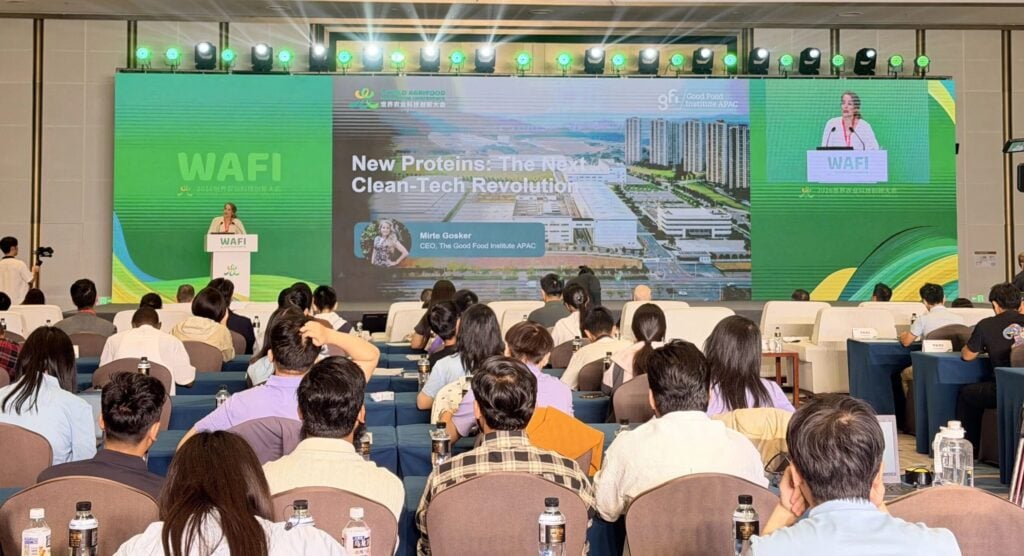
Policymakers, researchers, investors and food industry stakeholders gathered in Beijing’s Pinggu District for the World Agri-Food Innovation (WAFI) summit last week, discussing the role of alternative proteins in the country’s future food system.
“New proteins are the food equivalent of renewable energy,” Bruce Friedrich, founder and president of the Good Food Institute (GFI), said in his keynote at the Protein Diversification and Dietary Transformation Forum.
He pointed to China’s leadership in the global green energy transformation, noting how that proven industrial playbook could be applied to protein diversification, too.
The summit concluded with the publication of a declaration of six objectives the participants agreed upon, titled the Pinggu Consensus, which lays out implications for alternative proteins, including plant-based, fermentation-derived, and cell-cultured foods.
The six key objectives of the Pinggu Consensus
The first goal revolves around food waste, outlining the need to deepen innovation in resource-recycling models, reducing food loss across the supply chain, and synergising this with resource recovery and waste conversion. This would solidify the foundations of food security and sustainable development.
Next, the consensus reads that China should use AI to reshape the global agricultural landscape. This involves building digital application systems, strengthening data infrastructure, and expanding inclusive tech access through multi-stakeholder collaboration, all leading to a greener, more resilient agrifood sector.
Another objective is to drive food systems transformation by strictly controlling resource inputs, protecting arable land ecosystems, mobilising diverse stakeholders, and promoting the synergy of food production, ecological conservation and increased farmer incomes.
China should also use the high-quality development of the agrifood system to strengthen capabilities in nutritional research and tech, enhance standards, policies, industry collaboration and consumer guidance, and mutually advance industrial scale-up and improved public nutrition.
International collaboration is crucial, too. The document pinpoints the need for better agricultural cooperation among the Global South, faster dissemination of advanced technologies and innovative models, and international expansion of the Science and Technology Backyard initiative. This would enable research efforts to take off at the grassroots level and support the construction of global agrifood systems by integrating industry and education.
The final consensus objective involves harnessing the power of high-level policy dialogue to build consensus, convene multiple stakeholders, coordinate on key agricultural issues, align development strategies and the sharing of experiences, and translate policy consensus into practical action.
There was also a proposal for future initiatives, including strengthening multi-party collaboration through platforms like the Global AgriFood Innovation Alliance, advancing international research cooperation, and expanding the application of AI globally.
Can the consensus boost the alternative protein sector?
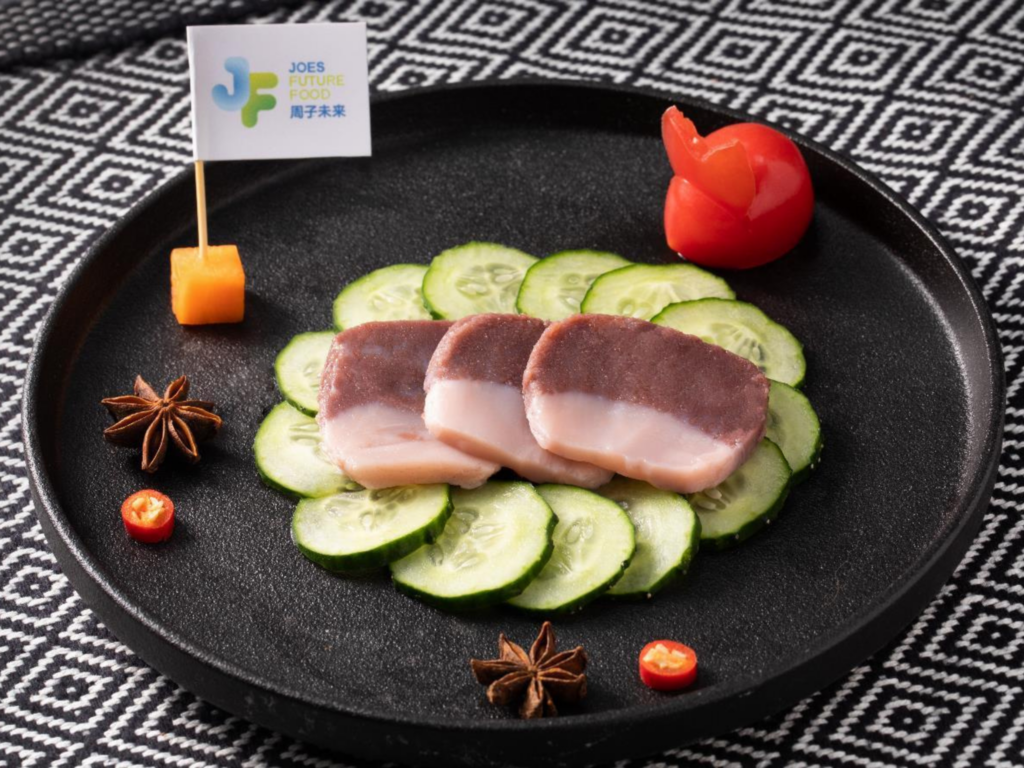
Distilling the high-level language of the consensus document, GFI APAC outlined what it could mean for alternative proteins. China’s integration of AI into industrial manufacturing gives it an advantage in scaling up these foods, so it can be expected to lean heavily on domestic manufacturers to incorporate AI into R&D and production systems and speed up the development of better-tasting, cheaper novel foods.
A recent report by GFI APAC expanded on this manufacturing strength, outlining how the country is repurposing its world-leading pharmaceutical production network to produce novel food ingredients, with the government and businesses committed to doing so at competitive prices “more so than any other country on Earth”.
The third goal of the Pinggu Consensus document, calling for resource input control, denotes that China recognises the inefficiency of the conventional livestock farming system, which uses up ecological resources and inputs on a colossal scale while delivering diminished outputs.
According to GFI APAC, China sees this as a fundamental barrier to making coordinated progress towards meeting the rising demand for meat, and understands that novel proteins could empower farmers and manufacturers to make more from less by keeping resource-hungry animals out of the picture.
Most critical is the call for high-level policy coordination. Chinese officials solicit input from leading experts when creating their industrial roadmaps, but once agreed upon, these plans “cascade top-down like a waterfall”, the think tank said. The top national policy decisions are decided in Beijing before being shared with other national, provincial and city government officials to facilitate alignment and implementation.
Speaking at the World Youth Forum at WAFI, GFI APAC CEO Mirte Gosker highlighted how investing in alternative protein manufacturing and R&D and making them a strategic priority – as China has done with solar energy and electric vehicles – can strengthen food security, unlock decades of economic growth, and lay the groundwork for the global protein transition.
These themes were touched upon by a report by Systemiq and the Gordon and Betty Moore Foundation in April, which charted China’s path to becoming an alternative protein leader by 2050. The analysts cited early indicators suggesting that the country is applying the same industrial strategy to agriculture as it did to the green energy and mobility sectors.