Chinese synbio firm Bestzyme, owned by GenScript Biotech, has installed what it says is the world’s first dedicated automated sweet protein production line at its Jinan facility.
The rapidly growing sweet protein market has just witnessed a major manufacturing milestone in China.
Bestzyme, which is owned by GenScript Biotech, uses precision fermentation to make brazzein, a zero-calorie sweet protein found in the West African Oubli fruit that’s 500-2,000 times sweeter than sucrose and has virtually no impact on blood sugar.
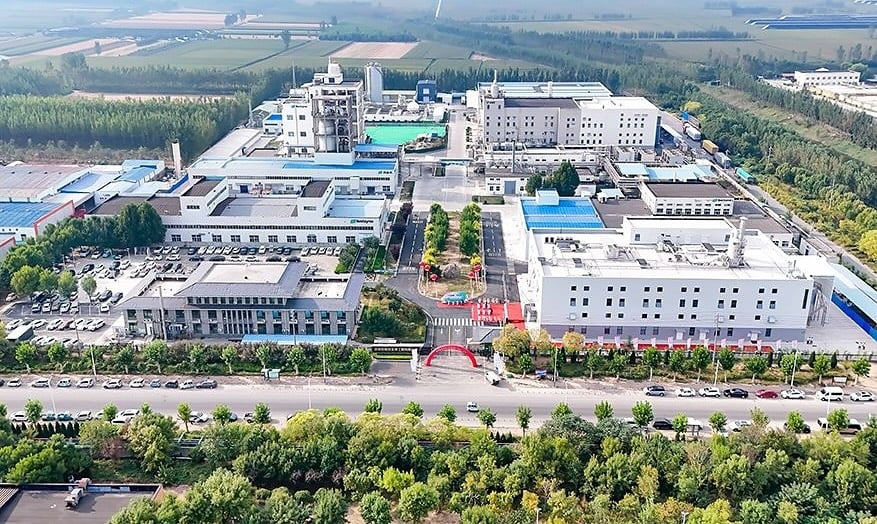
It has this week completed the construction of an automated, intelligent production line at its 5,000 sq m facility in Jinan, which it claims is the world’s first commercial manufacturing system specifically designed for sweet proteins.
Bestzyme has fully integrated its R&D, mass production and application capabilities for sweet proteins. Once the new line is fully operational, it will be able to churn out 100 tonnes of its brazzein ingredient annually, sold under the Mellia brand. That’s equivalent to the sweetness of 300,000 tonnes of sucrose.
The biotech firm now plans to double this capacity within two years through continuous strain iteration and process optimisation, fully equipping the facility for stable, large-scale supply of sweet proteins to food and beverage companies.
How Bestzyme solved the sweet protein bottleneck
Brazzein is naturally found in Oubli, though harvesting enough of the fruit for large-scale production of brazzein isn’t possible. The remoteness of its source locations makes this challenging, compounding an already lengthy, laborious process with little yield.
Many startups have turned to precision fermentation to address this bottleneck – the technology involves inserting a DNA sequence into microbes to teach them to produce the desired molecules during fermentation. However, low host expression levels and challenges in separation and purification drive up costs and have long confined these efforts to lab- or pilot-scale samples.
Bestzymes claims to have overcome these critical scaling hurdles by leveraging its expertise in industrial enzymes and biocatalytic manufacturing. Its synthetic biology platform enables high-yield strain development, high-density precision fermentation, and high-purity crystallisation separation.
The Jinan facility features end-to-end, fully automated capabilities spanning fermentation, purification, and freeze-drying. It’s equipped with smart fermentation control systems and cleanrooms that comply with international standards, ensuring high stability and quality throughout mass production.
According to the company, the installation of the new manufacturing line resolves long-standing industry bottlenecks, like low yields, batch instability, and prohibitive costs. It also underscores China’s leadership in high-value biomanufacturing, engineering delivery, and global supply chain compliance.
The Mellia sweet protein is being positioned as the “final piece of the puzzle” in sweetener formulations, rather than as a simple sugar alternative. It can be blended with existing substitutes like stevia and monk fruit to deliver a rounded sweetness profile, offering a zero-sugar profile with no compromise on flavour.
“The true challenge of sugar reduction is never simply removing sugar, but perfectly replicating the pure, full-bodied, and natural taste of sucrose while eliminating calories and metabolic burden,” said Aixi Bai, general manager of Bestzyme. “[The] Mellia sweet protein is the critical missing piece that satisfies consumers’ desire for authentic sweetness.”
Bestzyme partners with US sparkling water brand amid wait for China approval
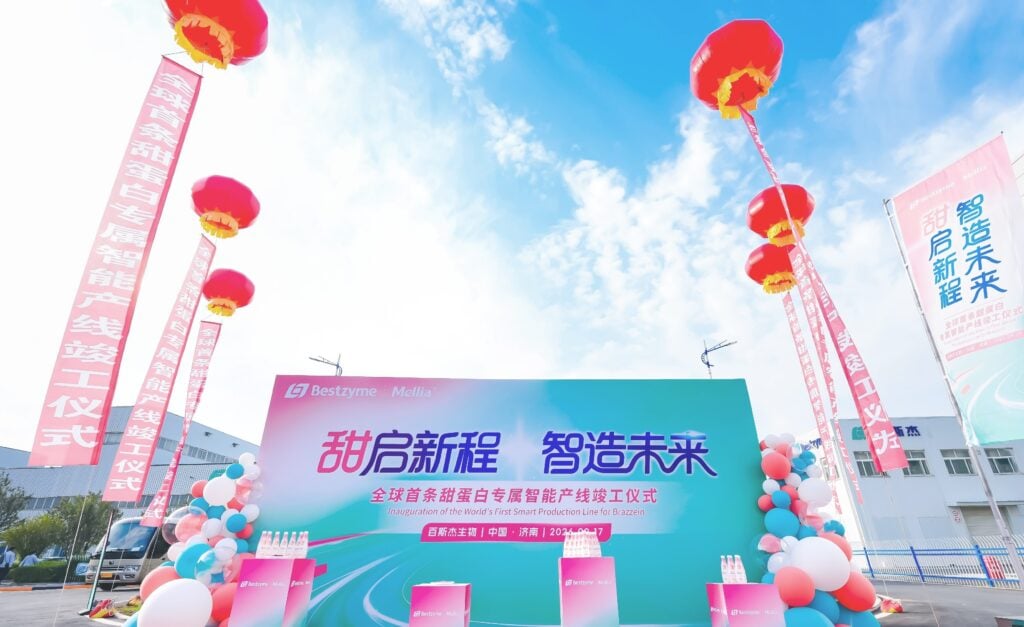
Bai stated that the company aims to provide global partners with “revolutionary” sweet protein solutions that balance health, safety and exceptional flavour: “The inauguration of our Jinan production line is both a realisation of our core R&D achievements and a commitment to delivering a stable, compliant, and high-quality commercial product to the global market.”
The launch signifies Bestzyme’s transformation into a full-value-chain “sweetness partner”, offering an integrated ecosystem of strain R&D, scalable mass production, custom formulation blending, and global regulatory support backed by an application science team and sensory evaluation platform.
This model enables tailored sweetness blending and flavour modification solutions for client product lines, shortening time-to-market cycles for end products by several months.
Speaking at the opening event – where Bestzyme sampled sugar-free sparkling water and pressed candies – Hua Mao, senior partner and managing director of Frost & Sullivan Greater China, noted that supplying bulk powder is no longer enough to solve complex flavour challenges.
Sweet proteins, he said, are functional macromolecules that exhibit varying sweetness release curves and flavour interactions across different matrices, such as fizzy drinks, plant-based dairy alternatives, and confectionery. So companies with full-stack application R&D and formulation guidance are best-positioned to build strong, competitive moats.
Bestzyme secured a ‘no questions’ letter for Mellia from the US Food and Drug Administration in 2025, enabling the sale of its brazzein ingredient to manufacturers stateside. It has already partnered with a sparkling water brand to bring a zero-sugar product to market.
Americans eat 17 teaspoons of sugar daily (way above the recommended amount), a habit that has fuelled the country’s obesity epidemic, which plagues 42% of its citizens. Plus, over 11% of consumers have type 2 diabetes. It’s why their top response when asked what they wanted to consume less of this year was sugar, cited by 45%. And more than half of Gen Zers and millennials believe alternative sweeteners are either as healthy or healthier than sugar.
Bestzymes has filed for regulatory approval in several other regions, including an application for a new food additive variety in China, which has been accepted by the National Health Commission.
Oobli already has approval for three sweet proteins in the US, while MycoTechnology has been cleared to sell a sweet protein derived from Hungarian honey truffles. Amai Proteins, meanwhile, has secured the green light for monellin (a sweet protein found in serendipity berries) in the US, Singapore and Israel. Perfect Day, Sweegen, and Microfarmtory also have approval, and Pentasweet is building a $76M factory for brazzein in Lithuania.