
Consumer research suggests that most consumers find Sun Bear Biofuture’s yeast-derived cocoa butter substitute equivalent to or better than the conventional fat.
In a major validation of the burgeoning microbial fat industry, a majority of consumers were found unable to tell the difference between cocoa butter and a yeast-based alternative made by UK startup Sun Bear Biofuture.
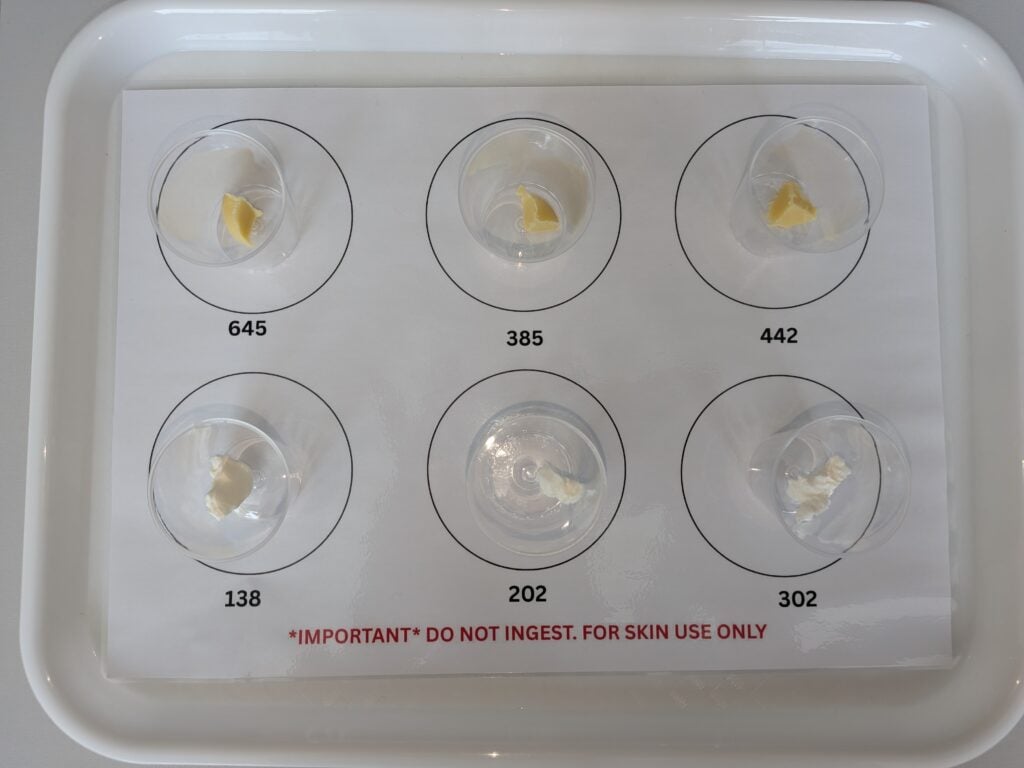
The research, carried out by the Centre for Nutrition and Health at Oxford Brookes University, revealed that the sustainable cocoa butter alternative was either equal to its conventional counterpart or the preferred purchase in four out of five products tested.
In fact, participants could only identify the yeast fat in one of the five cases, which comprised three food innovations and two cosmetics products.
Moreover, independent testing by the University of the Arts London’s (UAL) Cosmetics Science Department, backed by a grant from Innovate UK, found no difference in performance between the two fats in a hand balm formulation from a major high-street cosmetics brand.
‘This study set out to ask whether Sun Bear Biofutures cocoa butter alternative behaves as a direct, like-for-like swap for cocoa butter in this formulation,” said Joana Maia, a research scientist at UAL. “On the evidence gathered here, it does, in manufacture and in function alike.”
Answering consumer questions ‘extremely important’ for novel fat industry
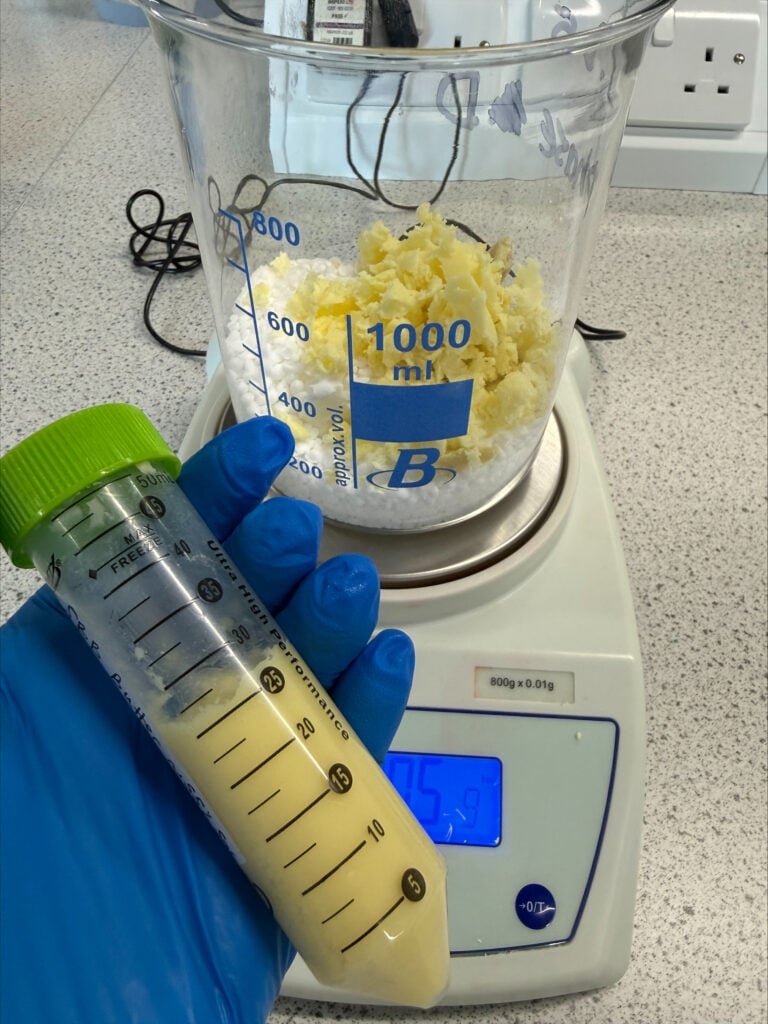
Founded in 2022, Sun Bear Biofuture uses precision fermentation to produce climate-friendly alternatives to harmful animal and tropical fats, including palm oil and cocoa butter.
The tech involves inserting specific DNA into microbes to teach them to produce the desired molecules when fermented. The startup engineers yeast to convert renewable sugars into a lipid-rich biomass, which is separated from the fermentation broth upon harvest. The cells are disrupted to release intracellular lipids, which are extracted with food-grade solvents, before being refined and polished.
Scalability and costs have long been precision fermentation’s biggest bottlenecks, thanks to process inefficiencies, high unit costs, and the use of bioreactors designed for pharmaceuticals rather than food.
Sun Bear Biofuture has suggested that a conventional precision fermentation pilot plant costs between £350,000 and £1M, but its approach uses readily available, lower-cost brewery and dairy equipment to become price-competitive with commodity products like cocoa butter.
In 2024, it achieved what it claimed was a “record-breaking” cell lipid content of 78% (the amount of the yeast cell composed of fat), significantly lowering costs and fuelling its scale-up efforts.
The fermentation vessel cost less than £1,000, compared with the £250,000 it would normally cost, while efficiencies in downstream processing of the yeast biomass and oil extraction (by removing multiple industry-standard pieces of equipment) further reduced scale-up expenditure. It also eliminated the need for solvents like hexane, which is harmful to human health.
The startup says consumer responses are critical for brands to decide whether to change an ingredient, so the Oxford Brookes research “really puts microbial lipids on the map” by validating their viability.
“It was extremely important for us to be able to robustly answer the questions we faced from many of the biggest players in food and cosmetics regarding this new, exciting, but largely unknown world of microbial lipids and their customers’ potential responses,” said Ben Wilding, co-founder and CEO of Sun Bear Biofuture.
“These two independent trials now give us great confidence. New ingredient options are needed, and we’re so pleased to be able to say that our range of fats and oils meets consumer demands.”
Sun Bear Biofuture eyes industrial-scale production of cocoa butter substitute
Palm oil is present in half of all supermarket items. It’s the main driver of tropical deforestation and has been directly linked to wildfires in Indonesia and Malaysia, with one estimate suggesting that tropical deforestation makes up nearly 20% of annual GHG emissions.
It’s widely used in the chocolate trade, itself under threat from the climate crisis. The cocoa industry is directly responsible for 94% and 80% of deforestation in Ghana and the Ivory Coast, the two largest producers of the crop.
In 2024, global cocoa stocks fell to a decade low, and its hit an all-time high. And as extreme weather events wipe out harvests and push a third of the world’s cocoa trees towards extinction, ingredients like cocoa butter are under threat.
According to Sun Bear Biofuture, the cost of cocoa butter inflated sixfold in 2025. Its yeast-derived version can cut land use by up to 95% and reduce emissions from producing tropical fats by 90%.
And with a “super” El Niño set to raise temperatures to extreme levels through to the end of 2027, chocolate manufacturers are hunting for alternatives. Barry Callebaut, the industry’s largest producer, is predicting a price hike of several thousand dollars per tonne of cocoa beans. And Mondelēz International is reporting a 25% hit on profits due to rising cocoa costs.
All this would lead to more expensive food and cosmetics, making alternatives all the more crucial. Sun Bear Biofuture is now scaling up production in its new pilot plant, and intends to begin industrial-scale runs by the end of 2027 (when it plans to launch its cocoa butter alternative through a cosmetics partnership). The overlal aim is to reach full industrial levels by 2029.
Several others are using technology to decarbonise cocoa butter. France’s Smey makes cCB (Cultivated Cocoa Butter), a direct replacement created with AI and yeast fermentation, ans Singapore’s Terra Oleo is producing waste-derived precision-fermented substitutes for palm oil and cocoa butter.
Germany’s Planet A Foods, already a leader in the cocoa-free chocolate space, has been working on a precision-fermented alternative to cocoa butter, too. Argentina’s Abydos Bioscience is leveraging oleaginous bacteria (instead of yeast or microalgae) to produce its version. And Israel’s Celleste Bio uses plant cell culture to produce cocoa butter, which has been used in new milk chocolate bars by Mondelēz.