US startup Ayana Bio and Indian specialty chemicals company Zenfold Sustainable Technologies have jointly acquired fermentation equipment from Meati Foods, which recently ceased operations.
The fermentation assets of US startup Meati Foods, once a darling of the mycelium meat industry, have been auctioned off for a fraction of their value by Ayana Bio and Zenfold Sustainable Technologies.
The deal, first reported on by AgFunderNews, comprises 300,000 litres of pilot and production capacity and includes the corresponding fermentation seed trains. These assets were worth millions, but were sold for just $75,000.
“The opportunity to acquire this fermentation equipment, at this cost, is a game changer for Ayana Bio to expand our own dedicated pilot capabilities to perform consistent and cost-effective pilot-scale development on plant cell lines,” Ayana Bio CEO Frank Jaksch tells Green Queen.
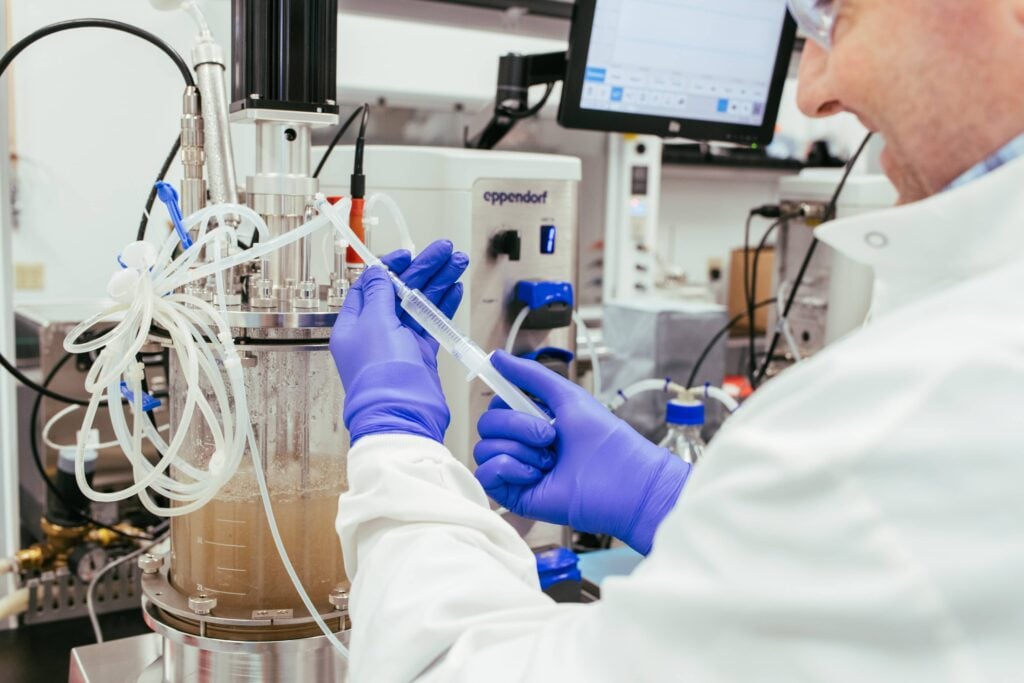
The fermentation equipment will be shipped to Zenfold’s facilities in India to speed up the production timelines for Ayana Bio’s range of plant cell bioactives.
“Our main goal is to take advantage of this opportunity to create our own dedicated pilot capability for developing our plant cell lines, as well as have access to future production capacity after pilot,” Jaksch explains.
How Meati Foods went from boom to bust
Meati was one of the highest-profile players in the alternative protein industry, selling a line of whole-cut mycelium chicken and steak products, alongside breakfast patties and other limited-edition innovations.
It had raised $450M to date, which included a $150M Series C funding round in 2022 that valued it at $650M, and a $100M Series C1 round that was the largest round in the alternative protein industry in 2024. In the latter year, it had doubled its revenue and expanded retail distribution by 130% to enter more than 7,000 stores across the US.
But things changed rapidly for Meati in 2025, when its lender swept away two-thirds of its cash reserves due to a technical default, despite assuring Meati that it wouldn’t.
The firm was in the midst of an internal fundraising round that would have extended its runway into 2026, and while it was current on its payments, it had breached a financial agreement relating to revenue and gross profit.
That led the company to lay off all 150 employees before entering the assignment for the benefit of creditors process (a bankruptcy alternative) in May. It was acquired by InvenTel founder Yasir Abdul for just $4M shortly after.
While the new owner had promised to return Meati to shelves, the tumult continued for the business in the ensuing months, with more cutbacks and ultimately a shutdown of its 100,000 sq ft manufacturing facility in Thornton. The property was seized in December over non-payment of taxes and interest worth nearly $6.7M.
This spring, its physical assets were put up for auction, but the core fermentation equipment remained unsold. “Meati spared no expense when they purchased the fermentation equipment for their Colorado facility. We estimate that they spent $15-20M for the fermentation equipment. However, we do not know exactly what they paid,” says Jaksch.
“The equipment failed to sell at auction earlier this year, and the city of Thornton was looking to recover what it could as the tax lien holder,” he adds when asked how Ayana Bio and Zenfold managed to snap up the assets for such a bargain.
Keeping equipment in the US would create roadblocks for Ayana Bio’s manufacturing goals
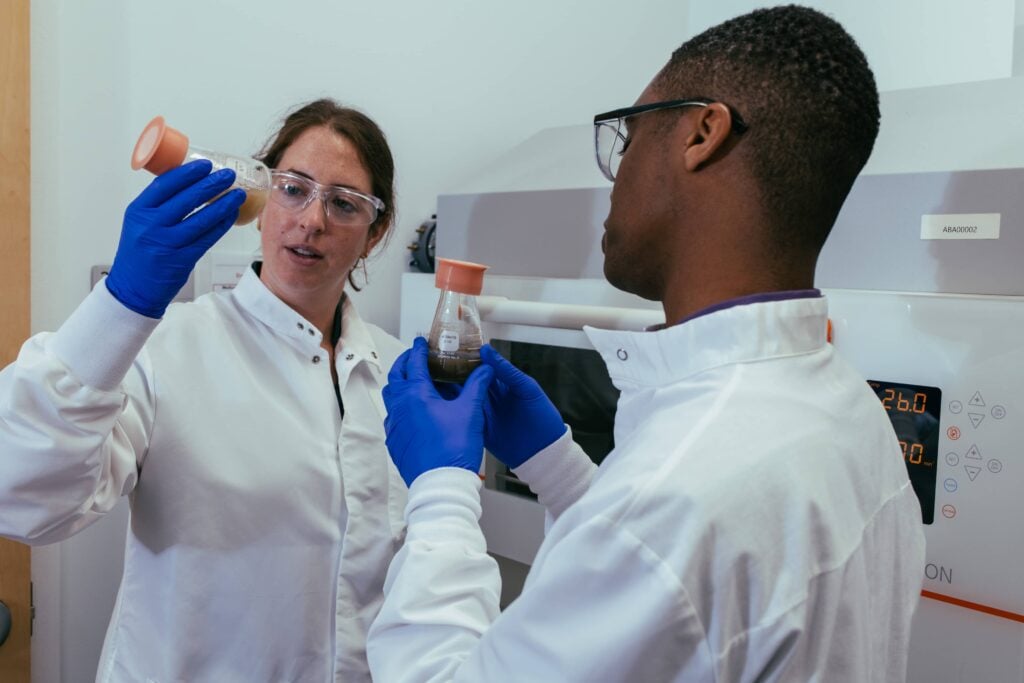
Plant cell culture is a process through which companies grow plant cells in bioreactors in tailored conditions, instead of relying on environmental factors like soil, sunlight, or water. Ayana Bio, a spinoff from synbio pioneer Ginkgo Bioworks, leverages this tech to grow a full spectrum of bioactives identical to those found in nature (and even higher potency in some cases).
It sources and grows plants in a controlled lab environment to sample tissue from different parts, including flowers, roots and leaves, and identify optimal cell lines to produce bioactives. The tissue is fed with a blend of micronutrients to form callus, which is adapted to liquid media.
Here, both solid and liquid growth environments are screened to assess growth and metabolites produced, ensuring optimal bioactive production. The firm uses technologies like high-throughput multi-omics to identify the most effective cell lines, which are locked in for further optimisation.
Once a cell line has passed product screening, it’s cultivated in a bioreactor to optimise both cell growth and bioactive production. After developing the bioprocess, these cell lines are scaled up for commercial production. Ayana Bio then harvests the cells for bioactive compounds, which are either extracted or isolated, depending on customer preference.
The firm does not operate its own production facilities, nor does it have plans to build one. Instead, it partners with contract development and manufacturing organisations like Zenfold.
“In this case, the opportunity to acquire the Meati fermentation assets allowed us to partner with Zenfold to expand our relationship and increase our dedicated pilot capabilities and early-stage manufacturing capacity,” explains Jaksch.
“Ayana Bio is a venture-funded startup, so we are trying to make sure our investors’ cash will be used as efficiently as possible. We have done extensive techno-economic and cost modelling regarding scale-up and manufacturing using plant cell culture. Keeping the equipment in the US would not allow us to achieve our pilot scale or manufacturing objectives.”
He confirms that the startup is currently fundraising, months after it received a $1.25M grant from the Binational Industrial Research and Development (BIRD) Foundation to scale its process using illuminated fermentation tech from Brevel. “We are still in the early stages of getting our collaboration with Brevel underway now that the Bird grant is in place,” Jaksh says.