The same demand and brand equity driving global growth for K-beauty brands is creating commercial opportunities for counterfeiters, helping fuel a parallel market that is already worth billions. Fake products and unauthorized distributors are increasingly blurring the line between legitimate K-beauty and the black market built around it.
South Korean authorities have arrested a broker who imported 100,984 counterfeit K-beauty and wellness products from China, and sold them as genuine on Coupang and Naver, the two largest e-commerce and digital platforms in the country.
Special judicial police units at the Ministry of Food and Drug Safety and the Korea Intellectual Property Administration led the crackdown. Investigators said 82,860 items reached the public market, generating ₩4.5 billion (US$3.2 million) in sales across 61 different products.
A search of a warehouse in Cheongju, South Korea, turned up 87 more types of products, worth ₩1.3 billion (US$940,000), which were also seized.
The case marks the first joint investigation between the two agencies. The development signals a heightened urgency to trace the full route of counterfeit cosmetics from border entry through storage and delivery.
Global trade in fake South Korean brands reached an estimated ₩11 trillion (US$7.94 billion) annually in 2024, according to the Organization for Economic Co-operation and Development (OECD). This amounts to roughly ₩7 trillion (US$5.05 billion) in lost sales for legitimate brands, and around 14,000 jobs.
Beyond the toll on sales, the trade of K-beauty counterfeits also puts unsafe cosmetics into the hands of consumers. The recent bust in South Korea found none of the counterfeits contained any functional ingredients, while recalled batches of Medicube creams were flagged in Singapore for containing a banned carcinogen.
.webp) The crackdown raises questions over online platforms’ responsibility for counterfeit products sold through their marketplaces.With these products laced across virtual shelves on credible platforms, the counterfeit market is increasingly showing resilience.
The crackdown raises questions over online platforms’ responsibility for counterfeit products sold through their marketplaces.With these products laced across virtual shelves on credible platforms, the counterfeit market is increasingly showing resilience.
The bootleg ingredient issue
According to South Korean authorities, the latest crackdown unmasked an illegal operation running from October 2024 through November 2025. The broker, identified only as A in domestic reporting, conspired with a manufacturer in Shenzhen, China.
Authorities say the goods were shipped from China by international parcel services, then stored at a logistics warehouse in Cheongju, South Korea. From there, the orders were delivered to buyers across the country. The combined distributed and seized products were estimated to be worth ₩5.4 billion won (US$3.9 billion), according to the Seoul Economic Daily.
The South Korean Ministry of Food and Drug Safety tested the seized counterfeit cosmetics and health supplements and found none of the listed functional ingredients. The finding fits a broader pattern where, due to their unregulated nature, counterfeiters forego adherence to formulas.
Recently, in a separate case in Singapore, the Health Sciences Authority (HSA) ordered a targeted recall of two of Medicube’s PDRN Pink Collagen Capsule Cream. The HSA detected trace amounts of Sudan IV, an industrial dye banned in cosmetics due to carcinogenic and genotoxicity concerns.
The regulators specifically targeted batches sold by retailer Venus Beauty, but Medicube parent company APR disputed the finding and claimed not to have supplied to the retailer.
The South Korean company stated that the affected batch numbers do not appear in its official export records to Singapore, and that it has never supplied products to Venus Beauty.
APR conducted its own tests at certified laboratories, including one accredited by HSA, and found no Sudan IV in its samples.
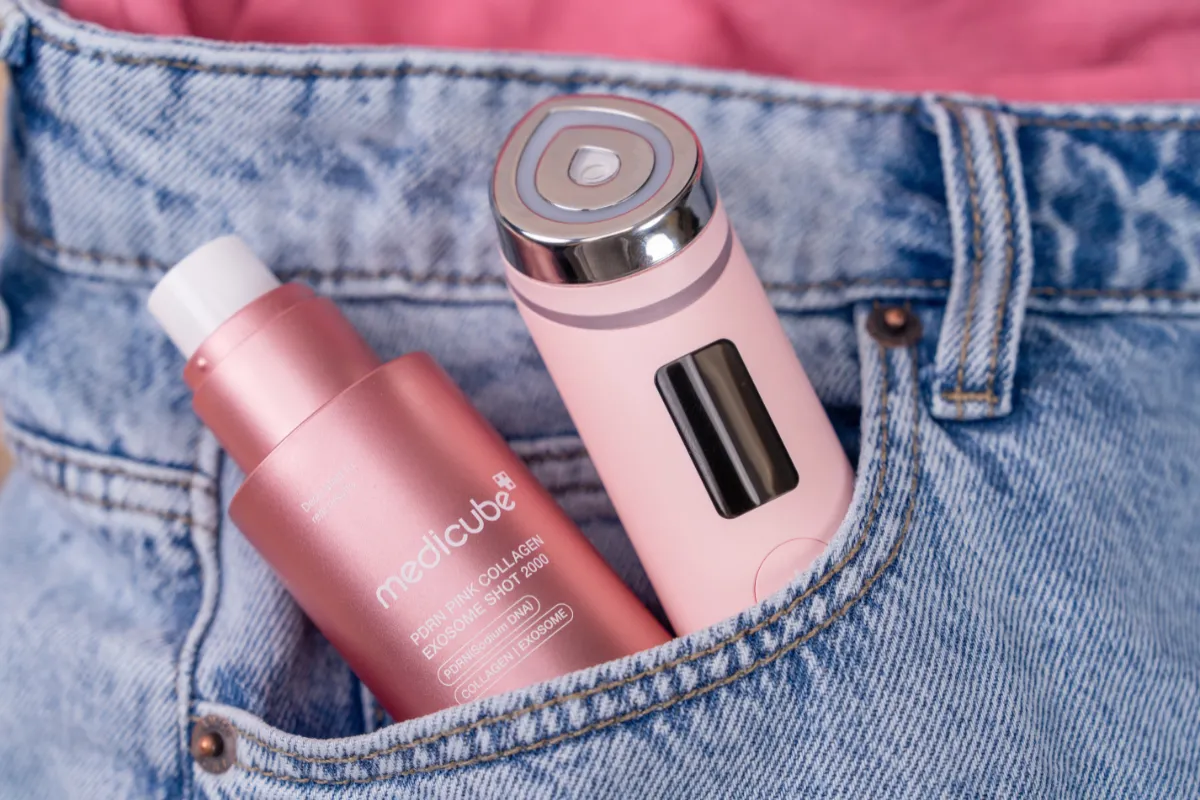 Counterfeit products can raise safety concerns for consumers and risks for beauty brands.“Whether the samples HSA obtained are genuine, and how they made their way to that seller, are questions that still need answers,” an APR official said.
Tip-toeing around virtual rules?
While the recent bust in South Korea found the fake cosmetics sold on Coupang and Naver, the Ministry of Food and Drug Safety said the investigation did not provide grounds to hold either platform accountable.
Together, the platforms control around 65% of the local online retail market. Coupang alone has over 35 million active monthly users, according to local reporting.
Under current South Korean law, online platforms act as “communications sales intermediaries” rather than parties to the transaction, allowing them to dodge liability for sales contracts. Korean law does not require platforms to scan for or remove counterfeit goods.
The legal grey zone surrounding e-commerce liability is not unique to South Korea. Across global markets, regulators are increasingly challenging this hands-off approach. Online retailers are progressively coming under pressure as regulators move to bring their platforms into the chain of accountability for unsafe cosmetics.
For South Korea, reform efforts are still underway. A proposed amendment to the E-Commerce Act would require platforms to monitor for trademark infringement and hold them jointly liable for seller fraud.
This comes as the Korea Intellectual Property Protection Agency reports that unauthorized overseas K-beauty trademark registrations increased 2.5-fold in two years. The agency says the figure rose from 4,045 unauthorized registrations in 2023 to 10,020 last year.
In the meantime, the country has established a Counterfeit K-brand Reporting Center, run through the Korea Intellectual Property Protection Agency. The system allows consumers to report a suspected counterfeit found overseas.
The crackdown raises questions over online platforms’ responsibility for counterfeit products sold through their marketplaces.The crackdown raises questions over online platforms’ responsibility for counterfeit products sold through their marketplaces.The crackdown raises questions over online platforms’ responsibility for counterfeit products sold through their marketplaces.Counterfeit products can raise safety concerns for consumers and risks for beauty brands.Counterfeit products can raise safety concerns for consumers and risks for beauty brands.Counterfeit products can raise safety concerns for consumers and risks for beauty brands.