
Discount retailer Lidl has extended its blended meat portfolio with the launch of a new High-Protein Meat range in the UK, combining beef and pork with pea protein in a first for the country.
Lidl has taken yet another step in its sustainable food leadership, unveiling the UK’s first private-label range of blended meat with more protein than 100% animal-derived versions.
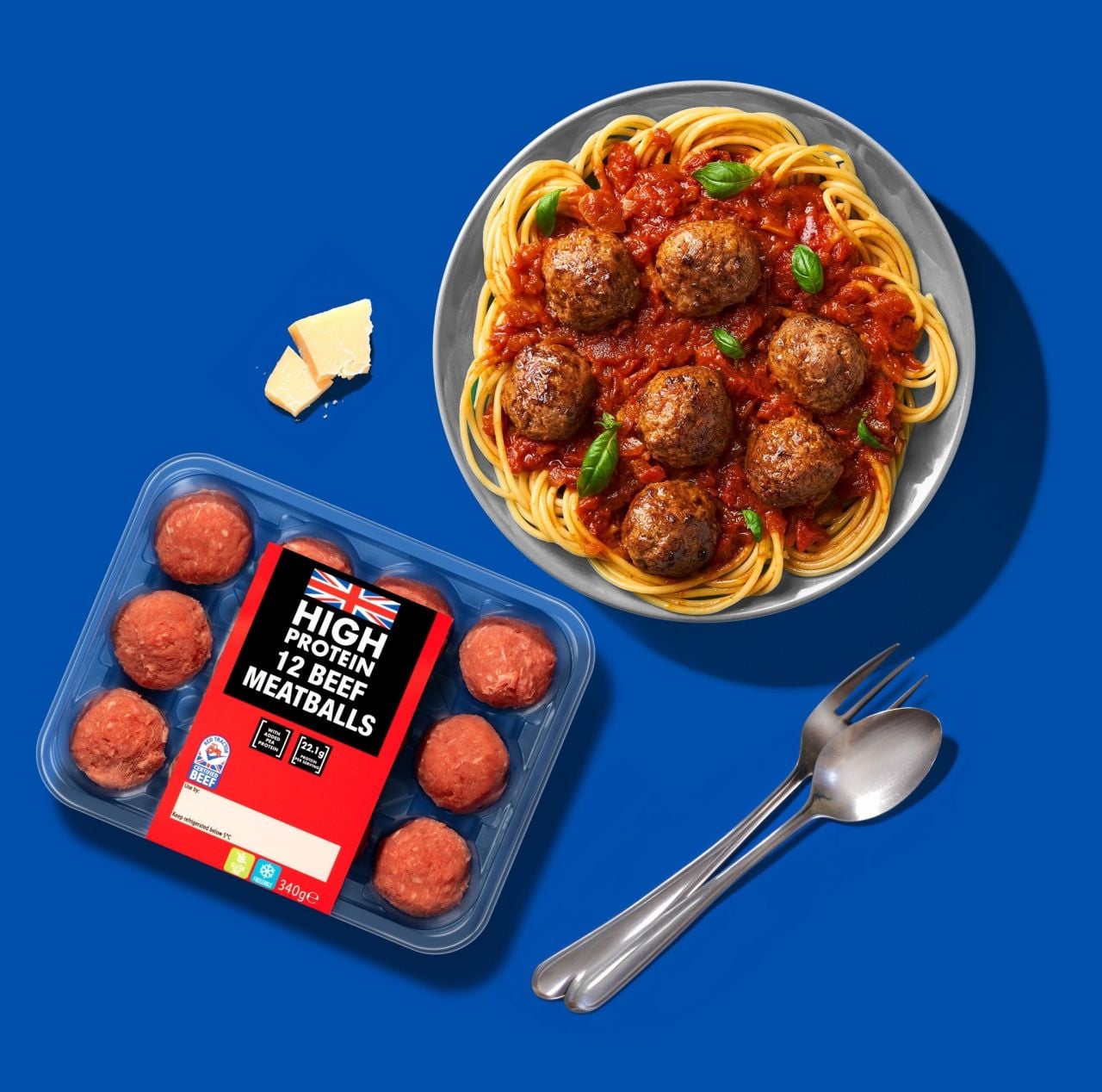
The discount supermarket is betting on the UK’s hunger for protein with beef mince, meatballs, burgers, and pork sausages mixed with pea protein. They have a minimum of 20% higher protein content than their conventional counterparts and, crucially, are affordably priced, starting at £1.99.
It’s part of Lidl’s aim to ensure that 25% of all protein sales come from plant-based sources by 2030, as well as its drive to better align with the Eat-Lancet Planetary Health Diet, which emphasises a plant-forward eating pattern for better human and environmental health.
“Demand for high-protein meals is soaring, but for too many shoppers, cost is still the main barrier. This week, we’re changing that,” Lidl’s chief commercial officer, Richard Bourns, said in a LinkedIn post, calling the new range “a genuine, first-to-market innovation that is a true game-changer for our customers”.
Can Lidl break open the UK’s blended meat category?
The new range includes pork and Cumberland-style sausages, priced at £1.99 for a 400g pack, delivering 24g of protein per serving. The latter product, in fact, provides 50% more protein than a 100% meat version.
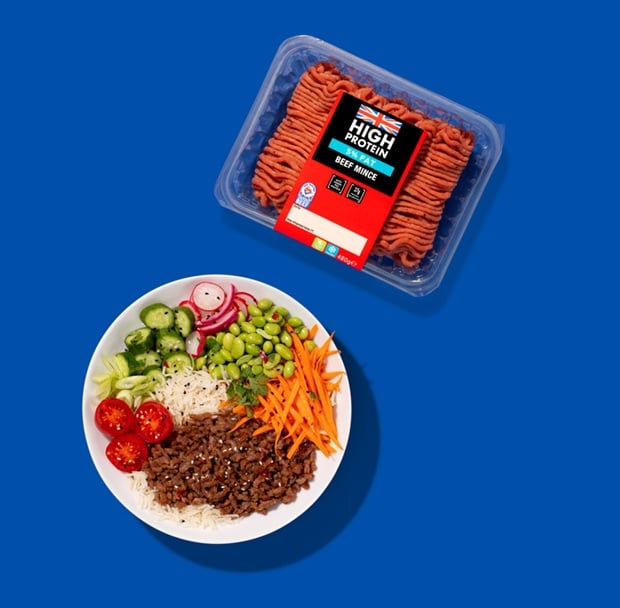
The beef and pea mince is available in 480g packs of 5% and 10% fat formats, priced at £4.79 and £3.99 for 37g and 40g of protein per serving, respectively. Lidl will also sell blended quarter pounders (£2.99 for 454g, with 27.7g of protein) and meatballs (£2.79 for 340g, with 22g of protein).
Blended meat products have several value propositions: they cut the amount of saturated fat and cholesterol in meat products, add fibre and variety to the diet, can often have more protein at cheaper or equivalent prices, and are associated with lower emissions, land and water use.
It’s why they have popped up in a string of supermarkets across Europe, a shift being spearheaded by Lidl. It has been selling beef mince with 40% pea protein in the Netherlands since 2024, and has introduced a blended meat range in Belgium.
Progress on this front has been slow in the UK, where first-generation attempts by Aldi and Tesco around the turn of the decade failed to take off. Until now, the most successful blended meat effort in the UK has come outside of retail, with Quorn combining its mycoprotein with meat to supply foodservice operators, including the NHS.
Research shows that around three in five Brits are open to trying these ‘balanced protein’ products, so long as they taste good and are affordable. ‘High-protein’ is among the top statements driving purchase intent here, particularly among Gen Z and millennials, making nutrition-forward marketing and meat quality cues essential to court consumers.
Lidl itself noted that interest in high-protein meals has skyrocketed by over 5,000% this year, but cost remains a primary barrier, with half of consumers (51%) calling it the main obstacle to following a high-protein diet.
“By blending quality British meat with plant-based protein, we’ve created a lineup that delivers at least 20% more protein than traditional options at unbeatable Lidl prices,” said Bourns. “This isn’t just about great value; it’s about retail leadership.”
Lidl’s blended meat range fits neatly into consumer trends
Lidl’s High-Protein Meat range follows a year when 43% of Brits increased their protein intake, as searches for ‘natural protein’ went up by 20%. According to NielsenIQ, sales of protein-based foods hiked by nearly 10% in the six months to January 24, and 57% of UK shoppers are following a high-protein diet to some extent.
This year, 14% are looking to add more protein to their diets, and 13% want to eat more fibre, as evidenced by trends like the fibremaxxing movement, as well as a growing awareness around gut health and the rise of GLP-1 drugs. Blended meat can help here, adding fibre to an otherwise fibre-less product category at a time when 96% of Brits don’t get enough of this crucial macronutrient.
That said, getting the product mix is key for success. Polling reveals that blended sausages are the clear favourite for consumers in the UK, where nearly half of respondents favour this application, followed by minced meat (33%) and burgers (15%). When given a choice between 100% meat and blended proteins, they chose the latter across all three formats.
Lidl’s new range hits the nail right on the head. It’s also an extension of its commitment to boosting sales of healthy food, which grew by 82% between 2019 and 2023, rising to 83% a year later, exceeding its target of an 80% hike by 2025. The retailer achieved a 22% increase in fibre sales in 2024, two years ahead of schedule.
Last year, it introduced a new logo for use on private-label products that align with the Planetary Health Diet, becoming the first grocer in the UK to actively fit its businesses into this framework.
“We’re bringing our Planetary Health Diet commitments to life right at the shelf edge, by creating high-quality, innovative solutions to deliver on health, sustainability, and value without compromise,” Bourns said in a statement. “As the only GB retailer setting a protein transition target, we’re ensuring that healthy, sustainable choices are truly accessible to everyone.”
Lidl’s protein split target isn’t restricted to the UK; it has made similar pledges in Germany, the Netherlands, and Denmark, and has promised to increase the share of plant-based food it sells globally by 20% by the end of the decade.
It is one of several retailers selling blended meat in Europe, including Aldi, Rewe Group, Albert Heijn, Colruyt Group, and ICA Gruppen across markets like Germany, the Netherlands, Belgium, and Sweden.

.webp&w=280&h=180)