The UK’s Sanitary and Phytosanitary (SPS) agreement with the EU could jeopardise its biotech lead, with an open letter calling on Andy Burnham to ensure the deal preserves the country’s novel food regulatory progress.
Food tech startups are pushing the brakes on commercial plans in the UK amid looming regulatory uncertainty caused by an upcoming trade deal with the EU, an open letter has warned.
The country is currently negotiating a new version of the Sanitary and Phytosanitary (SPS) agreement, set to come into effect in mid-2027, which will make it easier and cheaper for goods to move between it and the EU, including food products.
That could have a knock-on effect on companies producing cultivated meat, which could be forced to go through the EU’s novel food process to sell their products in the UK, undoing much of the progress the latter has made over the last couple of years.
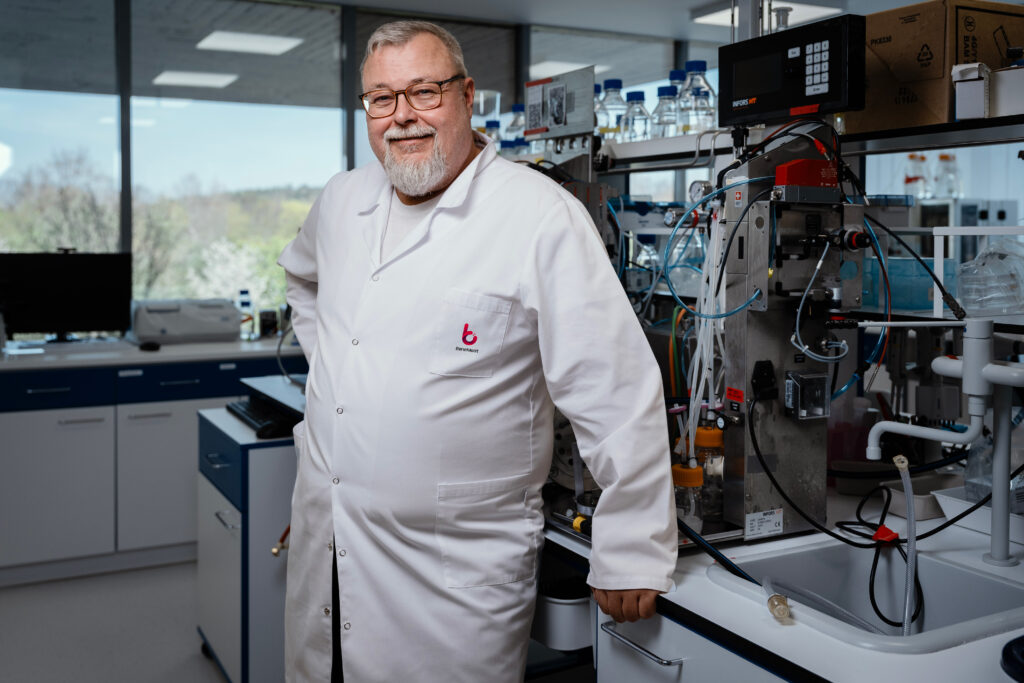
Czech firm BeneMeat, which makes cultivated meat for both pets and humans, is now urging British Prime Minister Andy Burnham to ensure that any SPS agreement preserves the UK’s ability to assess and approve novel food products based on its own scientific evidence and timeline.
“Uncertainty surrounding Britain’s future approach to biotechnology is already causing companies such as ours to put investment, partnerships and commercial plans on hold,” its letter reads.
“The agreement has not yet been concluded, but the uncertainty surrounding Britain’s future regulatory approach is already affecting business decisions,” says BeneMeat CEO Roman Kříž.
“Companies need to know whether Britain intends to remain a place where emerging food biotechnologies can be developed and commercialised. Without that clarity, investment, partnerships and expertise will move elsewhere,” he adds.
Investment and manufacturing plans ‘on hold’ as BeneMeat awaits clarity
After officially exiting the EU in 2020, the UK’s Food Standards Agency (FSA) continued to follow the bloc’s novel food regulations for several years, before overhauling its framework to fast-track approval timelines for companies.
In 2025, the regulator launched a two-year cultivated meat sandbox programme, through which it’s working with businesses and researchers to design standards and guidance for new products. Over the last year, this has resulted in the publication of several guidance documents aimed at providing companies with more clarity on applications.
But the SPS agreement could sidetrack these efforts, with the FSA reportedly warning around 600 approval holders and businesses that the deal could render UK authorisations void and require them to follow the EU’s process instead, which is notoriously complex and long (it can take up to six years).
Companies that have developed prototypes and controlled R&D activities would be among the first to experience the uncertainty. That includes BeneMeat, which has invested in the UK, built relationships with local businesses, prepared controlled tastings, entered talks about manufacturing in the country, and filed a regulatory dossier to sell its cultivated meat for human food.
“These were not speculative plans for a distant future. They were concrete steps towards bringing investment, technology, manufacturing expertise and new products to the UK,” it states in its letter.
“Today, however, further progress across all these areas is on hold as we and our prospective partners wait for clarity on whether Britain will retain the ability to develop its own regulatory pathway for biotechnologies.”
BeneMeat, which debuted cultivated dog food in the EU this year, says its concerns extend “far beyond” a single company or product category, framing cultivated meat as a practical gateway to “much broader capabilities in cell culture, bioprocessing, media development, automation and large-scale biological manufacturing”.
“The same knowledge, infrastructure, equipment and skilled workforce can contribute to new drug discovery and development, medical research, tissue engineering, regenerative medicine, advanced materials, agriculture and industrial biomanufacturing,” it outlines. “Countries that build these capabilities through food production will strengthen their knowledge and industrial capacity across the wider bioeconomy.”
Proposed SPS deal would contradict Brexit goals
So far, only London-based Meatly has been cleared to sell cultivated meat in the UK, and that’s for pet food. Aleph Farms, Parima‘s Gourmey and Vital Meat, Ivy Farm Technologies, and Mosa Meat are among those that have applied for human food approval.
In March, the FSA published a report on innovative food technologies most likely to enter the UK market over the next decade. According to the Times, it’s hoping to complete evaluations of two cultivated meat products by the time the sandbox ends, although the regulator hasn’t committed to a fixed timeline. Green Queen understands that Gourmey (duck) and Vital Meat (chicken) are the most advanced in the regulatory process.
But with the SPS deal looming, BeneMeat says the uncertainty means delayed product launches and investment for manufacturers and retailers, and creates a risk of the UK losing companies, expertise and industrial opportunities that its previous commitments to innovation have helped attract.
“One of the central promises of Brexit was that Britain would regain control over its own rules and decisions and be able to move faster where its interests and technological progress justified it,” it explains.
“Yet in biotechnology, particularly if a carve-out for novel foods cannot be negotiated, the proposed SPS agreement risks producing the opposite outcome: rules determined elsewhere, slower access to innovation, and ultimately less choice for British consumers.”
The company adds that this isn’t an argument to reopen the Brexit debate, but rather for preserving the country’s decision-making autonomy in areas where scientific and industrial progress is moving fastest. If the UK gives up this individual ability, it could quickly lose its biotech advantage.
“Cooperation with the EU should make trade easier; it should not prevent Britain from deciding for itself how safe innovation can be developed and commercialised,” says Kříž.
The FSA has indicated that it’s closely monitoring the progress of the trade deal and plans to update businesses as regulatory implications become clearer. “The sandbox programme runs until February 2027, and we’re focused on delivering its objectives of answering regulatory questions and providing clarity to the cell-cultivated product industry,” Joshua Ravenhill, head of the FSA sandbox, told Green Queen in July.
“We’ll consider next steps in due course. We are proud of what the programme has delivered for food safety and the industry, and will consider how its outcomes have a legacy beyond February.”