Belgian food tech firm Maash has secured €12.15M ($14.2M) in funding to launch its new demo facility and prepare for industrial production of its mycoprotein ingredient for blended meat and pet food.
Maash, a Brussels-based scale-up company producing mycoprotein for the food industry, has raised €12.15M ($14.2M) to expand its manufacturing capacity.
The funding round combines €5.85M ($6.8M) in equity investments from Ambra Capital, InvestPro, Bpifrance Amorçage Industriel, Nordzucker and Tereos with a €4.3M ($5M) grant from Bpifrance’s Première Usine programme and a €2M ($2.3M) loan from the French state-owned investment bank’s Prêt d’Amorçage Investissement scheme.
The capital will support the launch of Maash’s 12 sq m demonstration plant in Carling-Saint-Avold, France, and accelerate its efforts to reach industrial-scale production for its mycoprotein ingredient, LoCylia.
Coinciding with the financing is the appointment of former DSM, Avril Group and Enough exec Samah Garringer as the company’s new CEO. “I am thrilled to join Maash at this pivotal moment,” she said.
“Together with the team and our new partners, we will deliver the pre-industrial project, accelerate commercial rollout and build a resilient, cost-competitive platform to bring nutritious, sustainable mycoprotein to market at scale.”
LoCylia mycoprotein geared towards blended meat and pet food markets
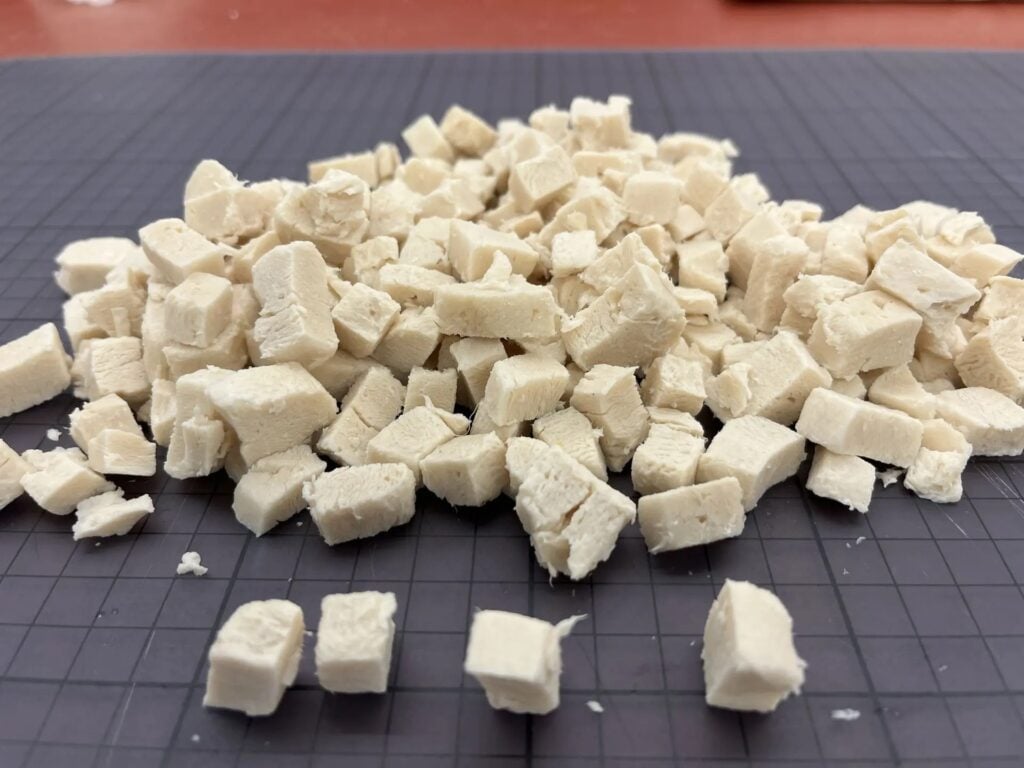
Founded in 2021 by Frédéric van Gansberghe and Gaspard Gilbert, Maash leverages submerged fermentation to make its mycoprotein. The process involves an EU-approved strain of filamentous fungi in a liquid medium.
The company uses simple fermentation steps to convert the active fungal biomass into a high-quality protein, which is treated for safety and supplied to manufacturers for a range of applications.
Compared to beef, the fibre-rich LoCylia ingredient uses 90% less water and 99% less land, while generating 95% fewer greenhouse gas emissions and eliminating methane.
Being a mycoprotein, LoCylia is a complete protein with all essential amino acids and a PDCAAS score of 1.0. The mycelium fermentation helps the body break down protein faster, and the metabolism of the fungi boosts satiety, which could be useful for products targeting GLP-1 users.
Functionally, it can be adapted to a wide range of textures and contains none of the top allergens that represent 90% of food-related allergies.
The ingredient is sold in two forms. LoCylia FD is designed to be incorporated into blended meat formulations that combine animal and alternative proteins. This ensures superior digestibility, weight control, and protein intake, and can help save the protein equivalent of up to 120 cows a day.
LoCylia PF, meanwhile, is built for use in pet food formulations, as an alternative to fish meal, soy, legumes and beans that can sometimes lack the comprehensive amino acid profile needed for optimal digestibility and growth. The ingredient ensures pets can absorb essential nutrients, posing as a health-promoting solution that outperforms “lower-quality” protein options.
Maash bets on industrial discipline and low costs to lead Europe’s mycoprotein market
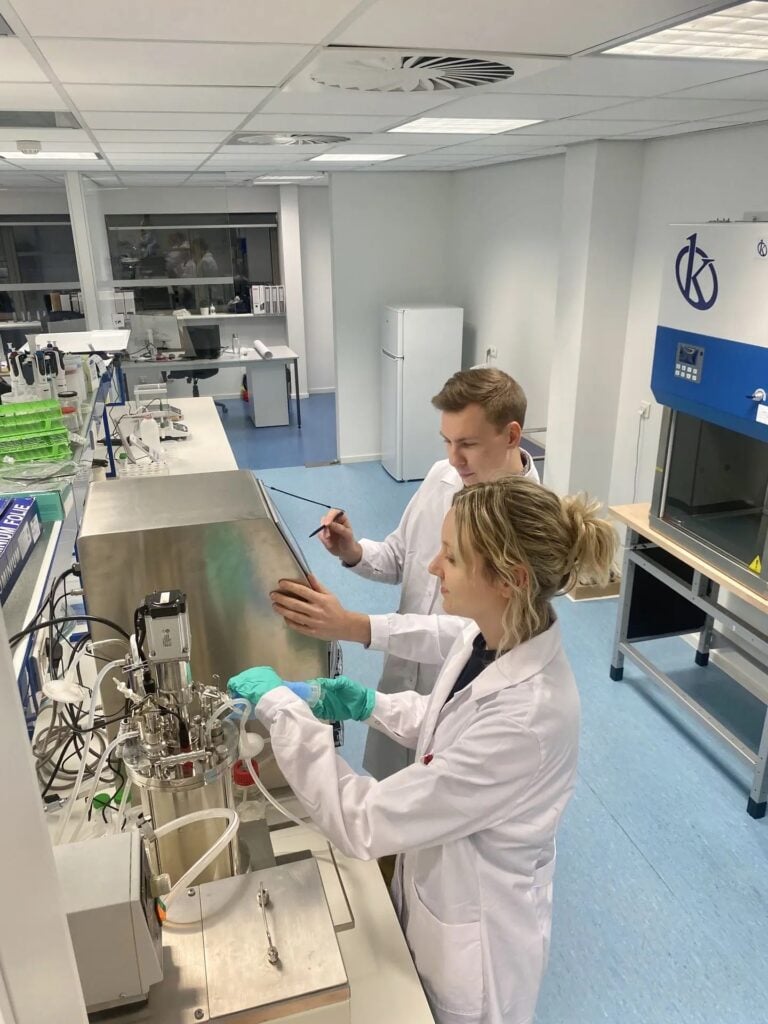
Maash’s latest fundraise comes two years after it acquired the Carling-Saint-Avold from Metabolic Explorer (Metex), and it’s now moving from project development to execution. “Acquiring the former Metex site gave us an industrial base. Over the past two years, we have worked to turn that base into a credible and executable project,” said Gilbert, the company’s managing director, COO, and acting CFO.
“This financing marks an important step in that journey: we now have the partners, resources and leadership in place to move from preparation to industrial deployment. The appointment of Samah Garringer as CEO reflects the same ambition, giving Maash the industrial, human and commercial capabilities it needs to scale,” he said.
The Belgian firm said it plans to stand out in a “more selective market for alternative proteins” through industrial discipline, cost competitiveness and close alignment with consumer needs, with an ambition to become a European leader in mycoprotein.
It aims to combine its founders’ fermentation expertise with a pragmatic approach centred on competitive capital investment and production costs. Beyond the cash, the new investors bring industrial know-how, market access and strategic support as Maash moves towards commercial scale.
Garringer’s appointment reflects the company’s priority to deliver the pre-industrial project and build commercial momentum. Van Gansberghe called the new CEO a “major asset” for realising the company’s ambitions: “Our industrial fermentation experience, combined with the arrival of our new partners, will allow us to move quickly through our technical and commercial scale-up.”
Maash is among several mycoprotein companies that have attracted investor interest this year in an otherwise dire funding landscape for alternative proteins. Swedish startup Millow raised €2M ($2.3M) earlier this month to commercialise its low-water, minimally processed oat and mycelium protein.
In June, Dutch firm The Protein Brewery added €18M ($20.5M) to its Series B round to scale up production and support the European launch of its Fermotein mycoprotein. A month earlier, UK startup Adamo Foods won a €10M ($11.7M) Horizon Europe grant to use industry sidestreams to launch its whole-cut mycelium meat, and Germany’s Pacifico Biolabs raised €7M ($8.1M) to bring its clean-label mycelium chicken to market.