
The World Economic Forum has namechecked alternative proteins and cellular agriculture as solutions that must be incorporated into food for long space missions.
As missions to the Moon and Mars evolve from symbolic milestones to operational programmes, there’s a need to rethink how we feed astronauts in space.
For decades, space food has relied on pre-packaged meals transported from Earth; this system becomes restrictive as the distance and duration of space missions increase.
“Resupply is costly, logistically fragile and constrained by launch reliability. At the same time, shelf-stable food systems degrade in nutritional quality, variety and sensory appeal,” experts working with the World Economic Forum (WEF) wrote in a blog post this month.
Mishaal N Ashemimry, managing director of the Centre for Space Futures (co-founded by WEF), and Deep Space Food Consortium founders Annie Shelton and Tor Blomqvist have called for a shift in how food is produced for space missions, arguing that it should be treated as a “system constraint”.
Part of their solution is to incorporate new technologies into the space food system, including cellular agriculture, alternative proteins, and 3D-printed foods.
A ‘two-way innovation system’ between Earth and space
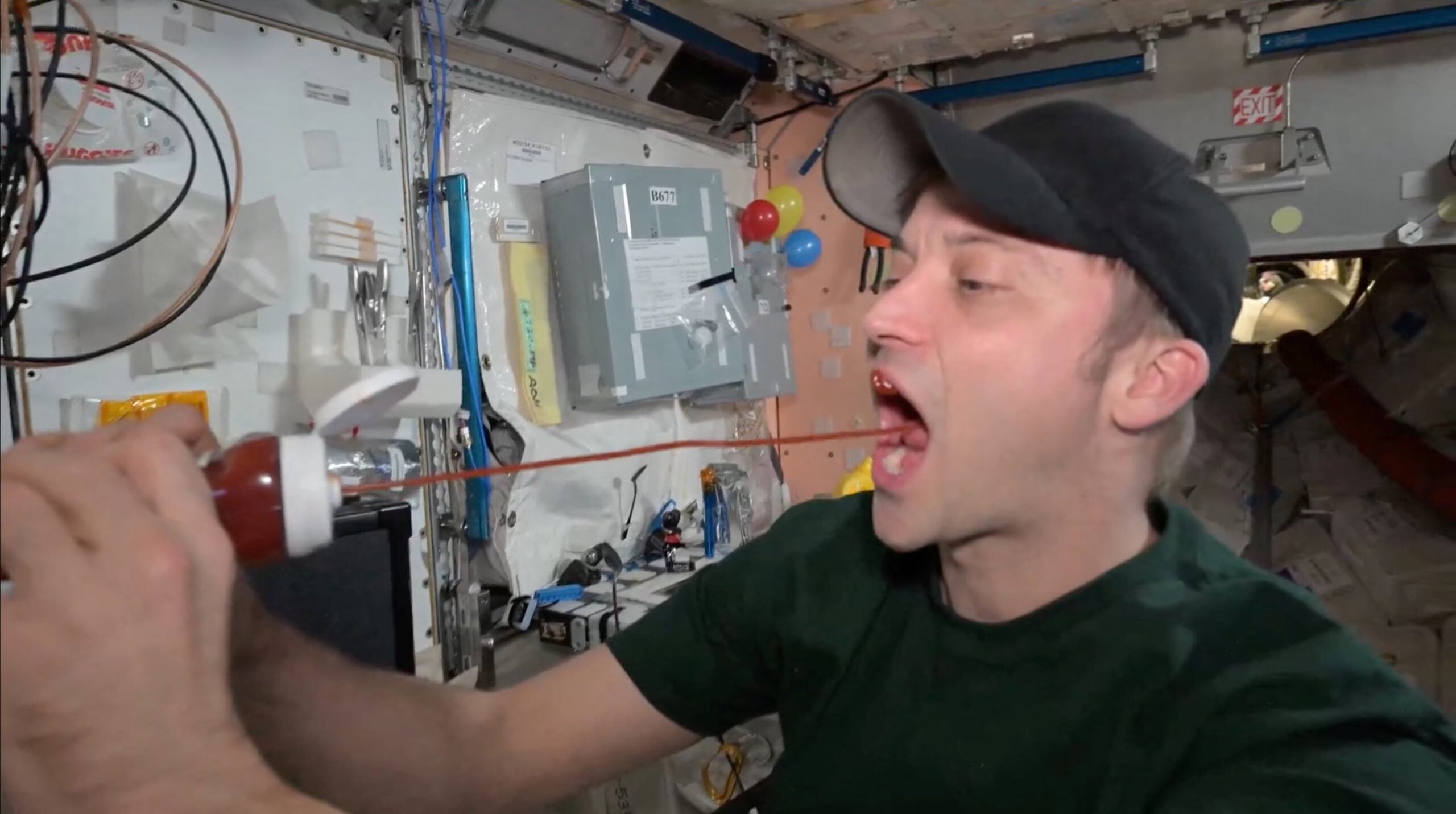
The authors stated that food directly affects crew health, cognitive performance, psychological stability and social cohesion – all primary operational factors in isolated and extreme environments.
So the challenge for sustained presence on the Moon and future Mars missions is to develop integrated food systems that are nutritionally complete over long durations, psychologically acceptable, operationally reliable, and scalable across mission architectures. Locally produced food and selective resupply thus become necessary evolutions.
While some space-based research is starting to demonstrate terrestrial relevance, food production and distribution operate as complex socio-technical ecosystems, shaped not just by biology and engineering, but also “by infrastructure, regulation, markets, cultural practices and operational realities”.
Much of that expertise lies outside the space sector, so its relationship with our planet should be framed as a two-way innovation system in which space provides extreme test conditions, and Earth brings in the knowledge needed to scale, regulate and implement solutions.
The authors on the WEF website argued that key enabling technologies are already advancing, they simply haven’t been integrated into viable systems. These include cellular agriculture and alternative protein production (such as cultivated meat) adapted to space conditions, as well as advanced food preservation and on-demand manufacturing via 3D printers and bioreactors.
Controlled-environment agriculture under microgravity or partial gravity, and closed-loop life systems that incorporate food production, water recycling and waste processing are important solutions.
Cross-sector collaboration and regulatory advancements are paramount
Addressing this food system gap would require coordination between agriculture, food processing, biotechnology, and regulatory systems, who must partner to mould research agendas, define use cases, and build implementation pathways.
Needless to say, policy will play a central role, since space research companies face many regulatory hurdles today, from a lack of clear data validation frameworks and limited early engagement with regulators to an absence of space-specific manufacturing standards and fragmented interfaces between health, food, and space regulatory bodies.
“For space food systems to evolve into an operational capability, it will require deliberate coordination and must remain confined to fragmented experiments with limited real-world impact,” the authors said. “The strategic value lies in treating space as a high-constraint development environment, where solutions are designed for reliability, integration and deployment from the outset.”
This means moving beyond isolated research efforts and towards joint agendas between space and terrestrial sectors, clear pathways from tech development to deployment, regulatory frameworks that enable commercialisation, and economic models that align incentives across stakeholders. “The opportunity is not only to support human life beyond Earth but also to strengthen food systems on Earth,” they said.
The idea of alternative proteins in space goes back decades – NASA has been conducting experiments on cultivated meat since 2001. The European Space Agency has previously funded two projects to explore the viability of producing these proteins beyond the exosphere.
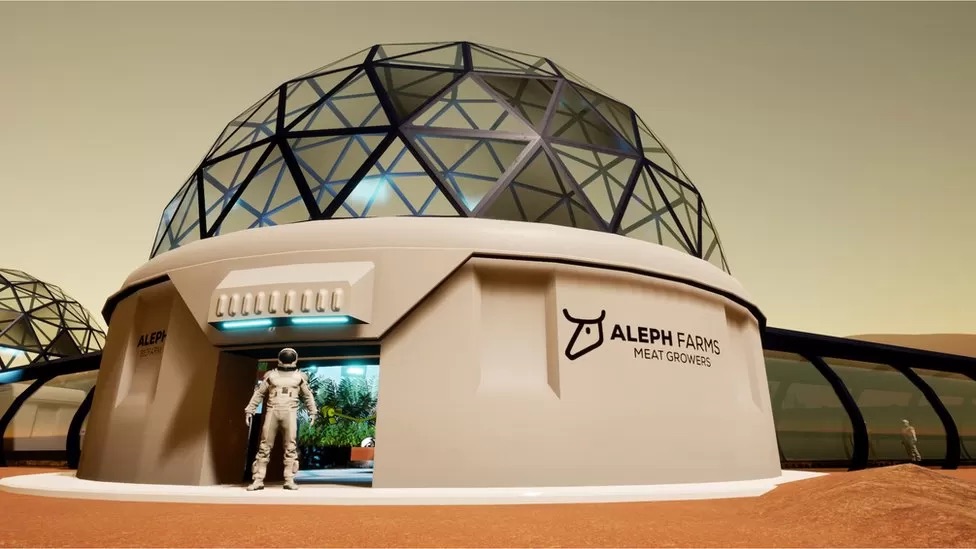
SpaceX has conducted experiments on the effects of microgravity on muscle tissue growth, using beef cells harvested by the Israeli startup Aleph Farms. The latter has even grown cell-cultured beef on the International Space Station, nearly 400km away from any natural resources.
And last year, scientists from the University of Edinburgh created a pig fat cell line that promises efficient, scalable and consistent cultivated meat production, with the potential to feed astronauts in space.