
Tufts University is establishing a new $4.6M Innovation Hub for Food and Materials to help companies test and scale novel ingredients, sustainable foods, and biomaterials.
Building on its sustainability leadership, US-based Tufts University has announced a new R&D facility to accelerate the development of climate-friendly foods and materials.
It’s investing $4.6M in the new Innovation Hub for Food and Materials at its Medford campus to advance shared research infrastructure and capabilities for product development.
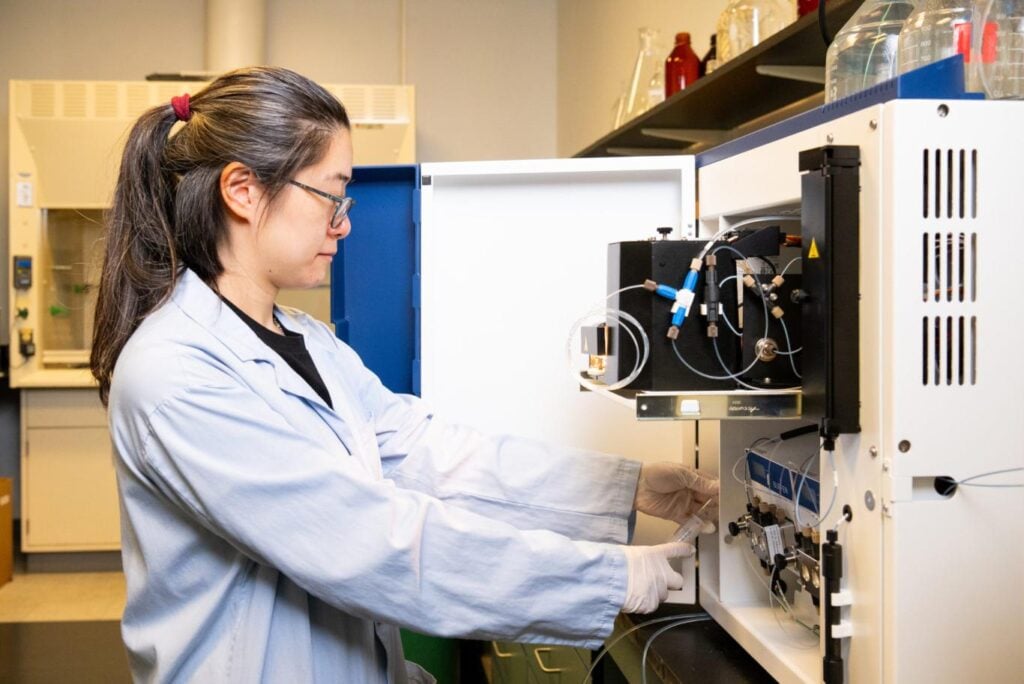
The 17,000 sq ft centre, set to open in the autumn, will offer participants “hard-to-find infrastructure” of emerging food technologies and future foods, from prototyping and characterisation to culinary and early-stage consumer testing.
“The Innovation Hub for Food and Materials reflects Tufts’ long-standing commitment to advancing technology in food, health, and materials science,” said Bernard Arulanandam, vice provost for research at Tufts University.
“Tufts’ capabilities in nutrition, biomedical sciences, and engineering create a collaborative environment where Hub participants have one resource to tap into a broad range of expertise.”
Tufts’s innovation hub to offer ‘tech sandbox’ to advance R&D
The innovation hub will serve startups, established companies, entrepreneurs, academic researchers, and non-profits looking to speed up the development of new food technologies, biomaterials, and other innovative products. It will support work in areas including novel ingredients, materials processing to enhance texture and functionality, and pilot-scale manufacturing.
A fully equipped test kitchen will enable customers to test how foods may perform in real-world settings and how to boost consumer acceptance for new and established products. This is complemented by a sensory analytics suite, which will help integrate both chef and consumer testing across the product development life-cycle.
The hub has an extensive bank of animal and insect cells, and the world’s most extensive plant cell repository (with more than 2,000 species). This open-access bioasset was partly built on a partnership between the Tufts University Center for Cellular Agriculture (TUCCA) and Good Food Institute, which are salvaging the IP of defunct cultivated meat firms, including SciFi Foods.
Its BioLabs-operated incubator houses 46 lab benches and shared co-working amenities, such as dedicated desks, private offices, and meeting rooms, designed to support early-stage life sciences and biotech companies.
Moreover, it will enable collaboration with TUCCA, which is focused on exploring alternative proteins, novel materials, and other products from cells, alongside plant-based biomaterials and hybrid plant-animal cell systems.
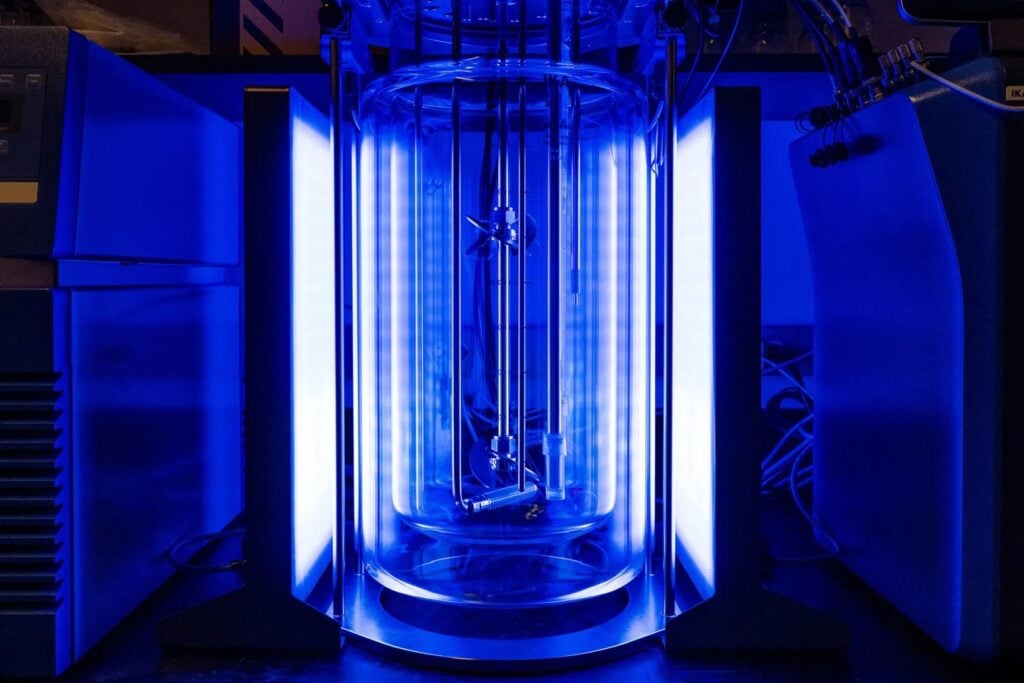
Tufts’s centre will offer a “technology sandbox” for businesses that make components of the R&D process that other companies need to operate – think bioreactors, extrusion technologies, and tools for materials characterisation. This will enable clients to test and improve these components in an integrated setting.
‘Shared infrastructure’ crucial for moving ideas forward
The investment in the innovation hub, alongside Massachusetts state and philanthropic support, will strengthen Tufts’s ability to advance public-benefit technologies and stimulate local and regional economies with innovations that open up new businesses and jobs.
The facility also provides resources for biomaterials development for specialised applications like medicine, textiles and agriculture, offering expertise in their design, characterisation, and application, which include both sustainable materials for the environment and living materials for medical applications.
“We’ve consistently heard from both researchers and industry that there is a need for shared infrastructure to move ideas forward,” said David Kaplan, a cellular agriculture expert and professor of engineering at Tufts.
“The Innovation Hub for Food and Materials is designed to meet the needs of academics looking to commercialise a new innovation, small companies that may not have the resources to test manufacturing capabilities, larger companies focused on production that would like to explore new products or technologies, or anyone that might be missing even a small part of the process to bring a product from idea to market.”
This year, Tufts will also open the Foodtech Engineering for Alternative Sustainable Technologies hub, which is partly backed by a $2.1M grant from MassTech, Massachusetts’s public innovation agency. This will offer advanced capabilities in cell culture, fermentation, bioprocessing, food and material formulation, and scale-up, and is a feature of the new innovation hub.