
US companies NNB Nutrition and Axiom Foods have debuted PeptiClear, a line of premium hydrolysed plant proteins, to help manufacturers meet consumer demand amid the global whey shortage.
With food producers struggling to whet consumers’ interminable appetite for protein through whey, the market for alternatives that function the same way has never been hotter.
It’s what NNB Nutrition and Axiom Foods’s new innovation is looking to capitalise on. The firms have released PeptiClear, a range of “advanced” plant-based proteins that can provide manufacturers with an equally functional alternative to whey without relying on the flimsy dairy supply chain.
“NNB believes the future of protein isn’t about replacing whey, it’s about expanding the world’s ability to deliver high-quality protein across every food format,” said Dustin Elliott, chief brand officer at NNB.
“As consumer demand continues to outpace traditional dairy supply, the industry needs innovative solutions that combine functionality, scalability, and performance,” he added.
PeptiClear paired with new peptide to deliver scalable plant proteins

Conventional plant proteins can introduce undesirable flavours, grittiness, or opacity. NNB and Axiom Foods are solving this through PeptiClear’s hydrolysed, clear plant proteins.
These are designed to deliver a “significantly more neutral” taste profile, improved functionality, and exceptional solubility. The resulting ingredients are highly concentrated, transparent proteins that can perform across applications where standard plant-based proteins have historically struggled.
These include functional beverages, ready-to-drink products, ice cream and frozen desserts, condiments and dressings, sauces, confectionery and baked goods, high-protein snacks, and everyday functional foods.
To further advance PeptiClear’s performance, NNB has introduced DL-185, a dietary di-leucine peptide that can enhance the anabolic potential of protein formulations. It’s composed of two leucine molecules naturally linked together in peptide form, and can be incorporated into both dietary supplements and food products similarly to leucine.
Human clinical research has shown that DL-185 demonstrates around 60% higher stimulation of muscle protein synthesis compared to leucine, and supplementation with the ingredient produces greater improvements in strength than equivalent leucine supplementation in resistance-trained individuals.
When paired with PeptiClear’s “advanced” proteins, DL-185 represents a novel approach to helping close the performance gap associated with plant protein formulations. Collectively, they provide brands with a compelling pathway to develop highly functional and scalable next-gen proteins with fewer supply constraints.
Alternative protein firms ramp up solutions to whey shortage
NNB also sells plant proteins as a base for milk alternatives. This latest launch builds on its existing partnership with Axiom Foods, announced last month, via which they’re helping food brands across Asia and North America formulate the next generation of Protein+ functional plant-based nutrition products.
The companies said their technologies offer manufacturers greater flexibility and can help diversify the global protein supply beyond the limitations of whey production.
Contracts for whey have been sold well into 2026, and some supplies are sold out for the rest of the year. Whey prices broke records in 2025, and have kept on surging since. Over the last two years, the cost of whey protein concentrate has risen by 108%, and whey protein isolate has nearly doubled in price.
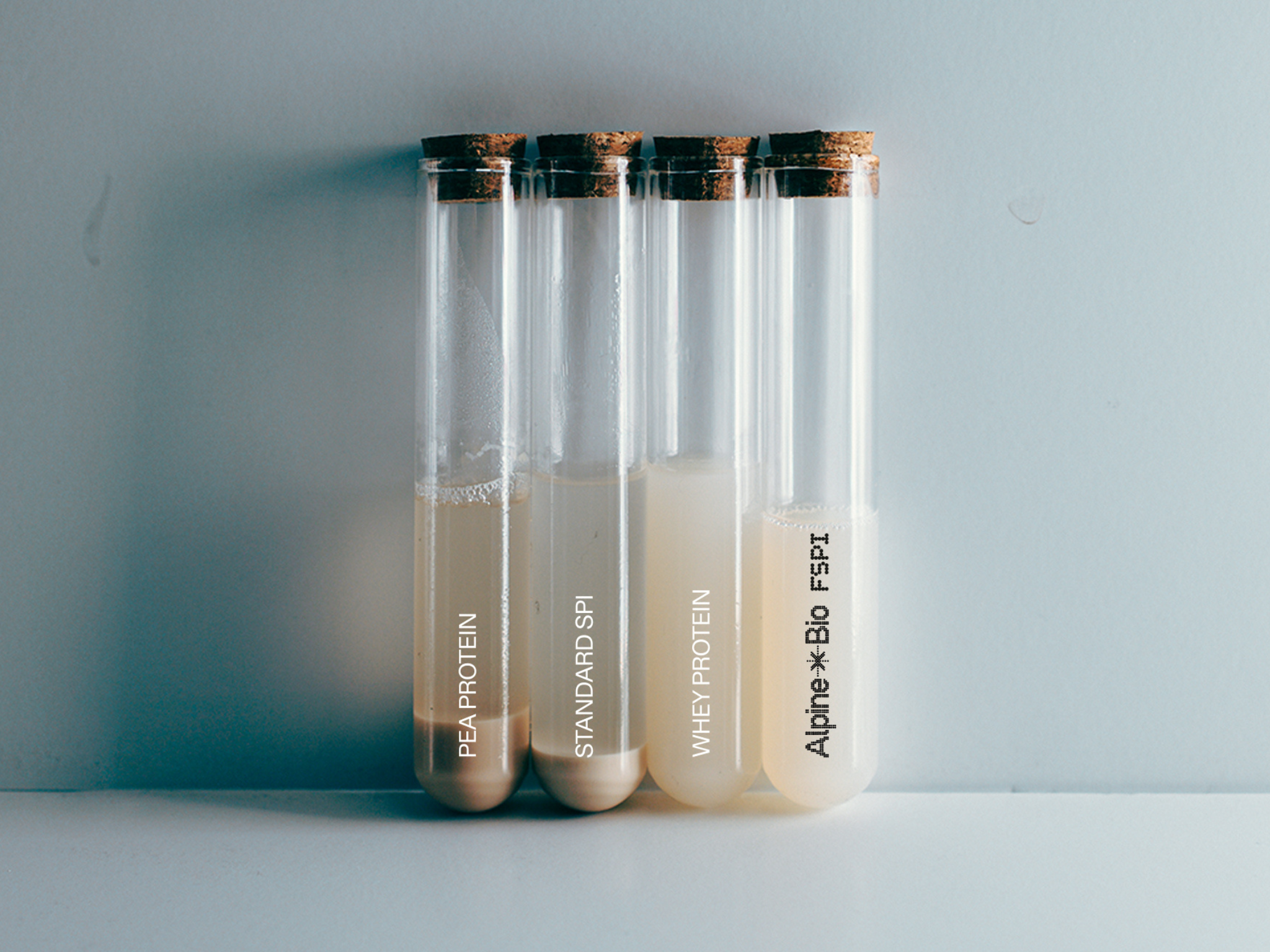
Whey has historically been a co-product of the cheese industry. “That means supply is structurally capped by cheese production, dairy capacity, and ultimately how many cows exist. You can’t surge it,” Magi Richani, founder and CEO of Californian alternative protein startup Alpine Bio, told Green Queen in June.
This year, nearly three in five (57%) Americans are prioritising protein, according to one poll. Another shows that 65% of Gen Zers and millennials are trying to consume more protein, rising to 73% among GLP-1 users, who witness a 25-40% decrease in muscle mass over eight to 16 months (several times more than non-medicated weight loss approaches and age-related muscle loss).
According to Innova Market Insights, the share of people who have used weight-loss drugs like Ozempic has grown from 10% in 2024 to 18% in 2025, and 40% of them report eating more protein.
Companies have been coming up with innovative solutions to solve the whey crisis. One firm is leveraging microbes to produce a postbiotic cultured protein that matches whey’s muscle-building abilities, and another has developed chickpea varieties with higher native protein. Some are producing recombinant whey proteins using precision fermentation, and some are leveraging leaves to produce Rubisco protein.