
The average adult in the EU consumes between 80g and 85g of protein per day, more than most population groups require, and animal-based products account for roughly 60% of that intake, according to a new report from the European Environment Agency (EEA). The report, “Protein diversification: strategic risks and opportunities for sustainable food systems,” argues there may be scope to rebalance Europe’s protein mix while still meeting nutritional needs.
Livestock’s environmental footprint
Livestock production accounts for more than 65% of the EU’s agricultural greenhouse gas emissions, the EEA states, while grazing and feed production together occupy over half of the bloc’s agricultural land. Nitrogen linked to livestock and fertiliser use contributes to water pollution and eutrophication, and agriculture was responsible for around 94% of the EU’s ammonia emissions in 2023, a major source of fine particulate air pollution.
The EU imports nearly two-thirds of the high-protein feed used in livestock production, concentrated among a small number of suppliers, mainly Brazil, Argentina, and the United States. Soybean imports alone amount to around 30 million tonnes a year, the vast majority destined for animal feed rather than direct human consumption, a pattern of demand the EEA links to deforestation and biodiversity loss in parts of South America. Recent geopolitical tensions have repeatedly pushed up energy and fertiliser prices, exposing further vulnerabilities in these supply chains.
A portfolio of pathways, not a single fix
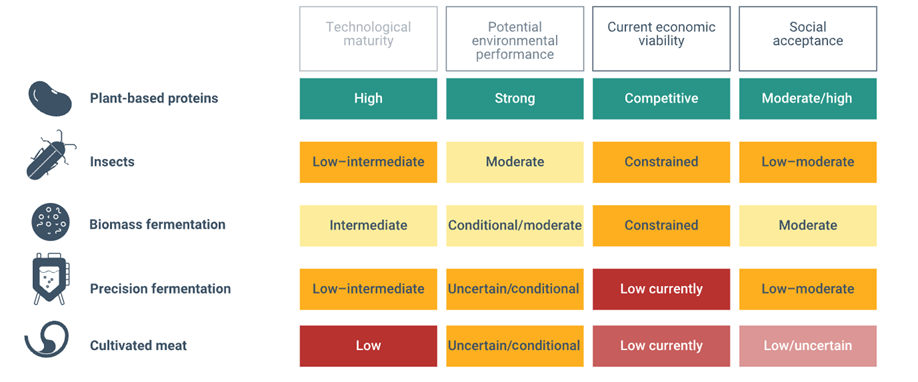
The EEA frames protein diversification as a portfolio of complementary pathways rather than a single solution. Alongside established plant-based foods such as pulses, legumes, and meat and dairy alternatives, the report assesses emerging options including insects, biomass fermentation, precision fermentation, and cultivated meat.
Plant-based proteins currently offer the most immediate environmental benefit, the report finds, citing established production systems, mature markets, and consumer familiarity. Emerging pathways may offer advantages in specific applications, such as feed diversification and reduced land dependence, but the EEA notes that many still face hurdles around production costs, infrastructure, regulatory complexity, and consumer acceptance.
The economic case
Global consumption of alternative proteins could increase more than sevenfold by 2035, the report states, while the plant-based protein market alone is projected to grow from around US$24 billion in 2025 to US$35 billion by 2030, positioning Europe to compete in plant-based foods, fermentation-derived proteins, and sustainable feed ingredients. Separately, modelling by the European Commission’s Joint Research Centre, cited in the report, suggests a coordinated shift toward more diversified protein sources could cut EU agricultural greenhouse gas emissions by around 5% by 2035 while reducing reliance on imported feed.
The report points to a forthcoming EU protein strategy, signalled in the EU Vision for Agriculture and Food, as the mechanism for delivering this: safeguarding environmental outcomes, strengthening resilience by reducing import dependence, and supporting a transition that protects affordability and rural livelihoods.