
Spanish-American chef José Andrés, one of the food industry’s most outspoken advocates for climate action, has partnered with Wildtype to serve its cultivated salmon at Barmini in Washington, DC.
While a few states are spending months trying to restrict consumer choice by banning cultivated meat, some Michelin-starred chefs are embracing these proteins.
Barmini, the flagship Washington, DC cocktail lounge by José Andrés, is the latest. The Spanish-American chef – a winner of some of the most coveted culinary and humanitarian awards – will begin serving cultivated salmon at the outpost starting June 3.
The launch stems from a partnership with Californian food tech startup Wildtype, which received approval from the US Food and Drug Administration to sell its cultured salmon nationwide last year.
“This is a big one for me, personally,” Wildtype co-founder and CEO Justin Kolbeck said in a LinkedIn post. “DC was home between my Foreign Service assignments, and nobody on the planet embodies the spirit of fighting for food security more than chef José Andrés.”
José Andrés’s legacy in food security and sustainability
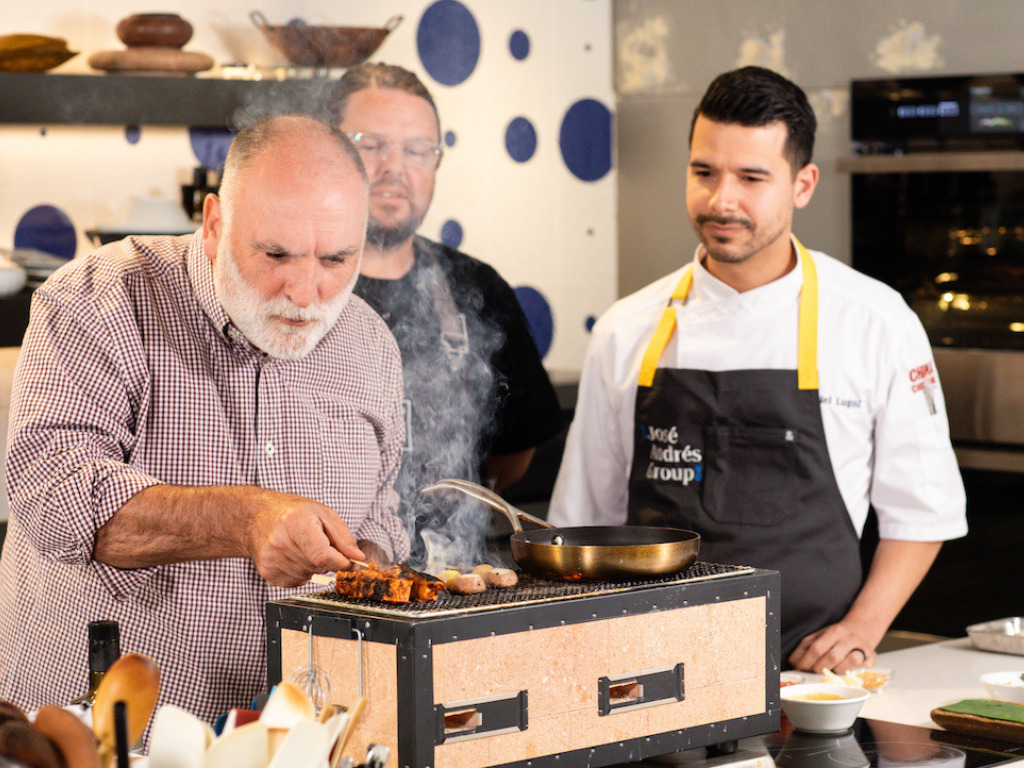
Located right next to Minibar, Andrés’s two-Michelin-starred eatery, Barmini combines classic cocktails with modern concoctions, offering more than 100 spirits, alongside experiential flights and innovative snacks.
It will now serve Wildtype’s cultivated salmon, marking the product’s debut in Washington, DC. However, it isn’t the first time Andrés has embraced cultivated meat.
The celebrity chef joined the board of directors of Eat Just, the company behind the Good Meat brand of cultivated chicken, in 2021. And two years later, he began serving the product at one of his other Washington, DC eateries, China Chilcano.
It was only the second time cultivated meat had been offered to the public in the US. The chicken was on the menu for a few months, and reviews showed the dinners went “extremely well”, Eat Just told Green Queen in 2024.
Andrés is one of the industry’s most influential champions of sustainable food in the face of the climate crisis and food insecurity. He has won a James Beard Award, a Presidential Medal of Freedom, and served as the co-chair of President Joe Biden’s Council on Sports, Fitness, and Nutrition.
He is also the founder of World Central Kitchen, a leading humanitarian charity that provides hot meals in areas affected by climate change and natural disasters. In 2021, the non-profit kicked off a $1B disaster fund to help vulnerable communities mitigate and adapt to the impact of the climate crisis, using $100M in donations from Jeff Bezos.
And in 2023, the chef teamed up with the George Washington University to establish the Global Food Institute, which works along policy, innovation, and the humanities to create and improve food policies, incubate innovative technologies, and lead critical conversations about the impact of food on humanity.
Wildtype’s salmon makes its way across US amid legislative challenges

Backed by the likes of Robert Downey Jr., Leonardo DiCaprio, and Bezos, Wildtype obtains living cells from Pacific salmon that are adapted to suspension culture. They are grown in tanks similar to those used to make beer or kombucha, under temperature and pH conditions that wild fish thrive in, alongside a nutrient mix containing proteins, sugar, fat, salt, and minerals such as iron and zinc.
The cells are harvested using bowl centrifugation, washed three times with a water and sugar solution, rapidly cooled using blast chillers, and stored frozen. They’re mixed with certain plant-based ingredients to replicate the structure and texture of conventional salmon.
Barmini is the latest establishment to add Wildtype salmon to its menu. Ahead of its Washington, DC rollout next week, the product has appeared in restaurants in 7 states since its June 2025 launch.
These include Kann (Oregon), Otoko (Texas), Robin (California), The Walrus and the Carpenter (Washington), Hai Sí (Colorado), Fulgurances Laundromat (for one night only in New York), and Kingfisher (Arizona).
Wildtype’s presence at Hai Sí and Otoko – both owned by Yoshi Okai – was short-lived, with the former closing and the latter removing salmon from the menu in the wake of Texas’s ban on cultivated meat.
The state was the seventh to outlaw the sale of cultivated meat, and has since been hit with a lawsuit by Wildtype and fellow Californian cultivated meat pioneer Upside Foods.
“Following our launch in July, we had planned to build on our momentum in Austin by making Wildtype available to a number of seafood restaurants across Texas, including in Dallas and Houston, but this bill closed those markets to us,” Kolbeck told Green Queen last year.
Aside from Wildtype, Mission Barns received FDA and USDA approval last year, enabling it to sell its cultivated pork fat. It launched meatballs and bacon mixed with plant-based ingredients at Bay Area restaurant Fiorella Sunset, followed by a one-time sale of its meatballs at Berkeley Bowl West.