
Each year, around 63 million pounds of sweet potatoes rot in North Carolina fields, costing the state’s farmers an estimated $13.2 million. A university startup now has nearly $1.82 million in grant funding to convert that agricultural waste into a commercial plant-based dairy alternative.
“The sweet potato industry is desperately in need of innovation”
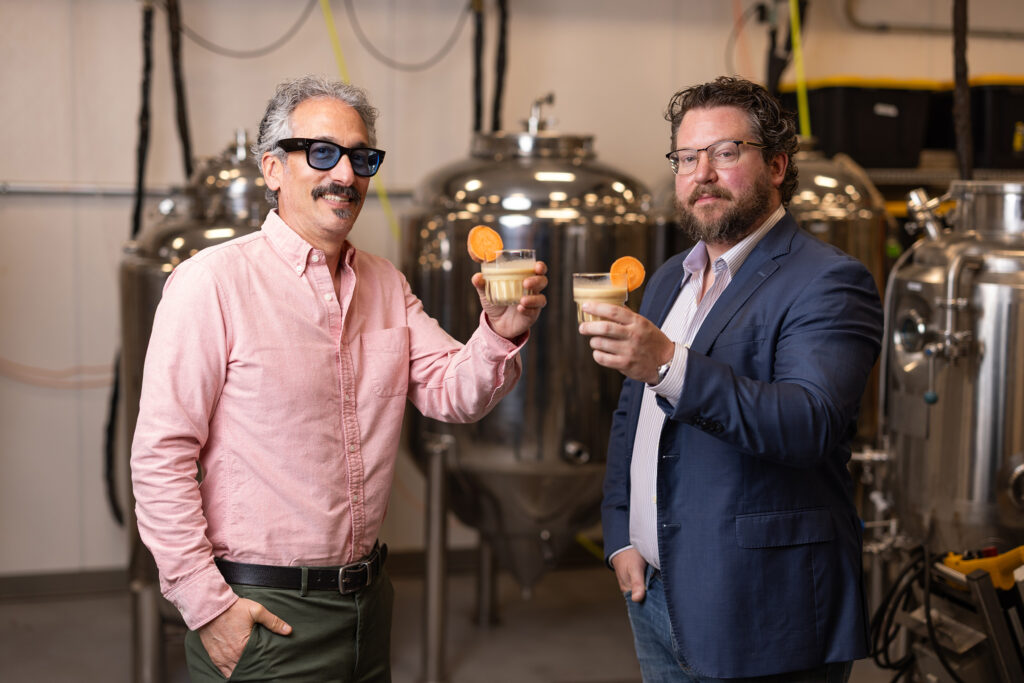
Rootsii, co-founded by Appalachian State University (App State) professor Dr. Brett Taubman and Fermentation Sciences Lab manager Daniel Parker, has received a preliminary grant from NCInnovation, a North Carolina nonprofit that bridges the gap between university research and commercial viability at the state’s public institutions. The figure is subject to finalization upon contract signing.
North Carolina grows around 60% of US sweet potatoes, yet up to 40% of each harvest is lost before reaching retail. Taubman’s team has developed a patent-pending enzymatic process that breaks down the root’s long-chain starches into a smooth, naturally sweet liquid that requires no added sugars. The current recipe uses four ingredients: sweet potatoes, chia seeds, a yeast-derived protein, and coconut oil, with the latter slated for eventual replacement with muscadine grape seed oil, sourced from North Carolina’s wine industry as a waste stream.
A fermented product range beyond milk
While the milk is the lead product, Rootsii’s planned range extends to creamers, ice cream, yogurt, sweet potato miso, and fermented hot sauce. Production will be split across two sites: bulk processing in eastern North Carolina close to the growing regions, and a facility in Boone, where App State is based. The project has been in development since June 2024 and is targeting market readiness within two years.
“The sweet potato industry is desperately in need of innovation, and we have an innovation that should seriously help to promote it,” said Taubman.
The NCInnovation grant will fund four undergraduate researchers for 1,800 hours annually across the two-year period, covering consumer testing, shelf life validation, and production scaling. Supporting partners include the North Carolina Sweetpotato Commission, Caldwell Community College’s Culinary Arts program, and the High Country Impact Fund. Talks with distributors and beverage companies are also underway.
NCInnovation CEO Michelle Bolas said: “North Carolina is the country’s top sweetpotato producer, and Dr. Taubman’s work could open an entire new market for those farmers while reducing agricultural waste.”