
German food tech firm Infinite Roots has strengthened its mycelium meat portfolio with the acquisition of Bosque Foods, which had filed for insolvency due to regulatory challenges in 2024.
Mycelium meat’s star is rising rapidly in Europe, following recent funding successes and product launches for a spate of startups. Now, two mycoprotein players from Germany are joining forces to accelerate the sector’s growth in the region.
Hamburg-based Infinite Roots has snapped up Bosque Foods for an undisclosed sum, nearly two years after the latter liquidated its Berlin-based subsidiary.
The deal will see Infinite Roots expand its fermentation technology portfolio and incorporate whole-cut meat analogues into its mycelium protein lineup.
“Over the years, our team has built up intellectual property, technical expertise and product knowledge in the field of whole-cut mycelium. For us, the key question was where this work would have the greatest potential for future growth,” said Bosque Foods founder Isabella Iglesias-Musachio.
“Infinite Roots offers a broader industrial platform on which Bosque’s technology can continue to create value and contribute to the next phase of the category,” she added.
Marrying two biomass fermentation technologies
Mycelium is the root-like structure of edible mushrooms, comprising a network of tiny thread-like cells that grow underground to form an intricate web of connections. There are several fermentation processes that enable companies to grow protein from mycelium.
Infinite Roots employs a submerged fermentation process, which involves growing microbial cells in a liquid medium. It uses edible mushroom strains (the same ones you can buy at the supermarket) and feeds them in a steel tank on a nutrient-rich broth.
After a couple of days, the mycelium is harvested and separated from the nutrient liquid. The startup mixes natural seasonings into the protein, which is then ready to be cooked. The
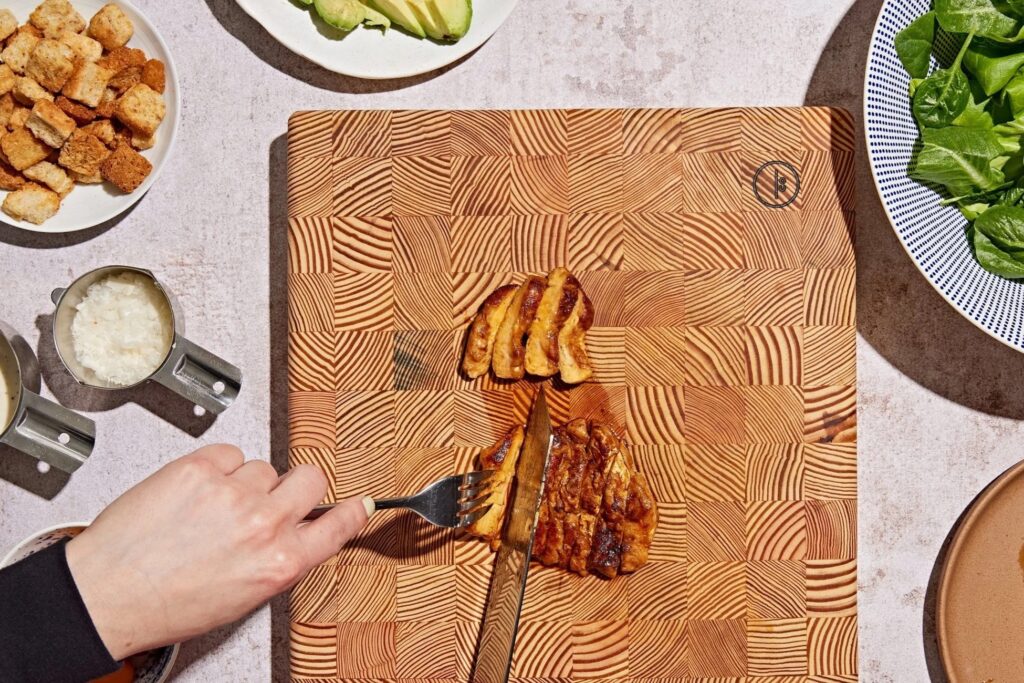
Bosque Foods, meanwhile, leverages solid-state fermentation, which involves growing microbes atop an inoculated solid surface. It makes use of low-value agrifood sidestreams to feed the microbes in a 10-day harvesting process, which can then be processed into whole-cut chicken and pork filets, as well as bacon.
In 2022, Bosque Foods closed a $3M seed funding round, a year before it unveiled a chicken cutlet with 85% mycelium content. But in 2024, its Berlin-based arm filed for insolvency, owing to the EU’s lengthy novel food approval process, which prevented it from placing its meat alternatives on the market in the near term.
It has since been operating solely through its office in New York. Its acquisition will give Infinite Roots additional process data to strengthen the technical foundation and further develop both companies’ technologies for industrial-scale mycelium applications.
Infinite Roots pivots to mushroom meat amid regulatory hurdles for mycelium
Infinite Roots has had to face its own regulatory challenges too. It had already self-determined its oyster mushroom mycelium as Generally Recognized as Safe (GRAS) in the US, but has since rescinded its evaluation request with the Food and Drug Administration, citing a need to update its safety dossier.
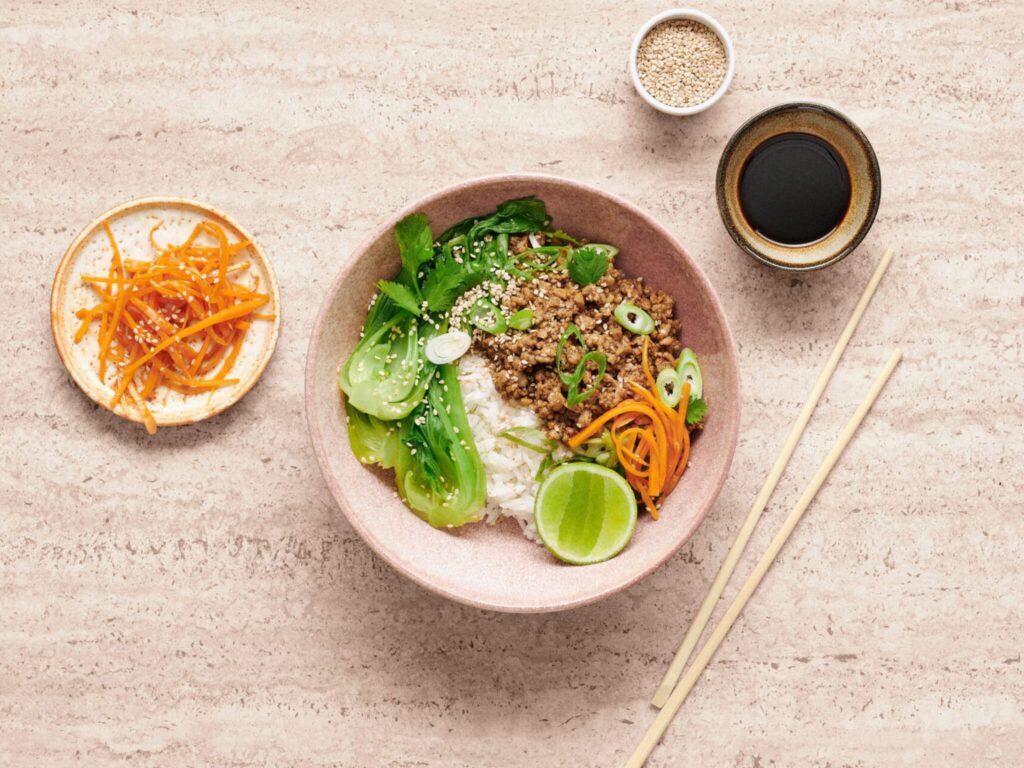
In 2024, the company’s struggles to obtain regulatory approval in the EU pushed it to diversify its market strategy. Infinite Roots teamed up with South Korean food giant Pulmuone to roll out mushroom-based meatballs and steaks under the latter’s Earth Diet line in the East Asian country.
Back in Europe, the startup entered German foodservice last year through meatballs made with champignon mushrooms. This was followed by the retail rollout of its mushroom mince, meatballs and patties at Rewe Group’s Billa Plus and Billa Pflanzilla stores in Austria.
Infinite Roots has also been working with the Hamburg University of Technology to develop tech that transforms whey into a feedstock for mycelium fermentation. The project is backed by a €2.6M grant from the German food and agriculture ministry.
“The next phase of mycelium will not be determined solely by isolated breakthroughs, but by companies that can integrate biology, process data, IP and industrial implementation,” said Infinite Roots co-founder and CEO Mazen Rizk.
“By bringing together complementary mycelium technologies, datasets and process expertise, we can scale up faster, develop across a wider range of product formats and translate technical progress more efficiently into industrially relevant applications,” he added.
Mycelium heats up Europe’s alternative protein ecosystem
The takeover of Bosque Foods comes as mycelium protein continues to gain traction in Europe. This week, fellow German firm Pacifico Biolabs earned €7M ($8.1M) in Series A funding to scale up and launch its mycelium chicken.
Meanwhile, UK player Adamo Foods won a €10M ($11.7M) grant from the EU’s Horizon Europe programme for a project to use industry sidestreams to scale up and launch its whole-cut mycelium steak. And Finland’s Enifer notified the FDA of the GRAS determination for its Pekilo mycoprotein.
The acquisition of Bosque Foods is part of a larger wave of consolidation in the alternative protein sector, where over 70 companies have been bought out or acquired, merged, filed for insolvency, or shut down since September 2024.
“I’m genuinely proud that the IP, know-how, and years of R&D our team poured into Bosque will continue to grow. The future of mycelium will be shaped by companies that can combine biology, process understanding, and industrial execution – and I’m glad our work will be part of that next chapter,” Iglesias-Musachio said in a LinkedIn post.
“Infinite Roots offered the right home for Bosque’s technology to continue developing at scale. As the mycelium category matures and consolidates around companies with the infrastructure to industrialise, their platform gives what we built a strong path forward – and that’s exactly the outcome I hoped for.”