
German mycelium protein startup Pacifico Biolabs has raised €7M ($8.1M) in Series A funding to scale up and launch its clean-label, cost-effective chicken alternative this year.
Pacifico Biolabs, a startup using fermentation to grow whole-cut mycelium meat in beer tanks, has closed a €7M ($8.1M) funding round to accelerate the production and launch of its proteins.
The Series A round included Stray Dog Capital, Saxony-focused firm TFGS, Sprout & About Ventures, Simon Capital, FoodLabs, and a regional brewery partner.
The Leipzig-headquartered startup had previously earmarked seafood alternatives as its first product category, and has since pivoted to chicken, which it will sell to B2B clients under the Viando label.
“This move was driven by customer demand first and foremost: we spoke to a lot of customers who made clear they were looking for great chicken products,” co-founder and CEO Zac Austin tells Green Queen. “It also happened that we were able to produce an excellent chicken product.”
The firm will use the funds to scale up production to 200 tonnes per month in Saxony, expand its team, and notch commercial partnerships to launch its mycelium meat in supermarkets across Germany, Austria, Switzerland and the Nordics by late 2026.
“Pacifico solves the industry’s scaling problem with an elegant, asset-light model,” says Sören Schuster, managing director of TGFS. “The combination of European sovereignty and high capital efficiency makes them a key player in the emerging bioeconomy.”
Declining beer consumption a boon for Pacifico Biolabs’s mycelium meat
Pacifico Biolabs employs biomass fermentation to grow mycelium protein for foodservice clients, as well as meat and alternative protein manufacturers and brands.
To make its meat alternatives, the startup feeds fungi on a sugar-rich broth in fermentation tanks, turning the microbes into a protein-rich biomass that resembles whole-muscle meat. This is then harvested, shaped and sliced.
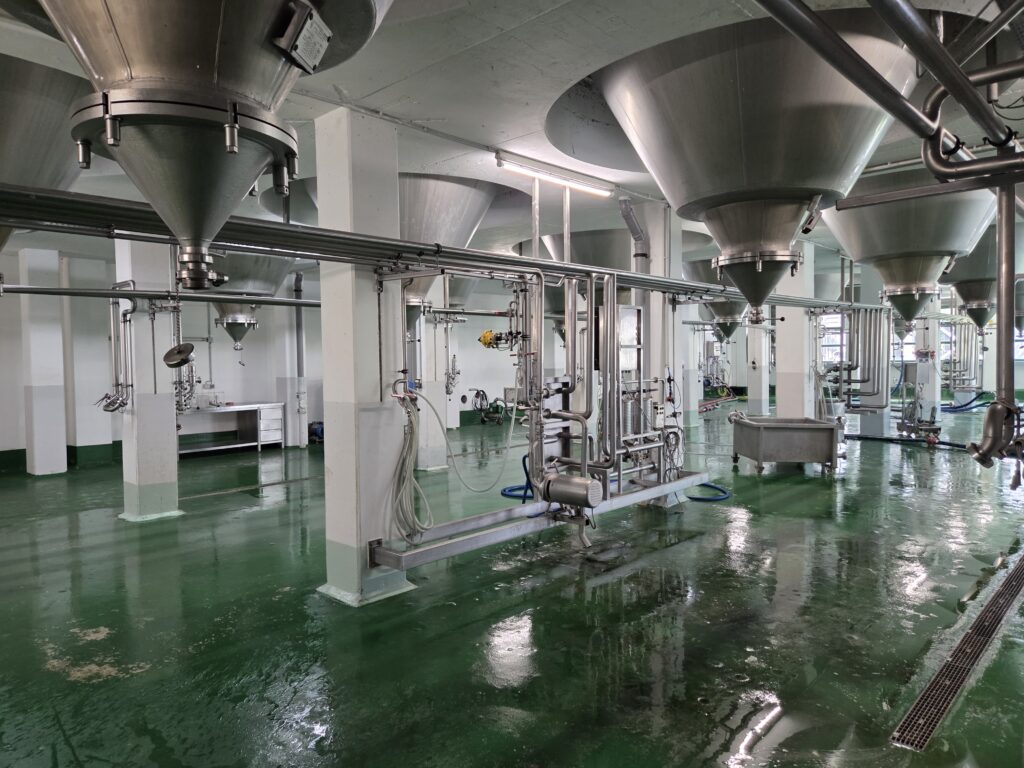
The USP of its mycelium fermentation process is the use of tanks designed for beer brewing rather than traditional bioreactors, which require purpose-built facilities and cost millions.
Thanks to a Gen Z-led sober curious shift, beer production has fallen for five consecutive years in the EU. And in Germany, beer sales plummeted by a record 6% in 2025. As a result, many breweries have fermentation tanks sitting idle.
Pacifico Biolabs leverages this into a strategic advantage, eschewing the years-long process of building new production plants to unlock a low-cost, highly scalable route to mass-manufacturing its mycelium meat.
“This is a huge cost saver, particularly as it entirely mitigates the need to build a new dedicated production site,” says Austin. “We do need to add some new equipment to a brewery site, but overall, we’re saving more than 95% of the capex versus other approaches.”
“Additionally, the process is cheaper to run than other biomass fermentation processes we’ve seen, resulting in a lower cost and higher quality product,” he adds.
Andrés Manzanares, principal at Stray Dog Capital, notes: “By using existing infrastructure to produce clean-label, nutritious, and affordable meat alternatives that are indistinguishable from their animal counterparts, Pacifico offers a credible solution to a broken protein supply chain.”
Mycelium chicken shines in clean-label, anti-UPF era
The animal agriculture industry causes 81-86% of the EU’s food-related greenhouse gas emissions and takes up 80% of its farmland, even though it only supplies 32% of its calories and 64% of its protein intake.
Scientists have been calling on the EU to support the growth of alternative proteins, including those produced via fermentation, to lower the food system’s planetary impact and safeguard the bloc’s future food supply. And this week, the German government released a biotech roadmap that promises to create an innovation hub for novel proteins.
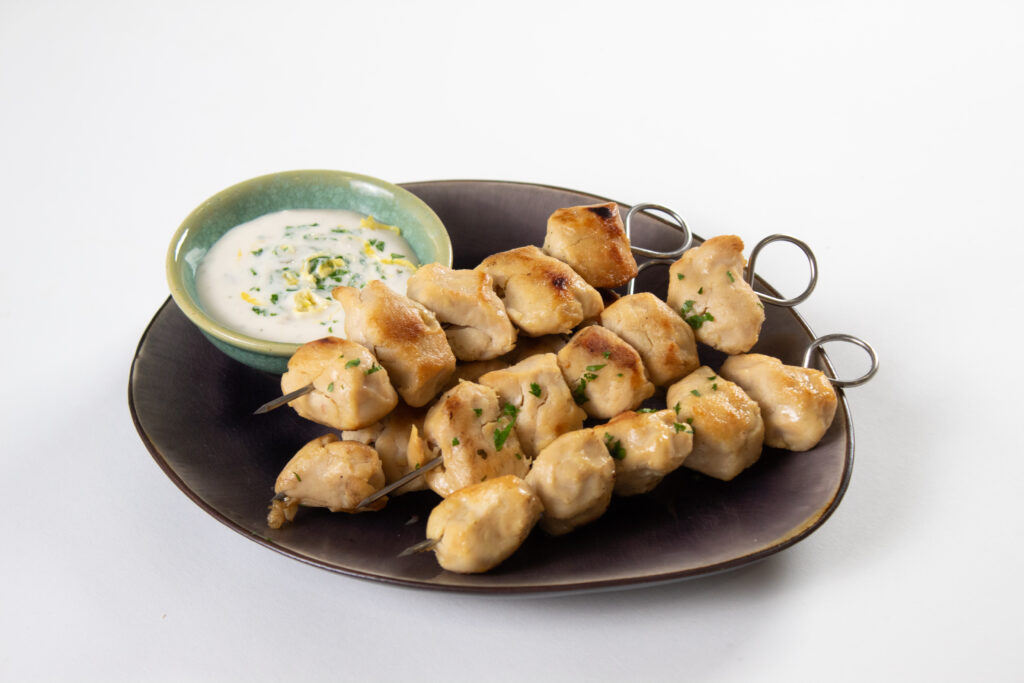
The mycelium chicken produced by Pacifico Biolabs requires up to 99% less land and 90% less water than conventional meat, while generating 90% fewer greenhouse gas emissions.
It also has 30% protein, all essential amino acids, high fibre and low fat content, and just five ingredients, fitting neatly into Europeans’ demand for clean-label, minimally processed foods. Polls show that 65% of these consumers are concerned about the health impact of UPFs, and 54% avoid plant-based meats because they’re ultra-processed.
“Our product can be formulated with just fungi, but we have various formulations with different customers tailored to their specific application needs,” explains Austin.
“The huge advantage of our mycelium is that it’s naturally got the texture and structure just like chicken, so we don’t need to add a lot of other ingredients or processing steps to get to a great product.”
Pacifico Biolabs – which is still working on seafood and pork – suggests its mycelium addresses the three main challenges of alternative proteins simultaneously: cost, texture and nutrition. It does so by replicating the muscle structure of animals and reducing the need for additives, providing a foundation for private-label meat analogues.
The Series A round follows a $3.3M raise in 2024 and a €680,000 non-dilutive investment from SAB, Saxony’s development bank, after a year when funding for fermentation startups fell by dipped by 43.5%, as part of a larger VC retreat from alternative proteins.
What made Pacifio Biolabs’s effort successful? “Our pitch has been focused on the scalability and economics of our production model, and the quality of our product, both of which are significant advantages,” says Austin.
.webp&w=280&h=180)