
Swedish plant-based dairy giant Oatly has introduced a high-fibre oat milk and low-GI cream in China, homing in on diverse nutritional highlights to build its momentum in the country.
Amid its strategic review to reverse years of weak performance in China, Oatly is hoping to win more consumers by ramping up its nutritional focus.
The company recently unveiled a slate of products featuring superfoods or tailored to wellness verticals like gut health. These include turmeric and matcha lattes, a low-GI oat cream, and a high-fibre oat milk.
The focus on fibre-rich, low-GI products comes amid growing concerns about fibre deficiency in China, expanding GLP-1 use, and the rise of the fibermaxxing trend on social media.
“Based on a deep understanding of Chinese consumers, Oatly focuses on the core issue of ‘healthy and delicious’ product development,” said Zhu Feiwen, assistant VP and head of R&D for Oatly Greater China.
“While creating functional health products with high fibre and low GI, we continue to tackle the challenge of optimising the taste of functional health foods, and have made significant progress in this direction,” he added.
Can dual-fibre, clean-label approach win over China’s consumers?
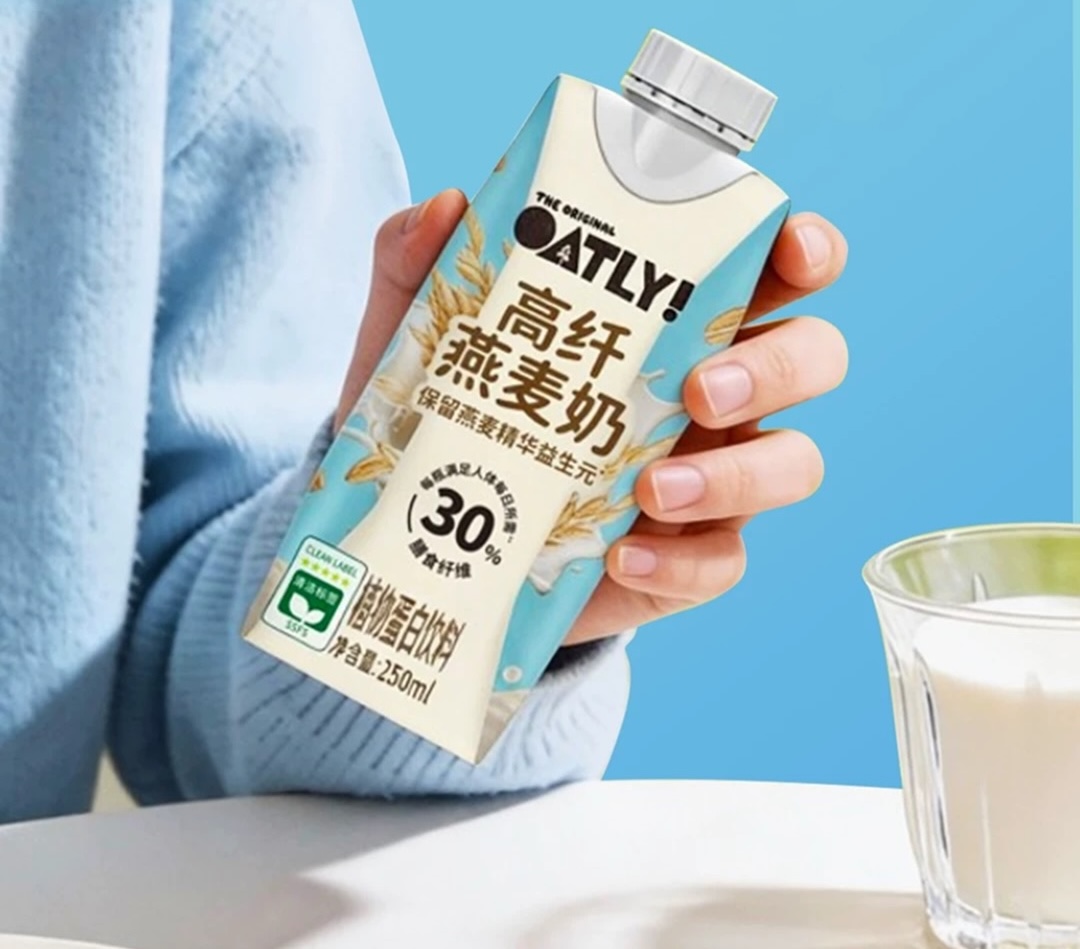
The high-fibre oat milk leverages an innovative enzymatic hydrolysis technology to better preserve the native soluble dietary fibre, beta-glucan, in oats. In addition, Oatly has added a water-soluble polyglucan to pump up the fibre content.
The result is a dual-fibre oat milk with a smooth texture, natural sweetness, and 7.5g of dietary fibre per 250ml bottle. The recommended intake of fibre in China is 25-30g a day, so a bottle of the new high-fibre oat milk could help consumers meet up to 30% of their daily requirements.
This fits right into the country’s nutritional needs. Currently, people in China only consume 10.2g of the macronutrient a day, creating a significant fibre gap. Awareness about this is on the rise on platforms like TikTok and Xiaohongshu – on the latter, posts spotlighting dietary fibre have received 460 million views.
Fibre can help to naturally regulate GLP-1, an incretin hormone released in the gut, which reduces appetite, prolongs satiety, and helps regulate blood sugar levels and manage weight. This is the goal of weight-loss drugs like Ozempic and Wegovy, whose popularity is skyrocketing in China.
Aside from the high-fibre claim, Oatly has collaborated with the Shanghai Society of Food Science (SSFC) to promote the application of clean-label standards. The fibre-rich oat milk has a five-star clean-label certification, which denotes that it contains no more than one additive.
“Health is not a form of asceticism, but a joyful party in life. Oat milk consumption has evolved from nutritional supplementation to functional segmentation and scenario adaptation,” said Zhang Chun, president of Oatly Greater China.
Health positioning could help Oatly turn its China fortunes around
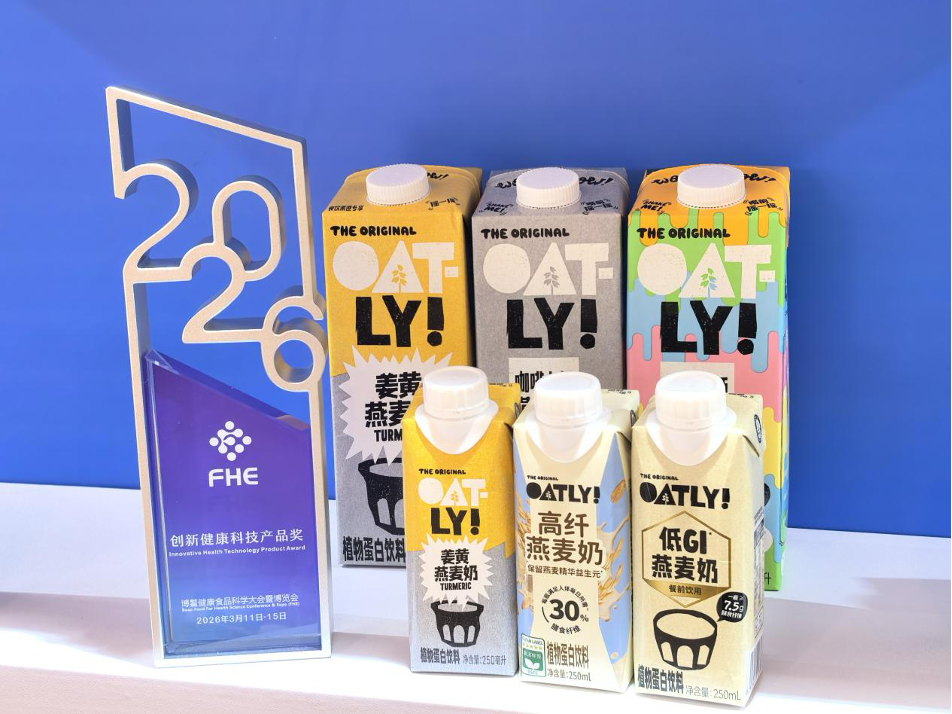
Oatly’s move to make fibre the core of one of its products follows the launch of the Oat Milk Healthy Eating Initiative it jointly launched with the SSFC, the China Agricultural University, and the China Food Information Center in 2025 to promote oat milk consumption in the country.
This came a year after seven national departments released the Whole Grain Action Plan to increase the supply and consumption of these foods over the next decade. And last year, five major institutions published the Scientific Consensus on Oats and Health, highlighting the nutritional value of oats as whole grains and encouraging their intake through products like oat milk.
For Oatly, the nutrition space is a big opportunity. Polling shows that 36% of China’s consumers choose plant-based diets for health reasons. In fact, when they’re told about the benefits of a vegan diet, 98% of the population is willing to eat more plant-based foods.
The oat milk maker has had a turbulent few years in China, leading to a restructuring of its operations in the region. It’s currently conducting a strategic review (set to be completed this year) that could result in a carve-out of its Greater China business. In Q1 2026, sales in the region were down by 2%, and volumes fell by nearly 9%.
Oatly has already been moving beyond just standard milk alternatives, having introduced products like gardenia-peach-flavoured oat milk, a low-GI ice cream, and even veggie crisps, according to Dao Foods International, a Toronto-based impact investment firm focused on China.
“From a nutritional perspective, oat milk contains less than one-third of the protein found in milk. It also has slightly higher carbohydrate content. Outside of coffee scenarios, this creates a perceived trade-off for consumers,” the firm said in a recent newsletter. “[This is why] Oatly is adjusting its positioning.”
Between its China debut in 2018 and last November, the company has sold enough oat milk to make 1.7 billion lattes. Now, it will look to expand its reach with new flavours, formats, and functions.
“High-fibre oat milk is just the beginning of our product matrix, and the future of plant-based products is not only a matrix, but also a comprehensive health solution that combines lifestyle, exercise, emotions, functions, and nutrition,” said Zhang.