
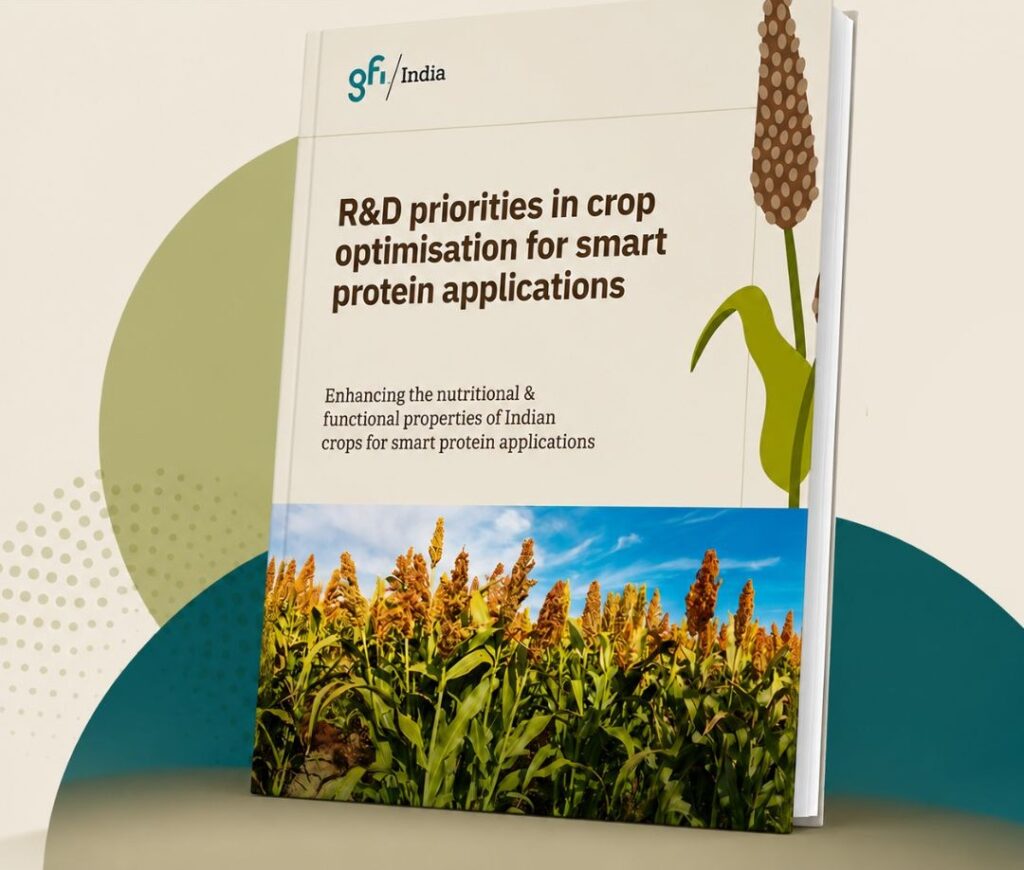
A new whitepaper from the Good Food Institute India argues that the country’s vast but largely untapped pool of indigenous and underutilised crops could form the backbone of a domestic plant protein supply chain, reducing dependence on globally dominant ingredients like pea and soy.
“India is a megadiverse country for plant genetic material”
Released to coincide with the International Day for Biological Diversity, the report titled R&D Priorities in Crop Optimisation for Smart Protein Applications maps out the research investments and policy conditions needed to bring so-called “orphan crops” into commercial-scale alternative protein production.
A narrow ingredient base, despite rich biodiversity
India has been recognised as one of the Vavilov Centres of Origin, meaning it is among a handful of regions where crop diversity originated and diversified over millennia. The National Gene Bank at ICAR-National Bureau of Plant Genetic Resources in New Delhi currently conserves more than 452,000 accessions of various crops. Despite this, the country’s food systems rely on a narrow range of staple crops, and today more than half of the population’s protein intake comes from cereals, which are often deficient in essential amino acids such as lysine.
The whitepaper identifies a range of crops with strong potential for plant protein applications that remain largely sidelined: horse gram, winged bean, grass pea, lupin, bambara groundnut, and several indigenous millets and legumes. Many are naturally protein-dense, require fewer agricultural inputs, and show greater resilience to climate stress than commodity crops.
What it would take
GFI India’s recommendations centre on several investment priorities: increased funding for breeding and genomics research, the use of AI and machine learning tools to accelerate crop trait discovery, and infrastructure development to build scalable ingredient supply chains.
The report also covers the full value chain for plant-based protein production, from crop development and cultivation through to primary ingredient fractionation, composite processing, and end-product formulation. Among the crops assessed for specific ingredient applications are chickpea protein isolates for plant-based meat, mung bean proteins for gelation and emulsification, and jackfruit for its structural properties in whole-muscle meat alternatives.
Padma Ishwarya S, Senior Scientist at GFI India and author of the whitepaper, noted the opportunity at hand: “Countries like Canada, Australia, the Netherlands, and China have leveraged this opportunity to dominate the growing global plant-based market. India, too, has the opportunity to emerge as a leading player if it capitalises on its indigenous and orphan crops to strengthen domestic ingredient supply chains.”
Connecting agriculture to food systems
The paper also calls for cross-disciplinary collaboration between agricultural scientists, food technologists, and industry, and points to existing government missions on pulses and oilseeds as models for how such support could be structured. Public-private partnerships are identified as central to moving underutilised crops up the technology readiness ladder.
GFI India is part of an international network that includes affiliates in the US, Brazil, Europe, Israel, Japan, and the Asia-Pacific region.
“India is a megadiverse country for plant genetic material,” the whitepaper states, noting that the country’s agricultural biodiversity remains largely absent from mainstream domestic food systems even as demand for protein-rich alternatives grows globally.