
Munster Technological University has received €3M ($3.5M) from Ireland’s agriculture ministry to develop biorefinery tech that can convert grass and legumes into protein.
Can grass be the next protein frontier?
It’s a question being explored by scientists at Munster Technological University (MTU) in Ireland, who are leading the Grass4Value project to reshape the country’s grasslands and bioeconomy.
The institute has been awarded nearly €3M ($3.5M) in funding from the Irish Department of Agriculture, Food and the Marine, and will focus on developing biorefinery processes to turn grass and legumes into protein.
The project also involves University College Dublin, the University of Galway, agrifood R&D authority Teagasc, and connects several new Irish demo and pilot scale-up sites.
These include MTU’s recently launched pilot biorefinery facility in Kerry, the Green Biorefinery and Anaerobic Digestion demonstration facility at Farm Zero C in Cork, and the National Bioeconomy Pilot Plant at Lisheen in Tipperary.
Researchers will develop new ways to produce sustainable proteins for animal feed, human food and energy applications, as well as create new value chains for grassland farmers.
Grass protein project will include precision fermentation research
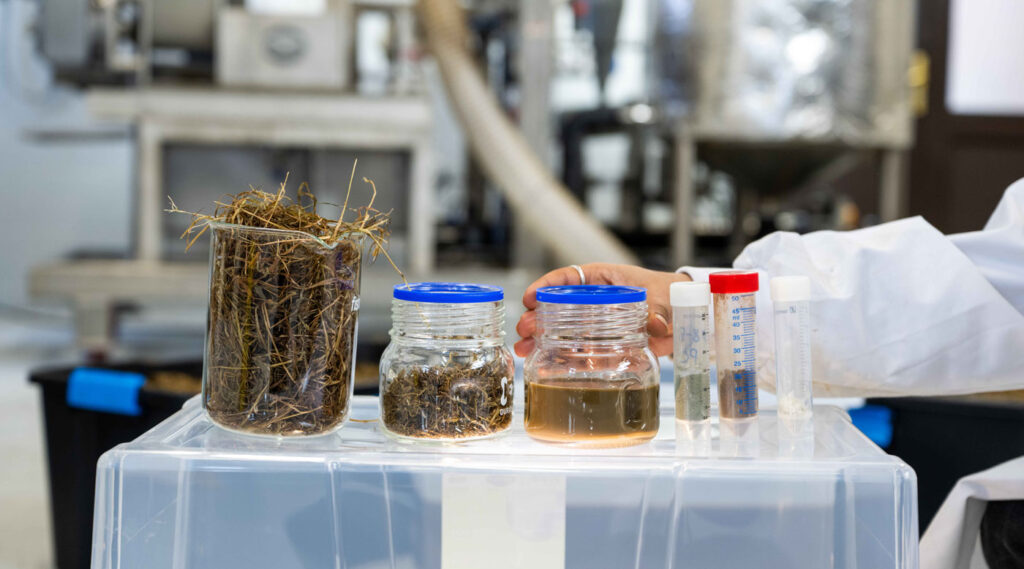
The Grass4Value project will develop grass protein concentrates as alternatives to imported soy, which will be tested in livestock trials. Plus, it will generate press cake fibre feed for cows.
Additionally, the researchers will advance and scale new technologies to develop high-value functional proteins and ingredients from grass-based feedstocks for human foods.
The project also focuses on downstream processing, such as precision fermentation and anaerobic digestion, to produce food and feed ingredients.
“The residual streams from these processes will be converted to renewable energy and nutrients in a circular economy model,” Prof James Gaffey, the project’s coordinator and a co-director of MTU’s Circular Biology Research Group, explained in a LinkedIn post.
“The approach aims to make farming in Ireland more resilient and robust in light of rising input costs and market volatility and other environmental and socio-economic pressures,” he added.
Martin Heydon, Ireland’s agrifood minister, said: “Our farmers and food producers need access to the best possible evidence, technologies and practices. This research investment will generate the insights and innovations required to meet those needs.”
Irish government champions sustainable proteins in new investments
The federal funding follows MTU’s establishment of its green biorefinery at the start of the year, which itself built on the institute’s ongoing research in projects showing that protein can be extracted from grass, clover and green leaves to feed livestock, while producing additional high-value products.
“As the only country in Europe with more than 50% grassland, Ireland is uniquely positioned to play a leading role in [the] development of green biorefining,” Gaffey said at the time.
“This new pilot facility is the first of its kind in Ireland, and complements our excellent track record of research in this space. It offers a great platform for us to scale this research and test these innovation opportunities with industry,” he added.
“This investment reflects MTU’s leadership in bioeconomy research and builds on the success of our recently launched green biorefinery,” said Prof Hugh McGlynn, VP for research at MTU. “Through Grass4Value, we are working with national partners to unlock new opportunities for Irish agriculture, supporting farmers while contributing to climate and sustainability goals.”
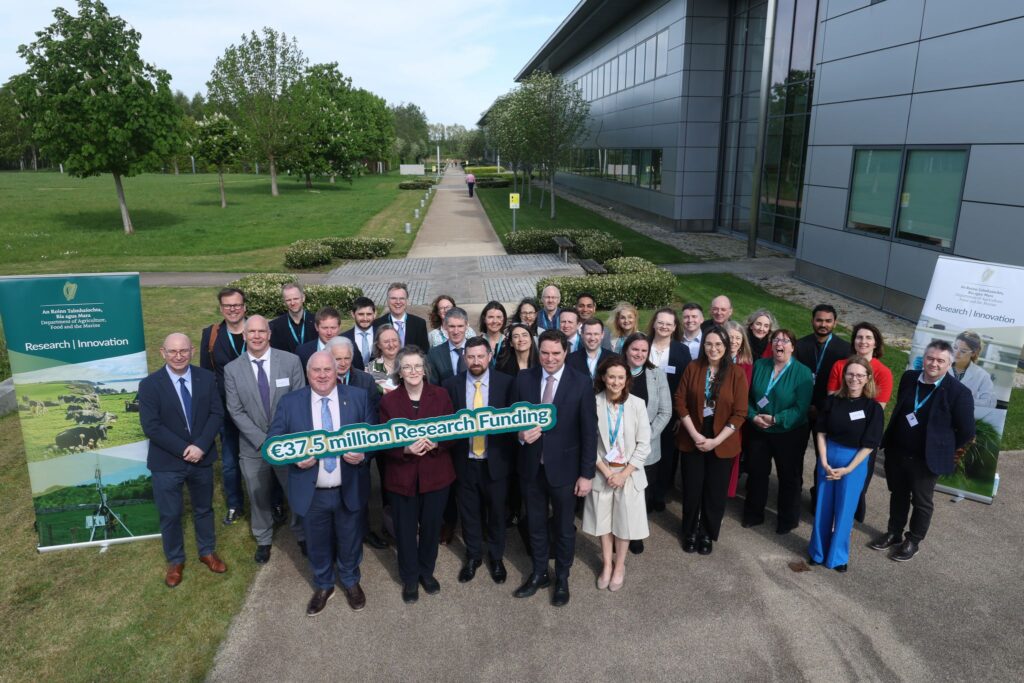
The funding was part of the agriculture ministry’s €37.5M outlay into agrifood, forest and bioeconomy research. This included a €732,000 grant to University College Cork to develop novel functional foods to meet protein requirements in older and weight-management cohorts, as well as a €1.57M investment in University College Dublin’s efforts to advance Ireland’s transition to sustainable protein sources.