
Comprehensive Human Vagus Nerve Map Unveiled
Scientists at Northwell Health’s Feinstein Institutes for Medical Research said they have released the world’s first comprehensive human vagus nerve anatomical map. The achievement could change our understanding of the autonomic nervous system and accelerate the development of bioelectronic medicine and neuromodulation therapies, according to the researchers.
The first dataset release, collected over three years from 30 human donors encompassing 60 vagus nerves, is now available to the global scientific community via SPARC Science.
The vagus nerve is the longest cranial nerve and a critical “information superhighway,” consisting of two main bundles (one on the left side of the neck and the other on the right side of the neck) containing more than 200,000 individual nerve fibers stretching from the brainstem to all major organs.

The nerve manages automatic functions such as heart rate, breathing and digestion, and serves as the body’s “on/off switch” for immune response and inflammation. To better understand the function of each vagal fiber, this new dataset resource offers a 3D view into the intricate anatomy of the human vagus nerve, utilizing techniques such as microCT imaging, immunohistochemistry, and ultrasound.
By mapping the organization of fascicles and fibers, investigators expect to gain critical insights into how the vagus nerve communicates with various organs and influences human health and disease.
“This dataset represents a major step forward in bioelectronic medicine, offering the most detailed anatomical reconstruction of the human vagus nerve to date,” said Stavros Zanos, MD, PhD, associate professor in the Institute of Bioelectronic Medicine at the Feinstein Institutes and co-leader of the project. “For the first time, we can visualize the vagus nerve’s complex architecture that will allow us to design more precise, effective and safe neuromodulation therapies and devices.”
The accomplishment marks a milestone that began with a $6.7 million National Institutes of Health (NIH) grant awarded to the Feinstein Institutes in October 2022 for its Reconstructing Vagal Anatomy (REVA) project, part of the NIH Common Fund’s SPARC program. The successful delivery of the map was supported by Peter J. Pappas, Jr., whose donation provided philanthropic support towards the goals of this project.
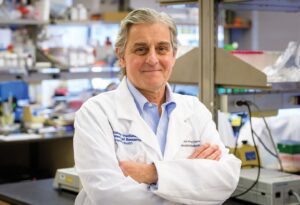
“Decoding the vagus nerve’s intricate language is an important advance for science and medicine,” said Kevin J. Tracey, MD, president and CEO of the Feinstein Institutes, Karches Family Distinguished Chair in Medical Research and author of the book The Great Nerve: The New Science of the Vagus Nerve and How to Harness Its Healing Reflexes. “This knowledge will further empower researchers to re-engineer human biology and unlock novel therapies for future patients.”
The Feinstein Institutes for Medical Research is a global scientific leader in bioelectronic medicine and vagus nerve stimulation, where medical researchers use modern technology to develop new device-based therapies to treat disease and injury, according to a Feinstein spokesperson, who points out that the field of bioelectronic medicine integrates insights from neuroscience, molecular medicine and biomedical engineering, and researchers at the Feinstein Institutes leverage the connection between the brain and the immune system to develop bioelectronic medicine interventions.
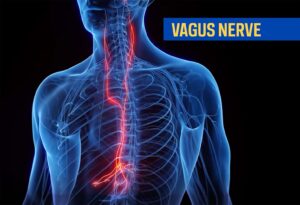
The discovery that initiated the field of bioelectronic medicine—called the “inflammatory reflex”—was made more than 30 years ago by Tracey, continues the Feinstein official. This discovery emerged from studies on vagus nerve signaling and showed that the brain and body communicate to regulate inflammation and, if uncontrolled, inflammation could lead to disease, said Tracey.
It was the first FDA-approved vagus nerve stimulation device in July 2025 to treat rheumatoid arthritis. Northwell Health was the first in the nation to implant the newly approved treatment in patients in August 2025.
Today, engineers, computer scientists, immunologists, neuroscientists and clinicians develop cutting-edge medicine, including neuroimmune modulation, miniature implants for stimulating and recording the vagus nerve, noninvasive ultrasound neuromodulation to suppress inflammation, and novel brain-computer interfaces to overcome injuries of the nervous system, according to a Feinstein Institutes statement. These collaborative efforts are focused on converging to create personalized, precise treatments that hold promise in treating acute and chronic diseases, often with fewer side effects compared to current therapies.
Scientists believe these treatments have the potential to enhance or replace existing treatments across a range of conditions such as arthritis, heart disease, inflammatory bowel diseases, diabetes, cancer, and autoimmune disorders. By producing bioelectronic medicine knowledge, disease and injury could one day be treated by our own nerves without costly and potentially harmful pharmaceuticals, predict a number of researchers.