
The US FDA has determined that toxic heavy metals found in tampons are not released in amounts that could harm users. The study addresses a safety question that unsettled consumers and prompted congressional pressure two years ago.
The FDA’s new research was released as a long-awaited follow-up to the 2024 UC Berkeley study that found lead and other toxic metals in tampons sold in the EU and US. At the time, the university researchers evaluated sixteen metal(loid)s in different kinds of tampons. Zinc had the highest concentration (geometric mean = 52,000 ng/g), arsenic’s geometric mean was 2.56 ng/g, and lead had a geometric mean concentration of 120 ng/g.
The study sparked fears across consumers, as these heavy metals are highly toxic and classified among as a “major public health concern” by the WHO. However, the US FDA says that the research did not contain a toxicological risk assessment (TRA).
Now, the agency’s laboratory testing and TRA investigated the levels of metals contained in, and released from, 11 tampon products legally marketed in the US. The FDA tested the levels of metals released under exaggerated conditions (50°C for 24 hours in acidified water), considering the recommended use of tampons.
The research detected 19 metals in the period products. Arsenic, cadmium, and lead were found at trace levels. These substances are classified as ICH (International Council for Harmonization of Technical Requirements for Pharmaceuticals for Human Use) Class I metals. The classification refers to a specific group of highly toxic elemental impurities monitored in pharmaceutical manufacturing, as they pose significant toxicity risks and have no biological benefit.
Based on the TRA, the FDA says all detected metals had margins of safety (MoS), indicating that there is “negligible toxicological concern from the presence of metals in tampon materials.”
Industry organization response
The FDA’s current communications, as of the study’s publication, confirm that no metal-related safety concerns have been identified in tampons.
The Center for Baby and Adult Hygiene Products (BAHP) has announced that it is encouraged by the agency’s results. BAHP and its member companies work closely with the FDA to ensure consumers have access to safe, trusted, and effective tampons.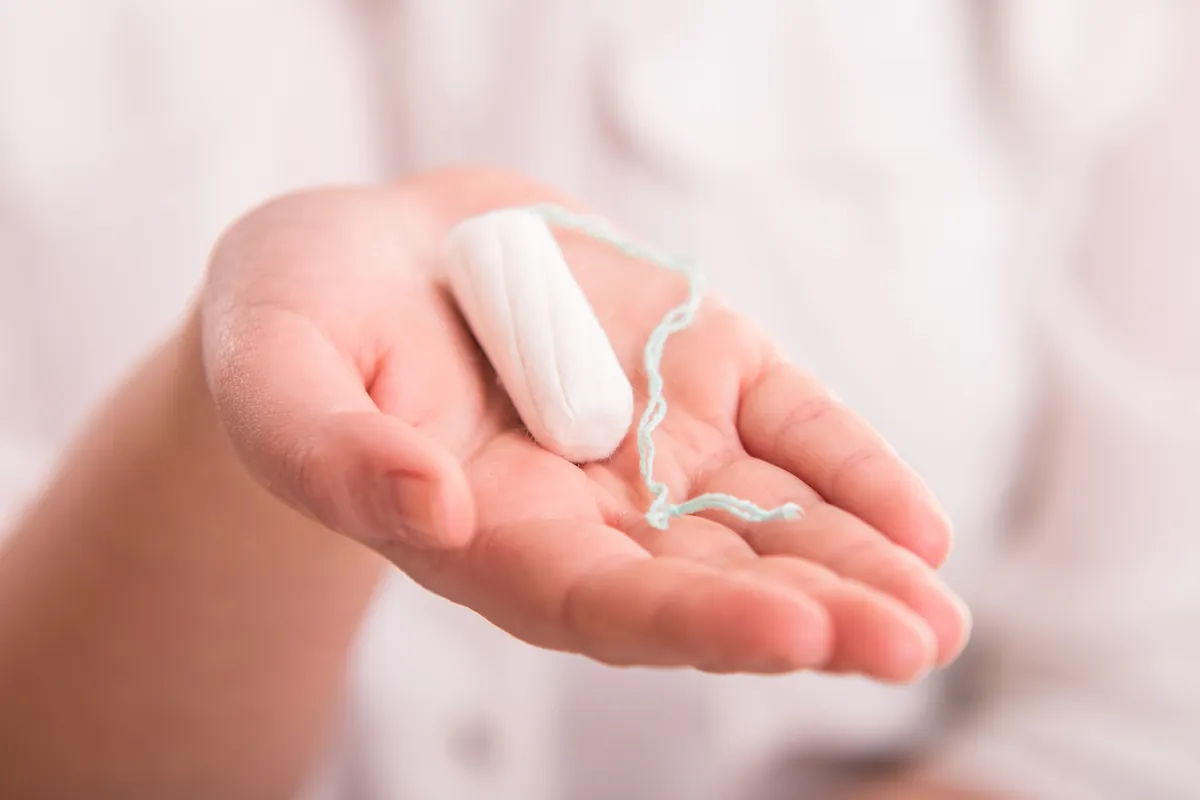 BAHP welcomes the findings and backs continued FDA collaboration on tampon safety.
“We remain dedicated to providing products that empower people to manage their periods with confidence and live life on their own terms. Millions of people around the world rely on tampons every day, and they deserve confidence that these products are safe when used as intended,” says the organization.
The BAHP says it will provide the agency with information it needs to carry out its public health responsibilities based on “sound science.”
Past research meets future findings
Approximately 52–86% of people who menstruate in the US use tampons, according to UC Berkeley’s 2024 study.
Considering the widespread use of tampons, the US FDA measured metal release under deliberately exaggerated conditions — higher temperature and longer duration than normal use. The study covered products from six brands, but did not name them. It also did not test scented tampons.
Meanwhile, the UC Berkeley research that sparked consumer concern evaluated the concentrations of 16 metal(loid)s in 30 tampons from 14 tampon brands and 18 product lines.
After the research’s release, the university study’s lead author, Jenni Shearston, told Personal Care Insights: “So far, what we know is that metals are present in all the samples we tested. We do not yet know if metals can leach out of the tampon and whether they are absorbed by the body. We, therefore, cannot yet assess to what extent (if any) metals in tampons contribute to any health problems.”
“We need more research on this severely understudied area, especially because millions of people could be affected.”
That research has now been conducted by the US FDA and concluded that there are no metal-related safety concerns in tampons.
“Although metals can be present in tampons, only a proportion will become bioavailable based on our studies, and as a result, the TRA indicated that the levels of metals released from tampons are not expected to result in adverse health effects,” says the FDA. “The calculated margins of safety values were 7 or greater, indicating a low toxicological concern, which is consistent with findings from an independent, systematic literature review.”
FDA testing finds all detected metals fall within safe margins under exaggerated conditions.
Tightening federal oversight
The FDA’s bench study is not a standalone response. It is one of two research initiatives the FDA committed to in September 2024, when the agency announced it would investigate potential metal exposure from tampon use following UC Berkeley’s findings and mounting congressional pressure.
The first of those initiatives, an independent systematic literature review of contaminants in tampons commissioned by the FDA, reported its results in December 2024. The agency says the new laboratory findings are consistent with that review’s conclusions.
The research sits within a broader tightening of US menstrual product oversight. In October 2025, the FDA issued draft guidance titled Menstrual Products — Performance Testing and Labeling Recommendations. It provides recommendations to the personal care industry on evaluating products for contaminants and promoting transparency in menstrual product ingredients.
States are moving in parallel. New York became the first US state to require ingredient lists on menstrual product packaging under a 2019 law that took effect in 2021, and six states — including Maine, Colorado, Connecticut, and Virginia — have since enacted phaseouts of PFAS in menstrual products.
Now, the agency’s laboratory testing and TRA investigated the levels of metals contained in, and released from, 11 tampon products legally marketed in the US. The FDA tested the levels of metals released under exaggerated conditions (50°C for 24 hours in acidified water), considering the recommended use of tampons. BAHP welcomes the findings and backs continued FDA collaboration on tampon safety. BAHP welcomes the findings and backs continued FDA collaboration on tampon safety. BAHP welcomes the findings and backs continued FDA collaboration on tampon safety.