
US alternative fat startup Savor has closed a $32M funding round, with participation from AAK, which has signed a deal to develop dairy alternatives and bakery applications with the former’s carbon-derived fats.
Californian food tech player Savor has secured $32M in new financing for its carbon-derived fat alternatives.
The firm employs a thermochemical process to convert point-captured carbon, green hydrogen, and methane into agriculture-free fats that can replace butter and palm oil, which have entered the US market over the last year.
The new funding, first reported by Axios, will help Savor scale up from a few tonnes of product a year to a couple hundred tonnes. The startup has now secured $65M to date, and eventually plans to raise a Series B round to build a 10,000-tonne facility.
Among the investors is Swedish speciality fats leader AAK, which has struck a two-year joint development agreement with the startup. The two companies develop and commercialise agriculture-free fats for use in dairy alternatives and baked goods, targeting customers from across the world, with a particular focus on the US and European markets.
It complements Savor’s carbon-to-fat conversion technology with AAK’s formulation expertise and commercial infrastructure, enabling them to deliver a new supply chain for domestically produced, climate-friendly specialty fats.
“AAK is a global leader in plant-based oils and fats, and they bring exactly the formulation expertise and commercial infrastructure we need to scale our impact,” said Savor co-founder and CEO Kathleen Alexander.
“This collaboration accelerates our path to the large food manufacturers who are actively seeking supply chain resilience and ingredient innovation at scale,” she added.
A new source of saturated fats decoupled from agriculture
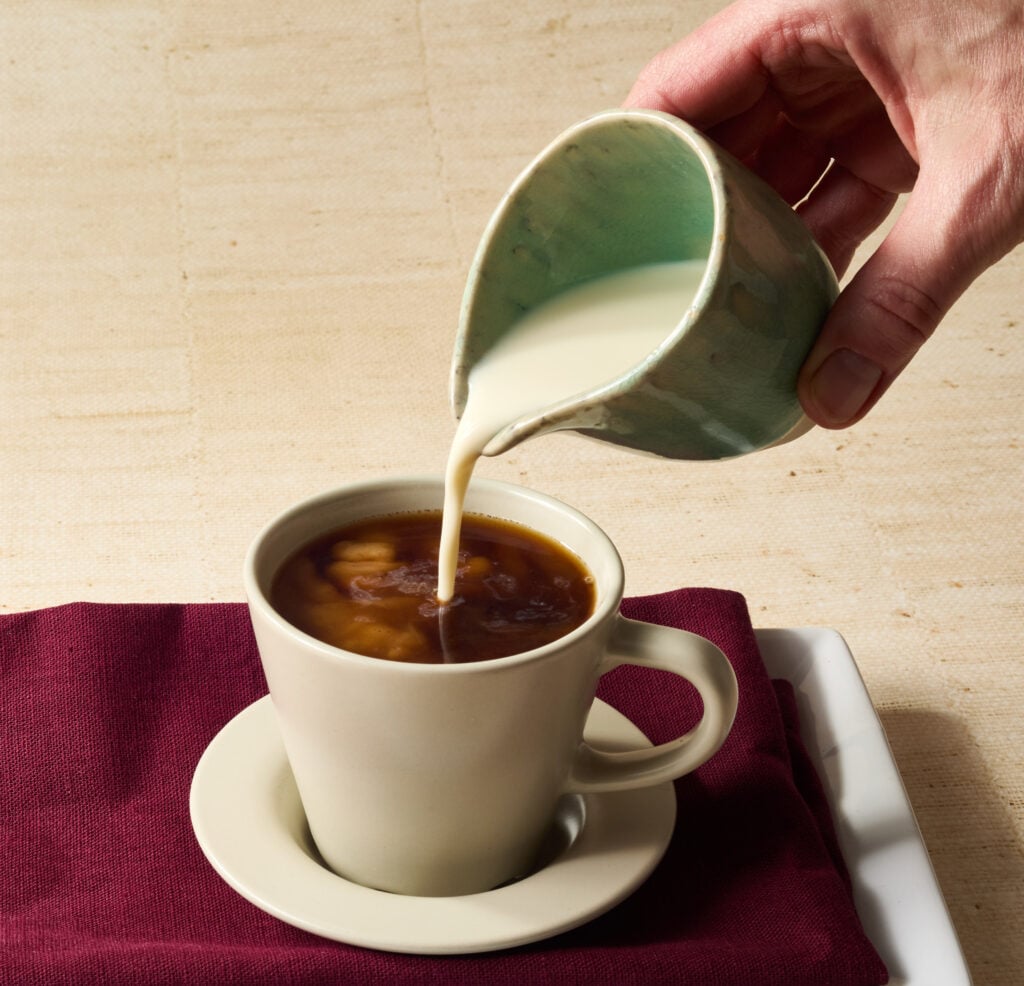
Founded in 2022 by Alexander and Ian McKay, Savor converts gases into carbon chains called alkanes, which are then transformed into fatty acids through a controlled combination of temperature and pressure. These are purified and assembled to produce high-quality short-, medium-, and long-chain triglycerides (SMLCT) to replace fats such as butter and palm oil in food and cosmetic applications.
These lipids are “chemically identical” to conventional fats, just in varying concentrations. The main ingredients in Savor’s EcoButter – named one of Time Magazine’s best inventions last year – are MLCT oil, water, sea salt, sunflower lecithin, natural flavour and beta carotene.
Having self-affirmed its butter as Generally Recognized as Safe (GRAS), the company has commercialised its CO2 butter in San Francisco, where it’s currently being used in chocolate truffles at the patisserie of Michelin-starred outpost, One65, and in baked goods at Jane the Bakery.
“Savor’s technology platform opens a new source of saturated fats, decoupled from agriculture and traditional supply chains, with a strong sustainability profile. In addition, these fats can be designed together with AAK’s plant-based oils for a vast array of functionality and solutions,” said Kim Olofsson, global head of R&D at AAK.
The AAK partnership focuses on the alternative dairy and bakery sectors because both face growing demand for fats that deliver functional performance, at a time when supply chain diversification has become paramount.
“The unique solutions that are unlocked by the AAK-Savor strategic collaboration address a market need across the food industry,” said Ronald van der Knaap, global head of dairy, early life nutrition and savoury food at AAK.
“Beyond supply chain resilience and sustainability, we will create applications with great taste and texture for our customers within two very important segments, and in this way, ticking all the boxes and improving the overall consumer experience,” he added.
Savor’s carbon-derived fats could lower carbon emissions by 98%
Savor’s Carbon Crafted platform can be deployed anywhere in the world, with no need for fertile land, fertilisers or freshwater, helping it decarbonise two highly polluting industries.
Global dairy production is responsible for around 4% of greenhouse gas emissions. And among livestock emissions, the milk industry makes up 30% of the footprint. Subsequently, climate change is causing extreme heatwaves that could lead to a 4% drop in milk production by 2050, a gap Savor will hope to fill with its carbon-based butter.
Last year, it launched a beauty and personal division with four ingredients targeting problematic fats like palm oil, which is linked to widespread deforestation, human rights abuses, and wildlife threats, and suffers from a lack of traceability and transparency in its supply chain.
“Food and CPG manufacturers are under real pressure on two fronts simultaneously: supply chain stability and the need to reduce the environmental footprint of key ingredients,” said Chiara Cecchini, senior VP of commercialisation at Savor. “This collaboration puts a compelling answer to both in front of customers who need it most.”
AAK and Savor said their fats could enable more diverse and resilient supply chains, reduce long-term costs, require 1,000 times less land, and lower carbon emissions by 98% compared to their conventional counterparts.
The partnership comes weeks after Savor became the target of a federal bill that aims to ensure its butter is labelled as “lab-created” to prevent misleading Americans. “Our products will always be labelled in compliance with FDA requirements and all applicable laws,” a company spokesperson told Green Queen last month.
“We have and continue to develop alternatives to imported ingredients like tropical oils, which are subject to volatile pricing, tariffs, and supply disruptions,” they noted.
“Building a domestic, dependable source for these critical inputs is central to our work, and a meaningful part of how Savor supports American food manufacturers and businesses. This is further evident through our collaborations with a growing number of industry partners.”