
Dutch contract manufacturer Nizo Food Research has partnered with Winclove Probiotics to discover novel probiotic solutions at a time when gut health is firmly in the nutrition spotlight.
With fibremaxxing at full tilt, a Dutch partnership seeks to turn microbiome science into premium probiotic solutions.
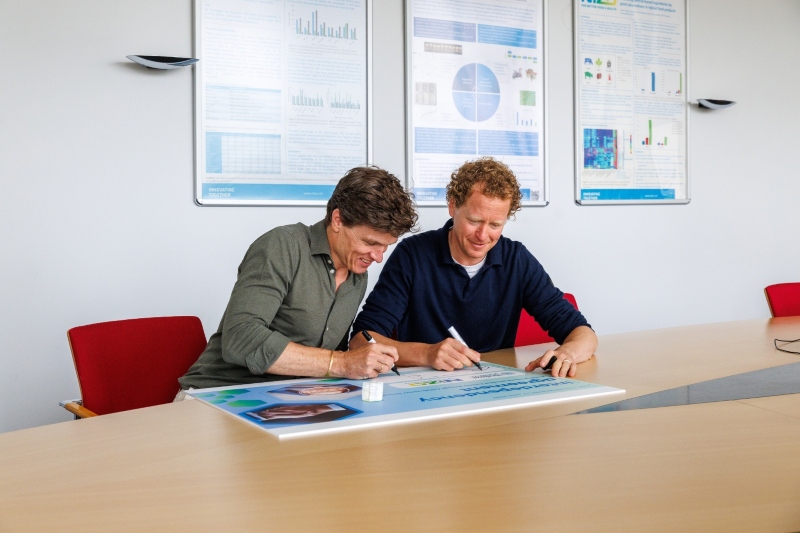
Nizo Food Research, a contract manufacturing organisation based in Ede, has joined forces with supplement producer Winclove Probiotics to speed up the discovery and development of novel probiotic solutions.
The three-year agreement combines Nizo’s proprietary Culture Collection with Winclove’s decades-long expertise in probiotic development, formulation, and commercialisation.
“At the heart of the collaboration lies a shared belief in the power of interdependency,” said Winclove CEO Maarten Pekelharing. “The understanding that meaningful innovation emerges when organisations combine complementary strengths, knowledge, and purpose.”
Partnership to focus on reorganising microbial collection for maximum usability
Winclove has been around since 1987 and produces premium probiotic formulations for partners, centred on quality and efficacy. It’s focused on research-led innovation and thought leadership in the microbiome field, with the goal of providing clients with the best evidence-based, indication-specific multispecies probiotic formulations.
Nizo, meanwhile, was founded over 75 years ago and specialises in manufacturing healthy and sustainable products for food companies at the Biotechnology Fermentation Factory, which is Europe’s largest independent food-grade pilot plant.
Its Culture Collection comprises around 4,500 strains, of which approximately 2,000 are owned by Nizo itself. This represents a “rich and diverse resource” with heaping potential.
Through the collaboration, this collection will be systematically reorganised to maximise its usability for R&D purposes. Together, the two firms will characterise the boutique catalogue and explore its potential with the aim of developing innovative probiotic solutions to address current and future needs for health supplements and other applications.
“At Nizo, we strongly believe that the most impactful innovations are created through collaboration,” said Nizo CEO Nikolaas Vles. “This partnership with Winclove enables us to unlock the potential of our microbial assets in a way that neither organisation could achieve alone.”
Nizo Food Research and Winclove Probiotics eye microbial food innovations

The partnership comes amid a rise in awareness around fibre consumption and gut health. A majority of Europeans are deficient in fiber, with rates around 95% in the UK and the US.
One survey from 2025 showed that 38% of European consumers want to increase their fibre consumption. Probiotics, which are live, beneficial bacteria and yeasts found in fermented foods and supplements, are crucial to this.
They promote a healthy gut by protecting the microbiome from harmful bacteria, and can increase the production of short-chain fatty acids (which help maintain the gut barrier). Probiotics can further enable your immune system to better fight infections and, critically, help you digest fibre.
Further, studies have shown that probiotics can improve the body’s natural GLP-1 release, as well as boost the efficacy of weight-loss drugs like Ozempic and Mounjaro. Fibre itself can also trigger the GLP-1 response.
And with GLP-1 medication use growing across the world – it nearly doubled in the US last year, and is set to grow by 2.5 times in the UK over the next year – the market for probiotic supplements and fibre-packed foods (which can help feed probiotics) will only become more expansive.
Nizo and Winclove will look to capitalise on this shift. Beyond the direct scientific and commercial opportunities, they see the partnership as a starting point for cross-pollination.
Through the term of the agreement, experts from both organisations – including microbiologists, food technologists, clinicians, bioinformaticians, and product developers – will work together to discuss findings, connect complementary expertise, and identify promising directions for future probiotic and microbial food innovations.