
The EU has published its long-awaited Protein Plan, acknowledging the importance of plant-based proteins but failing to set concrete targets to increase production for human use.
Europe’s policymakers have embraced plant proteins as a tool to strengthen food security, public and planetary health, and farmer incomes – but with a glaring gap.
The European Commission has released its much-anticipated Protein Plan, which sets a framework for scaling up plant protein production to boost the region’s autonomy and self-sufficiency.
However, the strategy fails to reference measures to support farmers who want to grow protein-rich crops for human consumption, instead prioritising their production for livestock feed. Experts have criticised the move, suggesting the plan ”falls short” on addressing the protein imbalance and calling it a ”missed opportunity”.
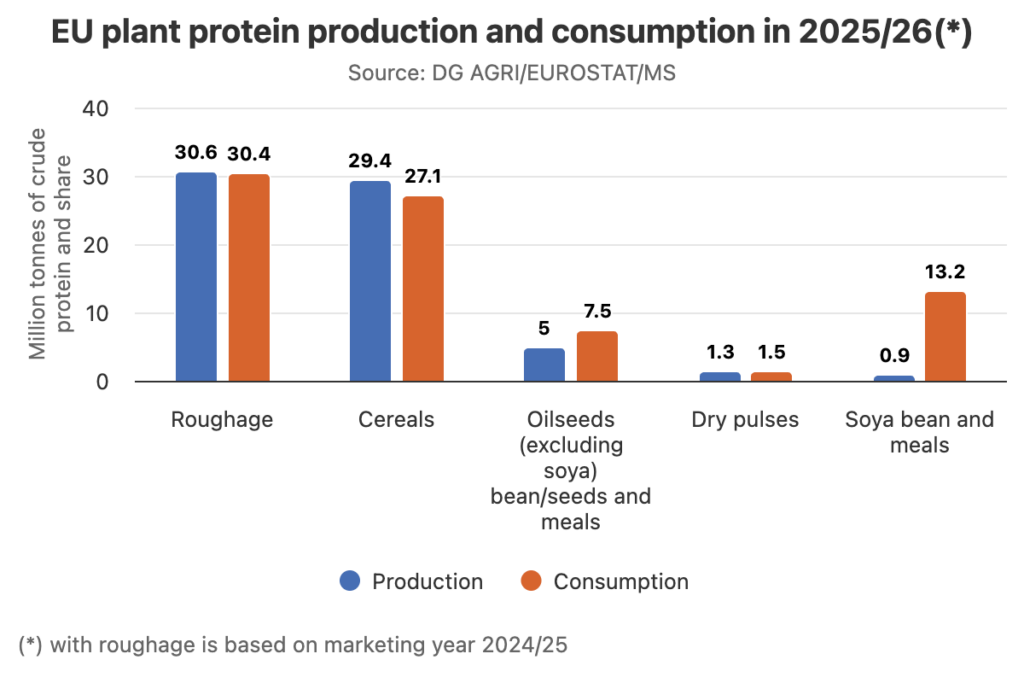
The Protein Plan primarily focuses on reducing the EU’s dependency on imported plant-based proteins. The region is self-sufficient in low-protein feed, but largely reliant on imports for high-protein sources like oilseeds and protein crops: 74% of those used in the EU are imported.
This makes the bloc’s food system vulnerable to global market fluctuations and supply chain disruptions, while limiting progress on the sustainability transition. Still, the only targets it sets are for the share of proteins produced domestically for feed, which it aims to increase from 25.8% last year to 35% by 2035.
The EU also simultaneously published its Livestock Strategy, which opens the door for livestock-generated methane to be treated differently from fossil fuel sources, despite the IPCC warning that both forms of the gas have roughly the same warming impact.
“The lobby’s influence is now in plain sight with the release of a Livestock Strategy littered with industry narratives and failing to meaningfully address the EU’s largest source of the super-heating pollutant methane,” said Caitlin Smith, campaign manager at Changing Markets Foundation.
”Almost every other sector is recognising the value of reducing methane emissions, but Big Ag continues to get the special treatment it has spent millions lobbying for, delaying much-needed action. Burying your head in the sand is not a strategy – it’s a capitulation to the mob,” she added.
What the EU’s Protein Plan says about plant-based food
The EU acknowledges that growing more plant proteins within the region would contribute to its food security and energy objectives, create new opportunities for farmers and rural areas, and contribute to its climate neutrality goal for 2050.
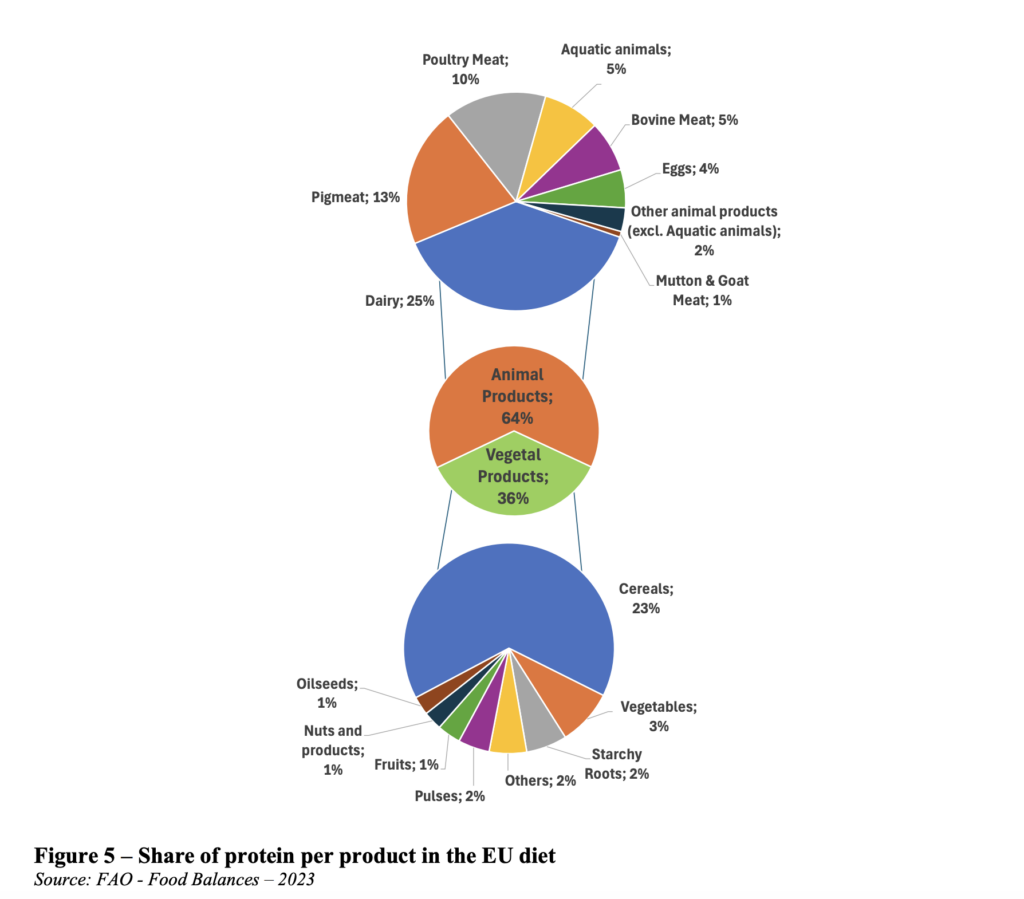
However, livestock is the largest consumer of plant protein in the EU, using up 74 million tonnes of protein as feed annually. And when it comes to human food, nearly two-thirds (64%) of the protein consumed comes from animal sources – higher than China (41%) and South Korea (57%).
And this gap is widening. Daily per capita consumption of animal protein increased by 5.7% between 2010 and 2023, rising from 69g to 73g. In contrast, Europeans’ daily intake of plant-based proteins dipped from 43g to 41g in the same period, a 4.2% decline.
The EU’s Protein Plan does recognise that diversified diets that include both sets of products play a vital role in the shift towards a sustainable food system, and acknowledges that plant-rich diets help support climate objectives.
”From an economic and social standpoint, increased sales of plant-based protein products create opportunities for farmers and rural communities,” it states, noting that plant-based food and drinks are ”well established and accepted in Europe”.
While alternative proteins like fermentation-derived or algae-sourced foods have ”promising market potential”, the biggest opportunity lies with plant-based proteins, thanks to their stable regulatory framework and consumer acceptance.
”These plant-based alternative products often aim to replicate the taste, texture, and nutritional profile of traditional animal-based products, although some have undergone a higher degree of processing,” the EU says, referring to the debate around ultra-processed foods.
These products do face a host of challenges hindering widespread adoption, not least the labelling restrictions imposed on plant-based alternatives, which cannot use terms related to dairy or, as of this year, meat. The EU mentions ”affordability, taste, convenience, [and] nutritional aspects” as key constraints, while underscoring the need for better consumer education.
Other challenges include ”the lower profitability of protein crops, in particular linked to the availability of dedicated knowledge, skills and inputs; an underdeveloped value chain; infrastructure needs such as storage and processing; investment gaps and the need for closer cooperation among stakeholders to de-risk transition decisions”.
Fermentation emerges as a potential winner
The document nods to advanced fermentation technologies like biomass and precision fermentation, which can ”create new circular business models for farmers and the feed industry”.
”Fermentation-based technologies are a complementary pathway within the broader protein landscape, with potential implications across agricultural value chains. They may create new opportunities for certain feedstocks, agricultural side streams and feed-related inputs, while contributing to the diversification of protein sources,” it reads.
”The extent to which farmers and rural areas benefit will depend on how value chains are organised, as fermentation-based technologies are expected to coexist with existing agricultural systems and practices,” it added, suggesting that the Commission is finalising a study to answer some of these questions.
”Innovative fermentation processes are developing and scaling in other jurisdictions, creating economic benefits and new income streams for farmers outside the EU. Similar benefits could accrue to EU farmers in the form of direct demand for agricultural feedstock and upgrading agricultural side streams,” it continued.
”The upcoming Biotech Act II will aim to strengthen the EU’s industrial competitiveness in industrial biotechnology and biomanufacturing, including […] advanced fermentation.”
Experts have already been calling on the EU to name fermentation-derived food ingredients as a covered technology category in the second Biotech Act, after it failed to include novel foods in its food and feed regulatory sandboxes.
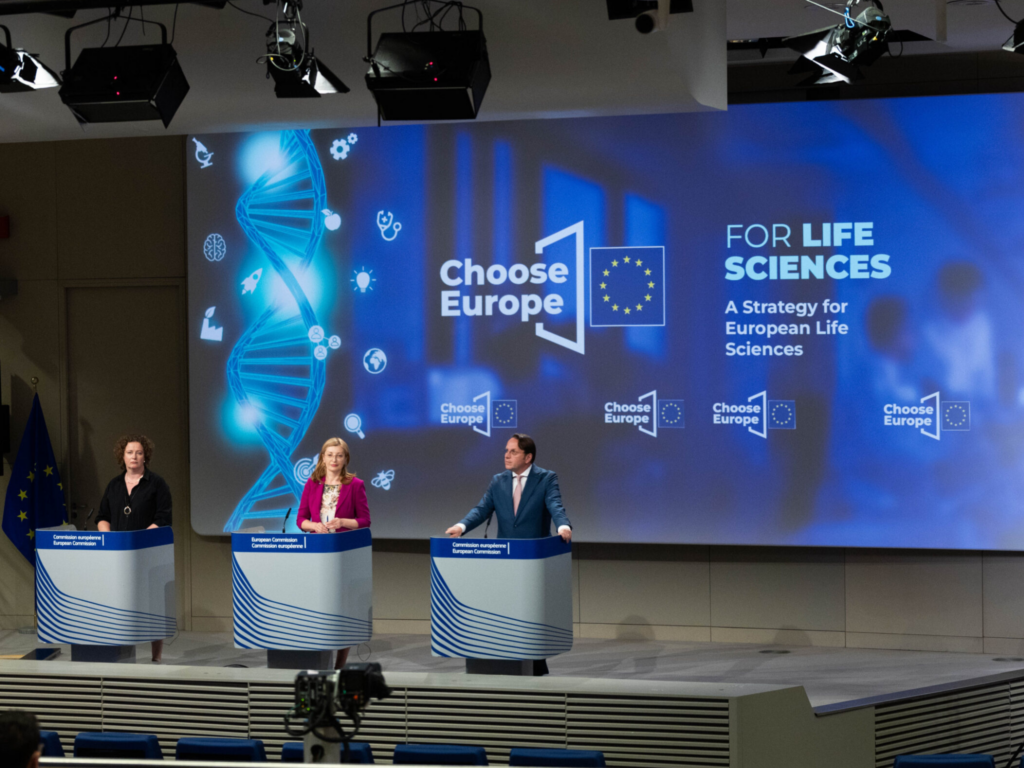
That said, the EU Commission did set aside €350M in funding opportunities to boost food and biotech innovation last year, highlighting the “significant potential” of fermentation in its life sciences strategy.
Where the Protein Plan delivers, and where it fails
The protein strategy undeniably contains several positives. Food awareness organisation ProVeg International highlighted how the plan promotes greater support for European protein value chains, and recognises carbon- and nature-credit incentives for legume-based systems to open a farmer income route into protein diversification.
The plan acknowledges that legumes and pulses, despite only accounting for 2% of EU protein intake, are an important part of a varied and sustainable diet, adding that locally produced pulses align with a ’best value’ public procurement approach and should be strongly promoted through schools and awareness campaigns.
It further mentions establishing a dedicated protein crop sector to boost the value chain and implementing sector interventions to support investment, recognising that R&D funding and adequate processing infrastructure and technologies are crucial.
The EU recognises Denmark’s trailblazing plant-based action plan as a best practice, recommending member states to consider taxation measures (which could include lower VAT rates for plant proteins), encourage livestock farmers to diversify, incentivise those who combine crops and animals, and compensate them for high production costs when switching to protein crops.
Still, the Protein Plan glosses over several key areas, not least a target for human consumption. The food measures are left largely voluntary and to national discretion, framing taxation, procurement and promotion as options to consider instead of bloc-wide commitments.
The concrete and measurable ambition on feed is absent from human food, as is a dedicated EU-wide action plan for plant-based foods, something farmer lobby groups and climate activists advocated for in the Strategic Dialogue on the Future of EU Agriculture.
“The plan still falls short on concrete measures to solve the EU’s protein imbalance. To unlock the full potential of plant proteins, the EU needs concrete policies that stimulate demand for plant foods and support a shift towards increased human consumption,” said Rafael Pinto, senior policy manager at the European Vegetarian Union.
And while the document mentions public procurement’s role, it is missing a ”target to balance plant/animal protein production and consumption as well as earmarked funding”. He added that the goal to boost protein production for feed could ”be easily achieved in the next few years simply by increasing human consumption of plant proteins, since our current dependency is caused by imbalanced diets”.
“The plan lacks funding commitments to scale up plant-based proteins and fermentation, and proposals to support farmers to grow the crops needed for these foods,” noted Alex Holst, head of EU policy at the Good Food Institute Europe.
”With China threatening Europe’s position as a world leader in protein diversification, the EU risks missing out on significant economic opportunities and remaining exposed to fragile global supply chains.”