
Quorn’s foodservice arm has supplied its mycoprotein to William White Meats for the launch of UltiMeat, a lineup of blended meat products for UK restaurants, caterers, and retailers.
As blended meat continues to gain steam across Europe, a new partnership aims to accelerate their wider adoption in the UK.
Local butchery William White Meats has teamed up with alternative protein giant Quorn’s foodservice arm, QuornPro, to launch UltiMeat, a line of products combining the former’s beef with the latter’s mycoprotein ingredient.
The burgers, mince and meatballs have been developed to help restaurants, caterers, retailers and other foodservice operators meet the growing demand for low-carbon, affordable food options that don’t compromise on flavour or texture, and the first listings are now live at wholesaler Brakes.
The launch comes two years after Quorn dived into the blended meat category in the foodservice space, starting with a partnership with the UK’s National Health Service (NHS).
UltiMeat range offers operational, sensory, nutritional and climate benefits
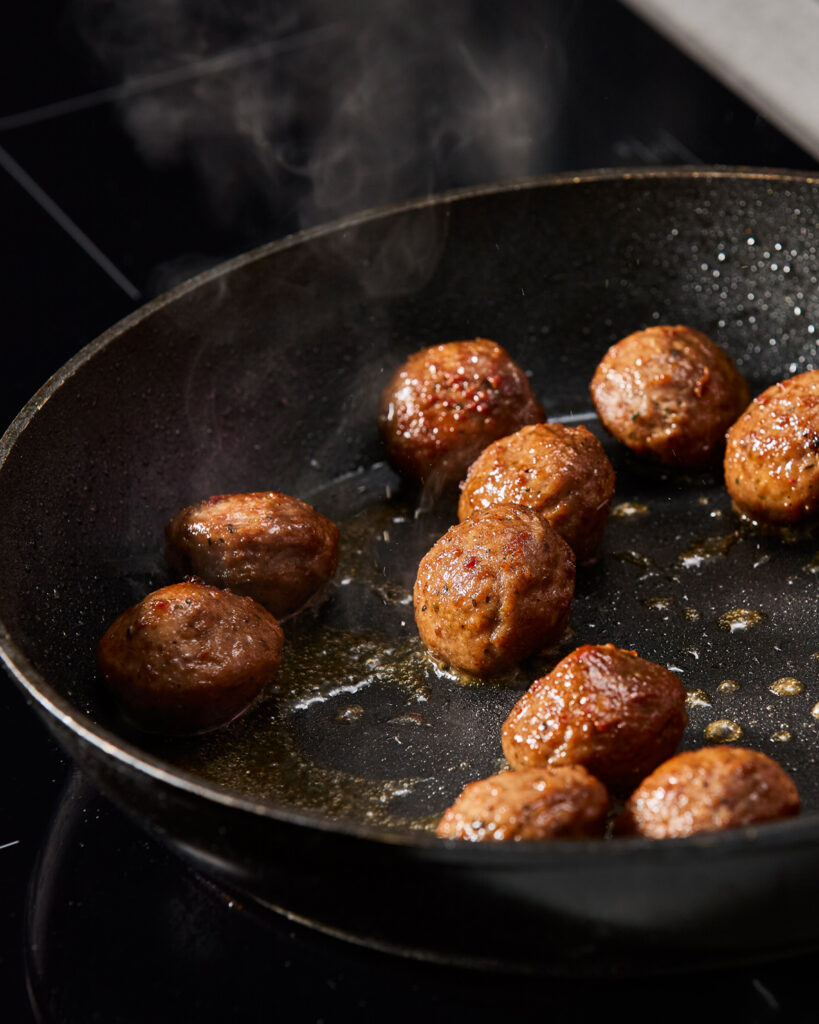
William White Meats has been selling blended meat products for several years now through its “plant-boosted” range of proteins for foodservice operators. It is now extending that direction with mycoprotein to produce UltiMeat.
The line was developed through a collaboration with the chef teams at the butchery and QuornPro. They began with initial meetings and tabletop sampling to refine flavour, texture and cooking performance, before scaling recipes into full production.
“This has been a genuinely collaborative development process from start to finish, combining our experience in meat blending and product development with Quorn’s expertise in mycoprotein innovation to create products that work commercially as well as nutritionally,” said Rebecca Marks, director at William White Meats.
The meat purveyor says the new range is built for operational ease. It requires no training or new equipment, cooks like 100% beef products, and can be swapped like-for-like on the menu. Notably, the blended meat product offers lower cooking loss, with just 5% loss for UltiMeat versus 18% for a conventional beef burger.
These products, also known as “balanced proteins”, carry consumer appeal, too. They look, cook and taste like conventional meat, and come with lower saturated fat and calorie content, and add fibre to products (up to 3g per 100g) that traditionally have none. UltiMeat’s lineup also offers 15-17.5g of protein per 100g.
Plus, there’s the environmental benefit. Beef is the most polluting food product on the planet, so reducing its share in processed meat products can dramatically lower emissions. According to William White Meats, UltiMeat has a 40% has a smaller carbon footprint than beef.
Can blended meat aid Quorn’s financial turnaround?
The rollout comes amid a continued decline in UK retail sales of meat-free products. In 2025, sales of meat alternatives fell by 7% in Europe’s second-largest plant-based market, with volumes slipping by a further 9%.
Still, a third of Brits want to cut back on meat and dairy, and 38% want to increase their plant-based consumption. And a recent survey shows that around three in five UK consumers would be willing to buy blended meat if it tasted good and cost about the same as 100% meat.
“This range has been developed to provide a practical bridge for operators and diners who want to reduce meat consumption without removing it entirely,” said Quorn CEO David Flochel. “Combining meat and mycoprotein delivers the taste and texture consumers expect, while helping operators reduce carbon, manage costs and evolve their menus in a realistic, scalable way.”
Blended meat is one of the key levers in Quorn’s turnaround. Its parent company, Marlow Foods (itself owned by Monde Nissin), saw sales shrink by 9% in 2024, although its foodservice revenue was up by 2.5%, thanks to the progress of the then-newly launched QuornPro division.
But last year, Quorn’s decline slowed, with Marlow Foods registering a 1.2% drop in annual sales, marking the first of a three-year transformation plan laid out by Flochel.
The blended meat vertical is a core part of this strategy. The demand for these proteins has led retailers across Europe to introduce balanced protein products. The shift is led by the Netherlands (where blended proteins are 4.4% cheaper than meat and dairy), while supermarkets in Germany, Belgium and Sweden have embraced this category, too.
Quorn isn’t the only major alternative player to open its spores to blended meat. In Spain, Novameat is now selling its pulled plant-based beef to meat manufacturers, positioning its proprietary protein texturisation technology as a scalable bridge for these balanced proteins.
“We are incredibly proud of this new range and see it as a real marker for innovation across our sector,” said Marks. “It is crucial that we are all doing what we can to innovate, not only to support the environment but to ensure we are offering customers products that are second to none when it comes to flavour, quality and cost.”