
Spanish plant-based leader Heura has debuted its first non-meat-mimicking products: legume-based veggie burgers that contain twice the protein as the category average.
On the back of its first profitable quarter, Barcelona-based Heura has moved into new waters by expanding its portfolio beyond meat analogues.
The startup has launched two plant-based burgers combining legumes with whole vegetables. It’s an ode to the classic veggie patty, but doubles the average protein content of this category with 15g of the nutrient per burger.
The diversification is a “deliberate strategic decision” for Heura, which aims to address the “unspoken trade-off” that comes with veggie burgers. “The vegetable burger always made you choose: protein or flavour. We didn’t accept that rule,” said co-founder and CEO Marc Coloma.
“We put legumes and vegetables at the centre and kept it all: more protein, more flavour and a juiciness you don’t expect,” he explained.
Leaning into Spain’s appetite for legumes
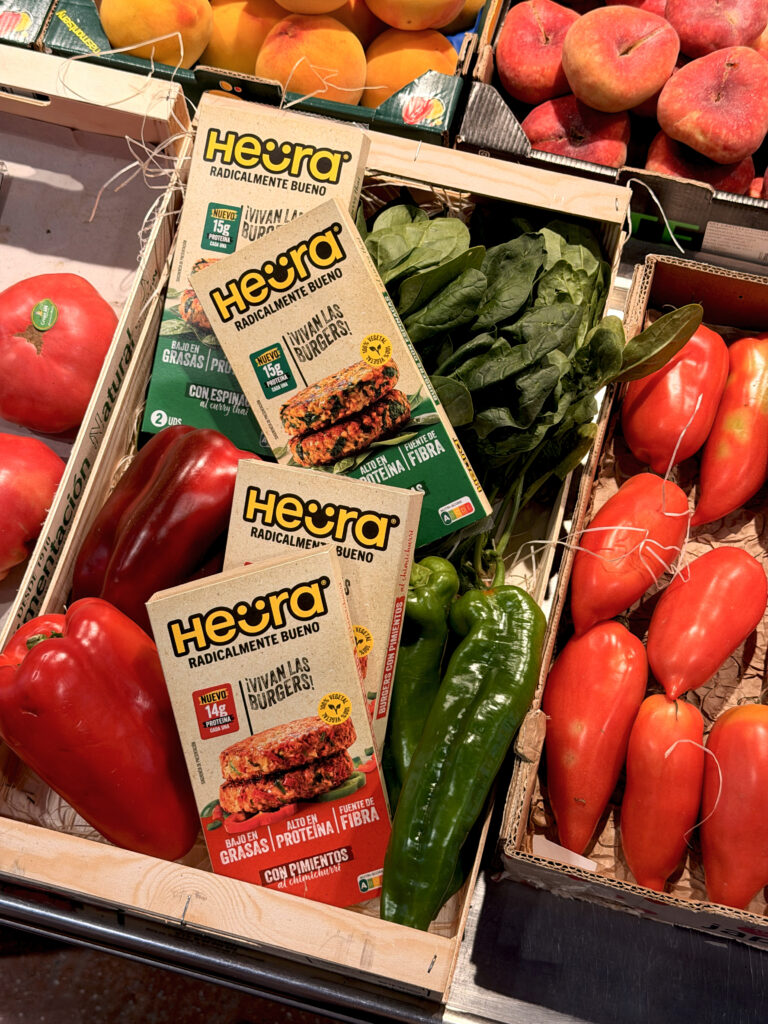
Heura’s newest burgers come in two clean-label variants with a Nutri-Score rating of A: spinach with Thai curry, and roasted peppers with chimichurri. They have a short ingredient list, are low in saturated fat and high in fibre, and – thanks to the Maillard reaction – form a crispy crust and juice centre when cooked on a griddle.
Despite the non-meat-mimicking focus, the company says its mission with the new products remains the same: to put legumes at the centre of a “radically good” food system and show that plant proteins can meet every consumer expectation, including taste.
In Spain, veggie burgers represent around 20% of the plant-based market, but Heura claims no one has reinvented the segment in two decades. This category has either offered tofu-based offerings (lauded for their nutrition) or fully vegetable-centred products (valued for their lightness and flavour) – the firm’s new range aims to bring these attributes together.
Heura notes that 78% of its customers are either omnivores or flexitarians, and more than half of the people who buy veggie burgers don’t purchase meat analogues. This makes the launch a sign of market expansion, not a cannibalisation of its existing portfolio.
Four in five Spaniards have cut back on meat or are open to that change, according to a 2025 survey commissioned by the Federation of Consumers and Users (CECU). That’s despite 39% of respondents increasing their protein intake over the preceding year, with 35% doing so through plant-based food.
Legumes emerged as a winning ingredient, as 73% of consumers found these very healthy (versus 40% who said the same for meat). This, however, falls to 22% for tofu and tempeh, and 17% for meat analogues.
Legumes are also viewed as the cheapest food in Spain, with 49% calling them somewhat or very inexpensive. In contrast, 64% find plant-based meat very expensive, and an even larger share (88%) had the same view of conventional meat.
However, CECU pointed to an intention-action gap when it comes to legumes: the average Spaniard consumes only 3.36kg of these foods per year, well short of the 11.5kg recommended in the national dietary guidelines. Heura’s new burgers will be looking to plug this gap.

Heura bets on successful track record to perk up veggie burger category
Heura has begun rolling out its legume-centred patties in Spanish retail through Carrefour, Alcampo, Ametller Origen, Bonpreu, and others. Next year, it plans to bring this range to Portugal, France, and Italy, markets where it already has an established presence and consumer base.
The company is betting on its excellent pedigree to further raise the plant-based category’s standards. Out of 133 burger SKUs in the national market, its two plant-based beef patties capture 39% of total sales, and deliver 41 times more revenue per product, making them the highest-velocity meat alternatives in the country.
It launched five new products across strategic segments in 2025, several of which already rank among the 10 fastest-rotating branded products in Spain’s plant-based category.
The country’s meat alternative market contracted by 6.3% in 2025 (against a 7.7% uptick for the overall plant-based market). But Heura held its position and accounted for half of the national plant-based sector’s growth, and reached its highest market share yet (double that of its nearest competitor).
This helped the firm post positive EBITDA – revenue excluding all non-operational and one-time expenses – for the first time in Q1 2026, prompting Coloma to call it “proof that the model works”.
Heura is now looking to expand through a B2B model by manufacturing plant-based products for retailers and brands in markets where it doesn’t compete directly. The white-label approach will see it bring its food tech platform, formulation expertise, and supply chain efficiency to partners to help them develop superior vegan products under their own brands.
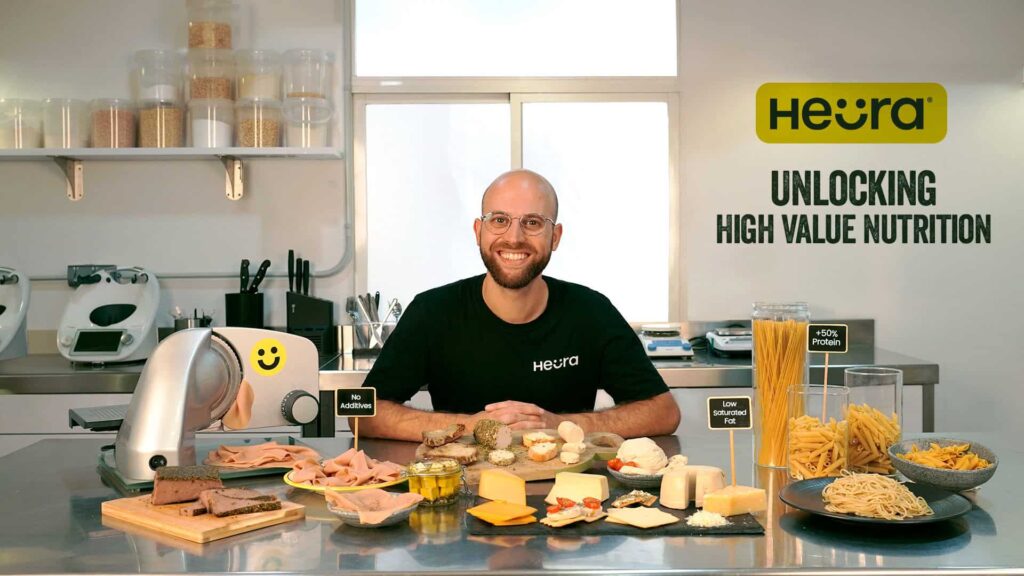
The company, which won a legal battle against the meat lobby last month, has been working on a wider range of categories to battle the ultra-processed tag that has plagued the plant-based sector. Last year, the company served up high-protein versions of spaghetti, dairy-free cheese (like feta, parmesan, mozzarella, and melty cheese), and cold cuts.
Speaking to Green Queen about the CECU poll last year, Heura co-founder Bernat Añaños highlighted a need for the plant-based industry to step up: “We must create amazing products and break the myths around plant-based food. The worst enemy of the category are bad products. People only change habits when the alternatives are exciting, familiar, and truly satisfying.”
Heura is the latest meat alternative brand to foray into the whole-food space in Europe recently. Last year, UK startup This launched the Super Superfood line (which has since been rebranded), while Oh So Wholesome rolled out Veg’chop – both ranges are made from vegetables, mushrooms, seeds and/or lentils.
Slovenia’s Juicy Marbles came out with a veg-forward Umami Burger in the UK. And Austrian mycoprotein player Revo Foods expanded its 3D-printed portfolio with fillet and mince products that it said didn’t intend to mimic meat.