A new study found that plant-based alternatives contained twice as many additives as meat and dairy, but its authors – and a range of experts – say this doesn’t necessarily increase health risks.
Mainstream media outlets love to jump on attention-grabbing headlines that do away with nuance. And while that may be true for a multitude of industries, it applies to the plant-based food sector, too.
Last week, a study by the Institute for Optimum Nutrition (ION) looked at 71 like-for-like pairs of plant- and animal-based products in an unnamed UK supermarket, and found that the former collectively had twice as many additives (199) as the latter (100).
There were 39 E-numbers in plant-based products, compared to 31 in animal-derived ones. And across additives, ingredients and these E-numbers, the biggest difference occurred between conventional and alternative meat, dairy and seafood.
Right on cue, the Daily Mail ran a story with a headline that read: “Bad news for vegans.” A food industry, magazine, meanwhile, suggested the “health halo” surrounding these alternatives had “slipped a little further” with the study.
These narratives are missing the point, one made by the study’s authors themselves, as well as several industry experts who spoke to Green Queen.
“It may be tempting to argue that the greater use of food additives in plant-based products presents an increased health risk, though such a conclusion cannot be drawn from the present study,” the paper, published in Food Additives & Contaminants: Part A, states.
The research fits into the ongoing debate around products with long ingredient lists and ultra-processed foods (UPFs), which consumers are trying to avoid. They’re looking to understand the negative health effects of these products, but the additive study “wasn’t focused on this”, according to senior author Joseph Whittaker.
“The findings of the study reflect a trend we are seeing across the food sector: consumers increasingly want greater transparency and simpler ingredient lists,” Devika Suresh, head of ProVeg International’s business incubator, tells Green Queen.
“At the same time, it is important to note that the authors themselves emphasise that a higher number of additives does not necessarily translate into a greater health risk.”
Authors and experts warn about additive study limitations
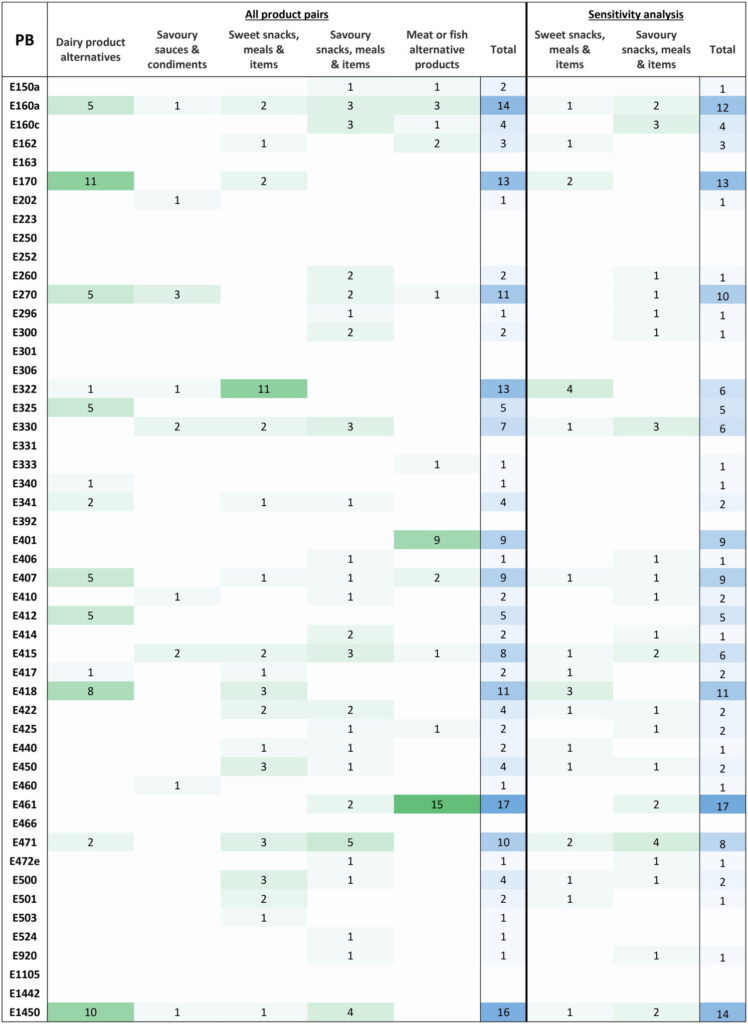
The IOM study has a host of limitations, and it’s something the authors also highlight. For instance, Whittaker noted: “Even though we found that plant-based products had more food additives, this does not necessarily mean an increased health risk.”
For one, it only analysed a small number of plant-based products from a single private-label range, excluding offerings from other retailers, brands, or geographical locations.
“Second, we didn’t assess the quantity or concentration of food additives used, nor how much or how often people eat these products, so, essentially, we don’t know the level of exposure to food additives from these products. And last, all food additives used in these products have passed UK food safety regulations,” outlined Whittaker.
Roberta Alessandrini, director of the Dietary Guidelines Initiative at the Physicians Association for Nutrition (PAN International), says the study raises a useful point about the makeup of some vegan alternatives, but “should not be read as a simple ‘plant-based foods are worse’ story”.
“It is not surprising that some plant-based alternatives contain more additives, as manufacturers often use them to recreate the texture, flavour and eating experience of meat, dairy or fish products,” she argues.
“A higher number of additives does not automatically mean a product is unhealthy or unsafe. The study did not assess the quantity of additives used, people’s actual intake, exposure levels, long-term consumption patterns or health outcomes,” she adds.
“The additives identified are approved for use and regulated in the UK, but more research is still needed on cumulative intake, especially among people who consume manufactured plant-based alternatives frequently.”
Marjorie Mulhall, executive director of the US-based Plant Based Foods Association, concurs with this assessment: “This study should be interpreted in the context of its limitations,” she says. “It examined a limited selection of products from one UK retailer and did not assess whether the additives identified pose any increased health risk.”
Not all additives are created equal

Food companies warn against painting all plant-based foods and additives with the same brush. “Plant-based products may use a wider range of ingredients to deliver the taste, texture and functionality people expect from familiar foods. This reflects how they are made, rather than being a measure of their healthfulness,” suggests Kate Overy, nutrition science and communications lead at Oatly.
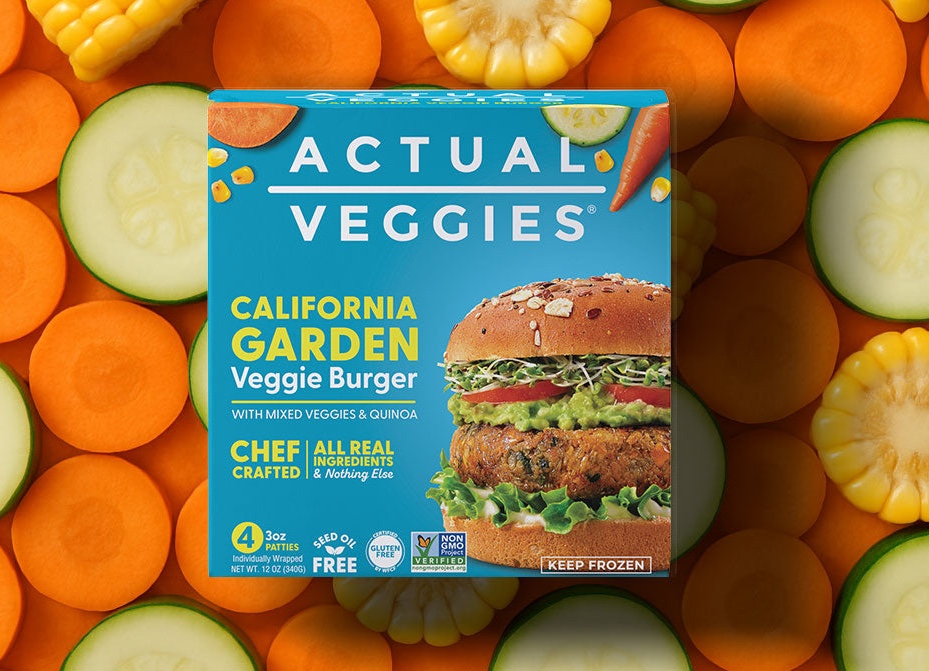
Jason Rosenbaum, co-founder and co-CEO of US whole-food brand Actual Veggies, adds: “This study highlights something consumers are already asking for: plant-based foods made with simpler, recognisable ingredients. Not all plant-based products are the same, and the category should not be treated as one bucket.”
It’s worth pointing out that many additives actually enhance products’ nutritional profiles. Most plant-based milk products are fortified with vitamins and minerals, for example, but many of these appear on labels as E-numbers.
Riboflavin (or vitamin B12) is E101, and vitamin C is E300. A string of others are innocuous, such as E599 (baking soda), E330 (citric acid), and E440 (pectin).
“Many ingredients commonly referred to as ‘additives’ serve important functions, including food safety, product quality, and fortification,” says Mulhall.
“The presence of these ingredients alone is not a measure of a food’s healthfulness. Consumers should evaluate foods based on their overall nutritional profile, and plant-based foods remain important options that help millions of Americans meet their dietary needs.”
ProVeg Incubator’s Suresh adds: “Food additives are widely used across both plant-based and animal-based products and can play important roles in food safety, shelf life, stability, and reducing food waste.”
Still, the demand for cleaner labels is driving startups to develop solutions that deliver the taste, texture, and nutrition consumers expect using fewer, more recognisable ingredients.
“These innovative formulations leverage everything from natural texturisers like fungal mycelium to AI-driven modelling technology to map how diverse protein sources can naturally replicate desired functionalities,” notes Suresh.
The study’s real message: food quality matters
“Plant-based alternatives can be useful for people reducing meat and dairy, particularly red and processed meat, and may support both health and environmental goals. But they should not be treated as the foundation of a healthy plant-based diet,” says PAN International’s Alessandrini.
“The real public health message is that food quality matters. A diet centred on whole and minimally processed plant foods, such as vegetables, fruits, legumes, whole grains, nuts and seeds, is very different from a diet that relies heavily on processed alternatives.”
This has created an enormous opportunity for startups like Actual Veggies, which posted $20M in revenue in 2025 and expects to hit $30M this year.
“For us, plant-based food should be a platform to help people get more vegetables into their diets, whether they are vegan, vegetarian, flexitarian, or even someone who eats meat regularly. No matter how someone chooses to eat, whole vegetables should be an important part of the diet,” says Rosenbaum.
“When you look at some imitation meat products, there are often very few, if any, real vegetables in them, and that is where consumers can start to see more additives and highly processed ingredients,” he adds. “Our products are made with real, visible vegetables and clean-label ingredients, not long ingredient decks (or additives) designed to imitate meat.”
Oatly is also keeping an eye on this trend. “We aim to keep our recipes as simple as possible while still delivering on taste, nutrition and functionality,” reveals Overy. “We also offer an organic range for those who prefer products with fewer ingredients.”
She continues: “While differences in ingredient lists may be interesting, they don’t indicate whether a product is better or worse nutritionally. That’s why it is important to look beyond simply counting ingredients or additives and consider the overall nutritional profile and how foods contribute to a balanced diet,” says
Do these conversations affect what investors decide to bet on? “We don’t see this study as a challenge to sustainable proteins, but as a signal that the category is evolving,” says Christian Nagel, co-founder and partner at VC firm Earlybird.
“Consumers are demanding products that are simpler, more natural, and economically attractive, while still delivering the taste and texture they love,” he adds, pointing to his firm’s investment in Nosh.bio, which produces a fermentation-derived koji protein for blended meat applications.
ProVeg’s Suresh explains how the study can be useful for food producers: “We see these findings as an opportunity to continue improving transparency and product formulation, while recognising that a food’s overall nutritional quality is more important than the number of additives listed on the label alone.”