
US startup Mushmycel has introduced a range of vegan leather accessories derived from waste materials like reclaimed mushrooms, coffee grounds and coconut fibres.
As consumers look for sustainable alternatives to harmful fashion materials, Californian firm Mushmycel has unveiled a line of accessories that offers a two-for-one solution to climate change.
The startup turns agricultural byproducts – such as mushroom waste, apple skins, coconut fibres, and coffee grounds – into vegan leather, lowering the greenhouse gas emissions associated with food waste and conventional leather production.
These alternative materials form the base of Mushmycel’s expanded lineup, which includes premium business accessories, travel essentials and lifestyle goods.
How Mushmycel creates its range of vegan leathers
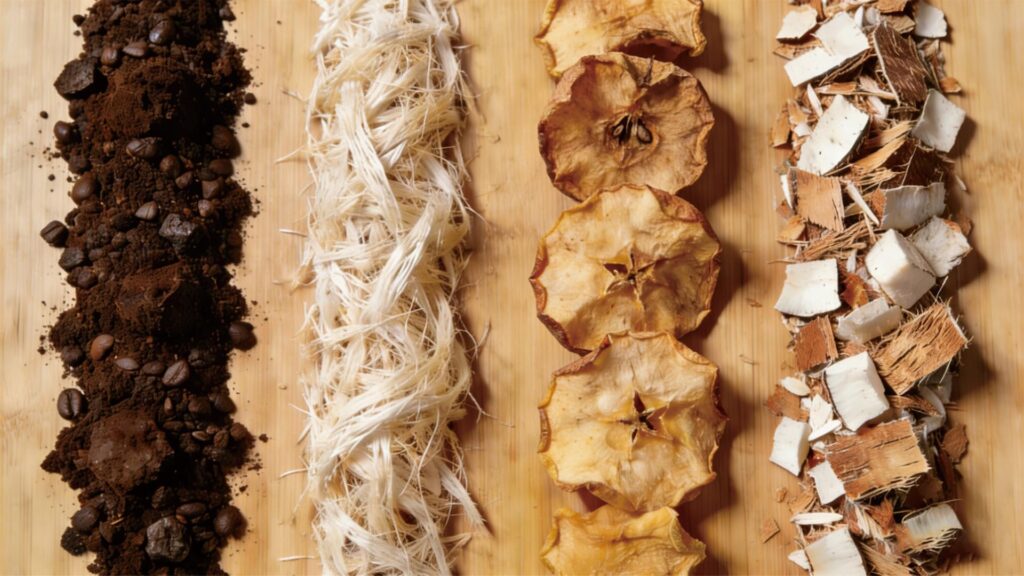
Founded in 2025, Mushmycel uses agricultural waste as a nutrient base, cultivating a dense, resilient mycelium network. This is then transformed into animal-free leather through advanced drying, tanning, dyeing, and embossing techniques.
For the mushroom leather, the startup recycles mycelium (leftover biomass from mushroom cultivation), combining it with plant-based substrates to form a soft, durable leather alternative via high-temperature pressing and surface finishing.
The apple leather is created by repurposing fibres from apple pomace (left over from apple juice extraction). These are fed to Mushmycel’s mycelium, followed by high-temperature pressing and coating processes, resulting in a soft-touch, lightweight material with high durability, scratch resistance, and long-term shape retention.
Mushmycel also makes leather alternatives by blending fibres from discarded coconut husks with plant-based binders. With the help of mycelium, high-pressure moulding, and surface finishing, these are turned into a matte-textured, lightweight leather.
Finally, the startup makes use of spent coffee to produce an eco leather that has natural breathability and antibacterial benefits. The coffee colour means it requires little to no extra dyeing, and makes it suitable for use in fashion accessories, home decor, automotive interiors, and tech gear.
Decarbonising leather is paramount
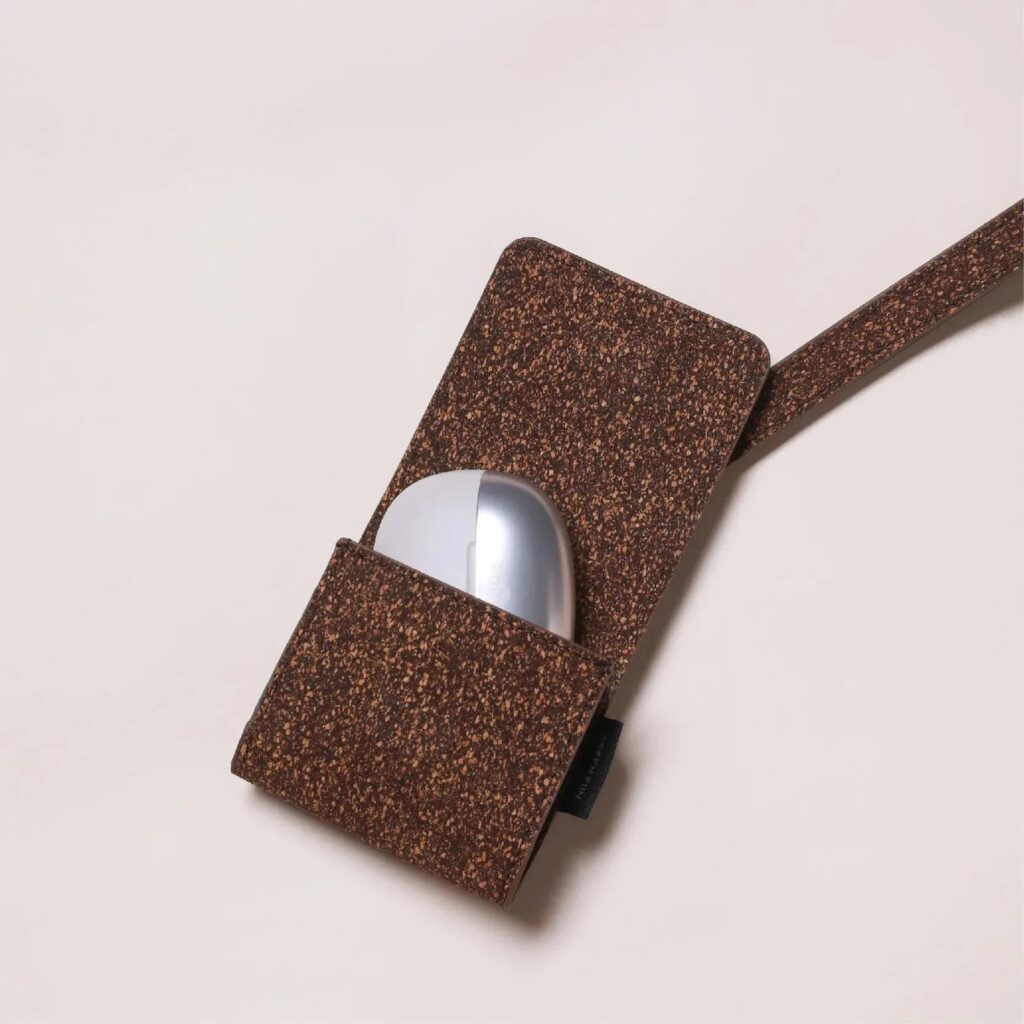
Mushmycel’s range of products includes mycelium-based travel bags and passport holders, coconut-derived cases for AirPods and eyewear, card holders made from apple skin, and notebooks and phone and earbud cases utilising its upcycled coffee leather.
Utilising food waste is a shrewd move, considering that it accounts for up to a tenth of global emissions (five times as much as the aviation industry). Producing leather, meanwhile, is an energy– and water-intensive process linked to deforestation and biodiversity loss, and it generates many hazardous chemicals during tanning, which are detrimental to human health.
The fashion industry generates 8.3 million tonnes of methane annually (nearly four times as much as France), and leather alone accounts for 54% of this share, producing 110kg of CO2e per sq m when derived from cows.
This falls to 15.8kg for plastic-based synthetic leather, an 85% reduction. But plastic, derived from petrochemicals, is highly problematic. Its production is responsible for 3.4% of global emissions, and it takes 20 to 500 years to break down. Further, plastic-based leather can shed toxic microplastics that can enter waterways, destroying aquatic life and wreaking havoc on our food systems.
It’s why companies like Mushmycel are innovating with bio-based, plastic-free alternatives to leather. Ecovative and MycoWorks are both working on mycelium leather too. Uncaged Innovations leverages proteins from grain byproducts to produce the material, which is already being used to line vehicles made by Hyundai and Jaguar Land Rover, among other applications.
Others are using cellular agriculture to make lab-grown leather, a space that includes Faircraft, Qorium and Cultivated Biomaterials.