
Swedish oat milk giant Oatly is reportedly considering selling its business in China, where it has struggled for years. A potential deal could be completed this year.
For several years now, Oatly has faced an uphill battle in China, a market it entered eight years ago, prompting a strategic review. While it is ongoing, executives handling its operations in the East Asian country are considering buying out this business, according to Bloomberg.
The publication reported that the potential buyers are working to reach a deal for Oatly’s China division as soon as this year.
The potential development shouldn’t come as a surprise, however, considering that the company has kept the possibility of a carve-out open throughout its strategic process.
Speaking about the China business, Oatly CEO Jean-Christophe Flatin told investors in the company’s Q1 2026 earnings call in April: “We continue to evaluate a range of options, including a potential carve-out, with the goal of accelerating growth and maximising the value of the business.”
Why China has been a tough market to crack for Oatly
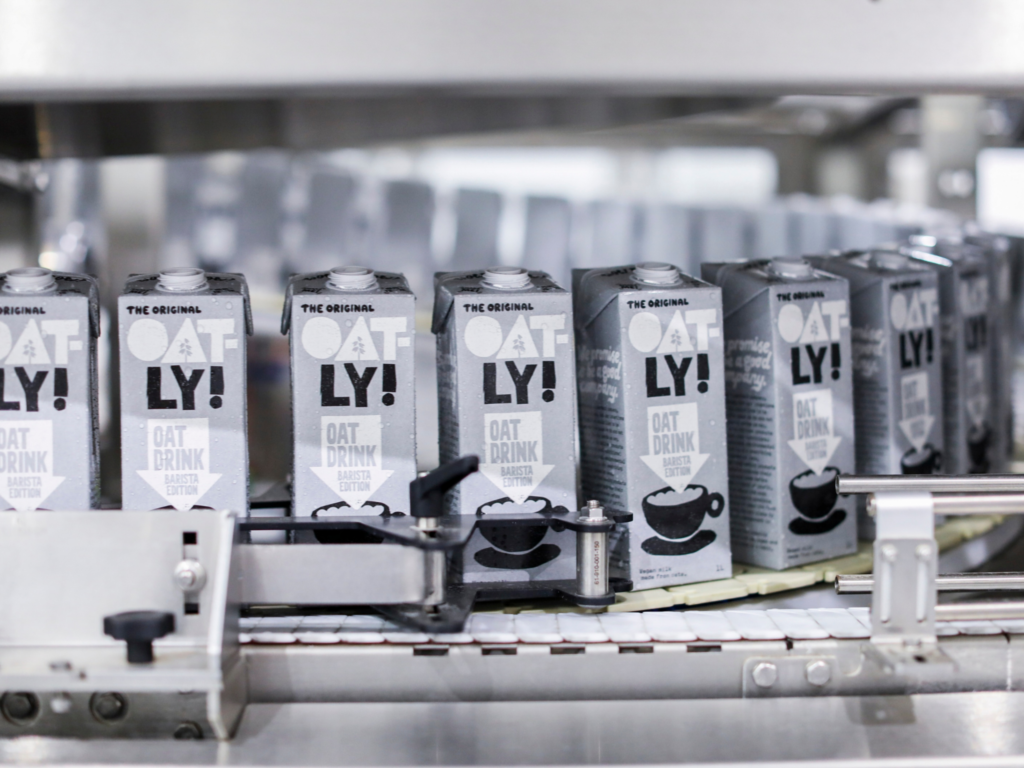
Oatly’s struggles in China ramped up after the Covid-19 pandemic, when it was still a young player in the country. The country accounted for 90% of its Asian market share in 2023, but its revenue in the region declined by 14% that year, while revenue in the West increased.
The company has a factory in Ma’anshan, Anhui province, though its financial struggles scuppered plans for a second facility in the country.
At the time, Oatly COO Daniel Ordonez said it couldn’t continue to justify “significant investments with uncertain payoffs”: “We will be therefore slowing down on SKU expansion and eliminating many unnecessary SKUs… and migrating to a more simplified cost structure.”
Flatin added: “We are refocusing on our core business, which means food service and very few key retail partners only in key cities.”
This reflects its wider struggles in Asia. The firm shuttered its facility in Singapore in 2019, impacting the jobs of 34 Oatly employees, plus 25 others who were contracted to local food producer Yeo Hiap Seng, which ran the site in partnership with the oat milk maker.
Globally, slower sales, higher manufacturing costs and supply chain difficulties in the post-Covid period and in the wake of Russia’s war on Ukraine led Oatly to adopt an “asset-light” strategy, even cancelling plans to open new factories in the UK and the US.
A slower-than-expected recovery from the pandemic, as well as the strength of domestic brands, meant that, despite a rise in plant-based milk consumption in China, Oatly never gained the foothold it wanted.
Business restructuring and market-specific innovation have mixed results
When it posted its 2023 earnings results, the company restructured its business, merging Asia into the Europe & International segment, and creating a new Greater China division (which also encompassed Hong Kong and Taiwan).
This revamped business had a topsy-turvy few quarters, posting a 6% year-on-year sales drop in Q2 2025, followed by 29% and 1% increases in the following quarters.
Its overall sales in China last year rose 13%, helping the company register its first year of profitable global growth. Things slowed in the beginning of 2026, with revenues in the region falling by 2%, and volumes by 8.8%, opposite to the picture in Europe and North America.
Oatly announced its strategic review last year, which is set to be completed by the end of 2026. “Our Greater China business has improved over the past few years. And it is much stronger now. It has been a strong contributor, delivered better results, established market leadership and is now well positioned for the future. We believe in the future potential of this business,” Flatin said at the time.
To turn its fortunes around, the oat milk producer has been tweaking its portfolio in China with hyper-specific products that you can’t find elsewhere.
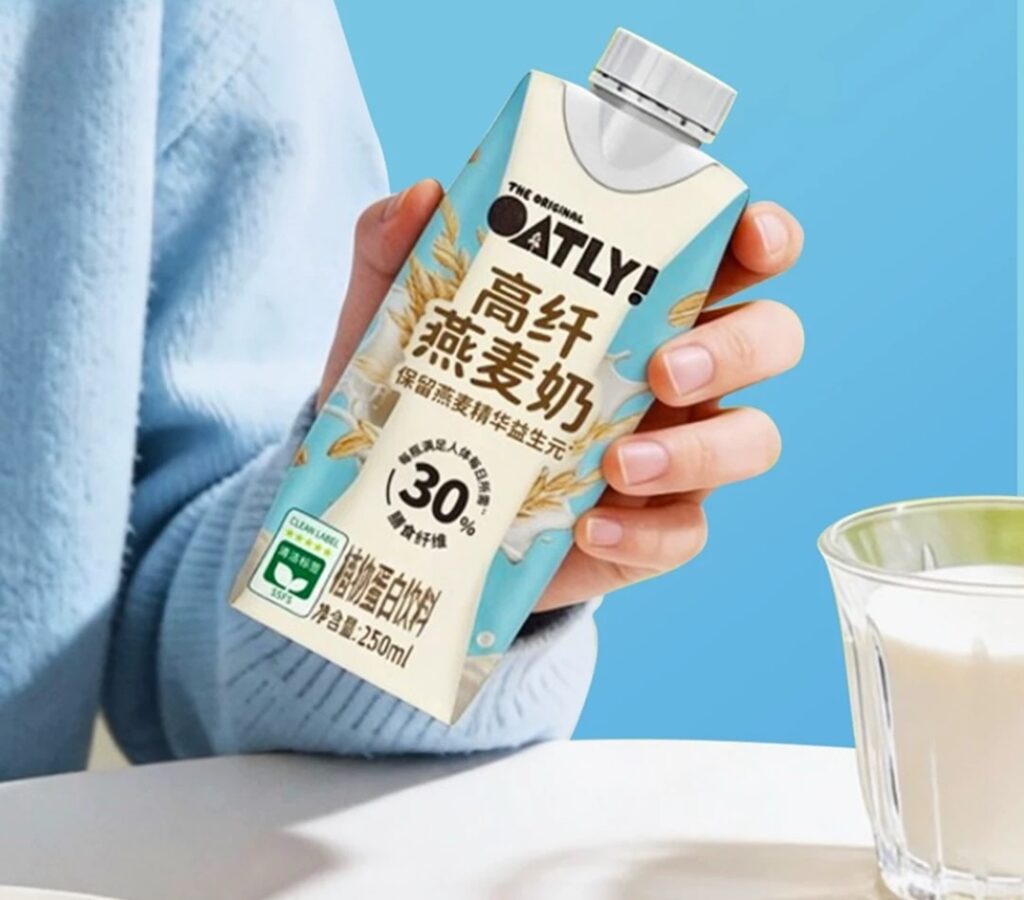
For instance, over the last year, Oatly has introduced a high-fibre oat milk, a turmeric latte, low-GI oat cream and ice cream, gardenia-peach-flavoured oat milk, and even veggie crisps.
The strategic review is still underway, so all options still remain open. However, analysts suggest that exiting China could significantly boost Oatly’s valuation, which has fallen from $13B when it went public in 2021 to $260M today.