
Malt producer Soufflet Malt has teamed up with research initiative Ferments du Futur to develop high-value ingredients through fermentation, starting with cocoa substitutes.
A new partnership between French malt giant Soufflet Malt and public-private research scheme Ferments du Futur is the latest entrant to the booming alternative cocoa market.
The 18-month programme will see the two entities create next-gen food ingredients via solid-state malt fermentation, starting with a cocoa substitute made from sprouted grains.
The project combines the industrial expertise of Soufflet Malt, the world’s largest malt producer, with the research capabilities of Ferments du Futur.
The latter was founded in 2022 and backed by the French National Research Institute for Agriculture, Food and Environment (INRAE) and the Association of Food Industries (ANIA).
“By combining advanced fermentation research and industrial know-how, this partnership perfectly illustrates the strength of the continuum between discovery and market-driven innovation,” said Ferments du Futur executive director Damien Paineau.
Recreating cocoa’s aromatic signatures through malt fermentation
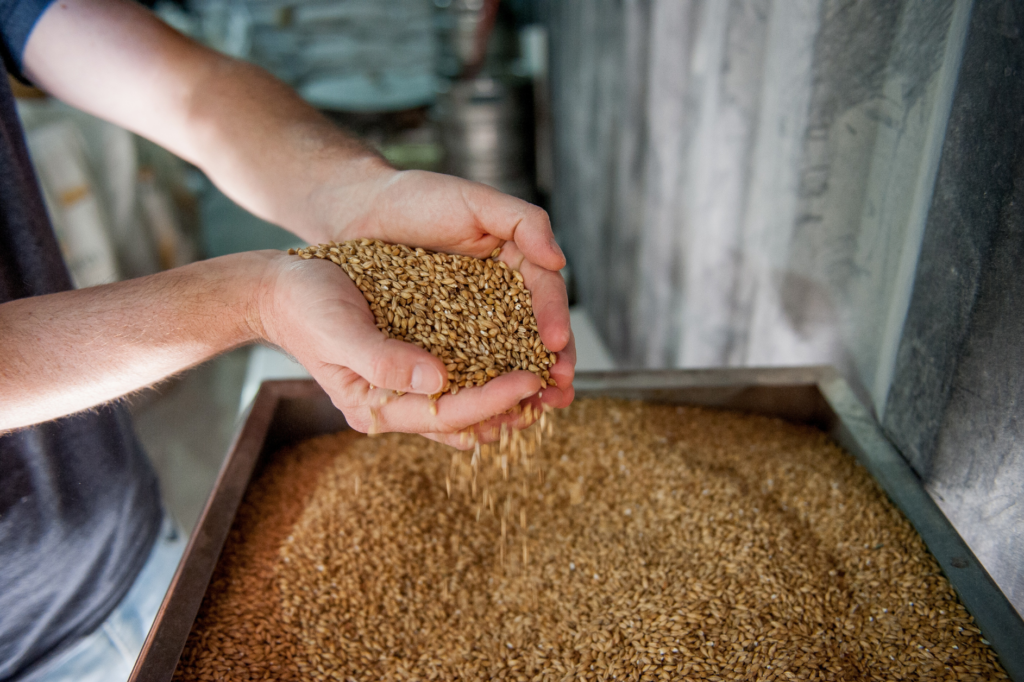
The research project relies on solid-state fermentation, where microbes are grown atop germinated grains to generate the targeted aromatic compounds.
This process could enable the creation of a range of grain- and legume-derived ingredients for food applications, including compounds rich in antioxidants and vitamins.
Soufflet Malt and Ferments du Futur will initially work on reproducing a cocoa-like flavour profile by fermenting barley malt, wheat, and other germinated grains.
To do so, the researchers will identify cocoa’s aromatic signatures and the metabolic pathways needed to reproduce them through malt fermentation. They will also screen microbial strains and optimise fermentation conditions, including roasting techniques that can deepen the flavour complexity of the compounds.
In addition to lab research, the project entails plans to scale up to commercial levels via a four-tonne pre-industrial demo facility in Nogent-sur-Seine, France. This will enable the teams to validate strain productivity and fermentation conditions at a larger scale, and prepare samples for commercial partners.
The programme is set to accelerate the transition from research to market-ready applications for sustainable alternatives to climate-change-affected commodities, which are becoming more important for manufacturers by the day.
Cocoa alternatives on the rise as climate change bites

Cocoa has been one of the commodities worst hit by the climate crisis. In 2024, global cocoa stocks fell to a decade low, and the ingredient’s prices hit an all-time high. In the US, a tonne of cocoa was going for a record $12,565 that December. And scientists say a third of all cocoa trees could die out by 2050.
Chocolate itself is one of the primary food-related drivers of climate change, emitting more greenhouse gases than any other food except beef. On average, it can take as much as 1,700 litres of water to produce a single bar of chocolate.
The industry is notorious for causing rampant tropical deforestation. It’s why chocolate is the subject of anti-deforestation legislation in the EU and the UK, as well as a similar proposed bill in the US.
“Given the challenges currently facing the cocoa value chain, innovation and collaboration between public research and industry are essential to developing new sustainable solutions,” said Laurent Debande, chief growth and innovation officer at Soufflet Malt.
The company is well-placed to capitalise on the alt-cocoa movement, given its extensive footprint – it operates 40 malting plants in 20 countries with an annual production capacity of 3.7 million tonnes. Meanwhile, Ferments du Futur runs an innovation centre in the Paris-Saclay science and innovation cluster, and is supported by €48.3M in funding from the government’s France 30 programme.
Elsewhere, a host of startups are working on alternatives like cocoa-free or cell-based chocolate, many of whom are supported by industry giants like Barry Callebaut, Cargill, Puratos and Mondelēz International.
These include Voyage Foods, Planet A Foods, Prefer, Win-Win, Foreverland, Nukoko, Endless Food Co, Green Spot Technologies, California Cultured, Kokomodo, and Celleste Bio.