Mondelēz International has used Celleste Bio’s cell-based cocoa butter to create nearly a dozen milk chocolate bars, a milestone moment for the cellular agriculture industry.
Cell-based chocolate is no longer a pipe dream – and one of the world’s largest confectionery companies is leading the charge.
Mondelēz International has developed nearly a dozen milk chocolate bars with cell-based cocoa butter from Israeli startup Celleste Bio, in which the Cadbury owner has been an investor since 2022.
Celleste Bio develops the fat using real cocoa cells grown in suspension in a bioreactor. The process takes one to two beans to produce the same amount of cocoa butter that traditionally requires four tonnes of cocoa and 10,000 sq m of land.
The Mondelēz innovation is proof that its technology works at scale and meets the consumption standards of an industry giant. Celleste Bio said it sets the stage for scaling up production to market-ready quantities within the next two years.
“It delivers the same texture, melt, and experience as conventional cocoa – and marks a real step toward scalable, commercially viable production,” CEO Michal Beressi Golomb said in a LinkedIn post.
Celleste Bio’s AI-led process can create customised cocoa butter
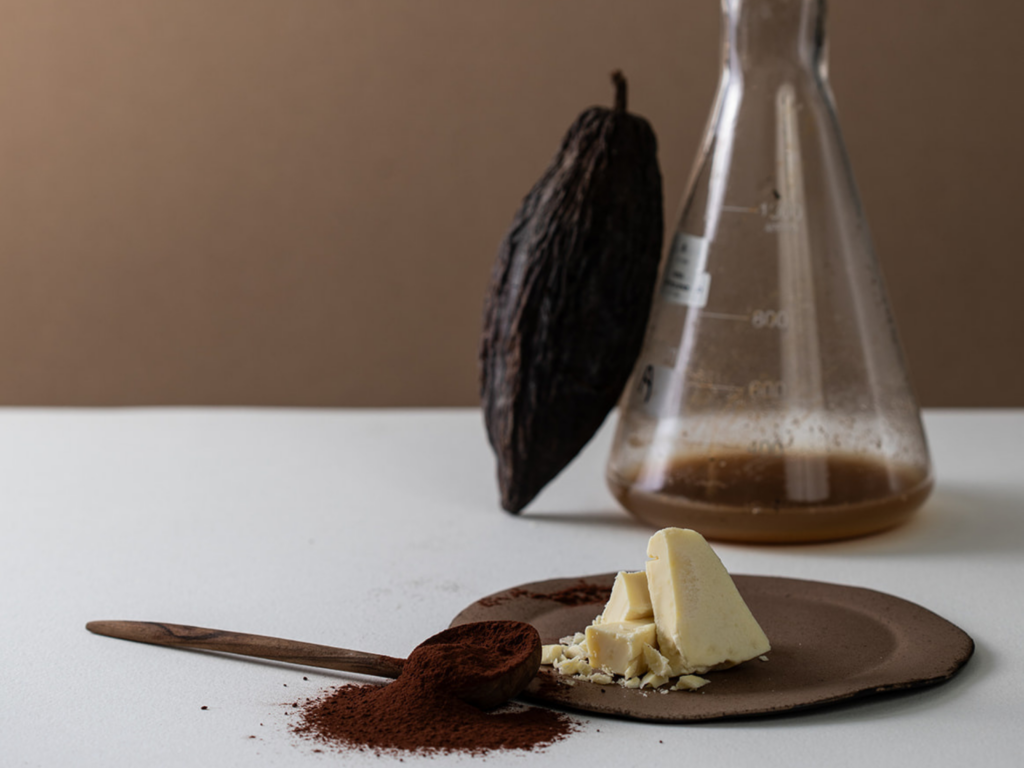
Founded in 2022 by Hanne Volpin, Orna Harel, Avishay Levy and Daphna Michaeli, with support from The Trendlines Group, Celleste Bio pairs agtech and biotech with computational artificial intelligence (AI) to produce cocoa ingredients via cell culture.
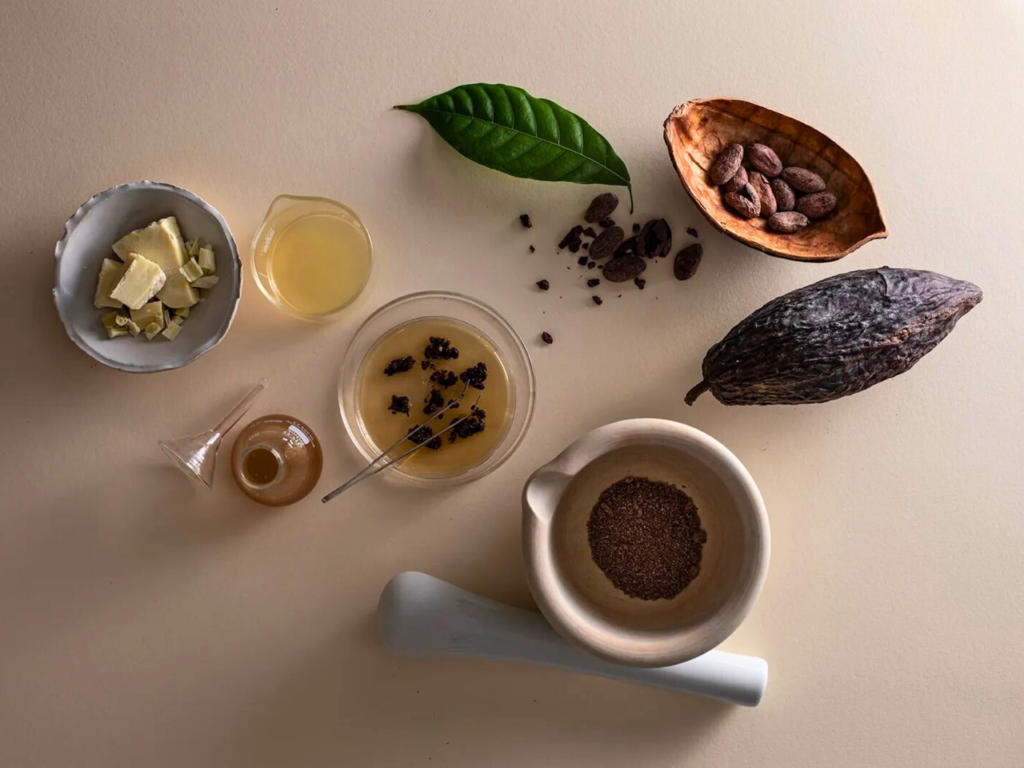
It selects different varieties of cocoa beans, extracts their cells, and grows them in a bioreactor with vitamins, minerals, water and sugar. This then becomes a biomass, from which it extracts cocoa butter and powder.
The process is similar to cocoa production in nature, but in a controlled setting under optimal conditions. Importantly, the cells keep growing after the biomass is removed, so the process repeats without needing another bean.
The company says its AI-led model is designed to customise cocoa butter to its clients’ specifications, such as higher melting points and taste experiences, which can allow them to level up their innovation and competitive advantage.
“Celleste launched in 2022 with the mission to secure a sustainable future for the global chocolate industry amidst increasing supply chain pressures of climate change, disease, traceability and geopolitical instability,” said Beressi Golomb.
“In three years, we’ve made unprecedented progress to meet this formidable scientific challenge. We’ve validated our ingredients as drop-in replacements, created an operational R&D pilot facility to scale up our volumes and now proven our cocoa butter performs identically to conventional cocoa, clearing the next phase to commercial scale.”
Celleste Bio aims to be market-ready by 2027
According to Celleste Bio, chocolate manufacturers spend about $16B on cocoa ingredients each year, and cocoa butter alone accounts for nearly half of that. And althouth crop yields and prices can level out at times, long-term instability is almost a given without tech-forward solutions.
And instability is exactly what has plagued the cocoa industry. Climate change pushed cocoa stocks to their lowest levels in a decade and prices to all-time highs in 2024. Extreme weather and crop diseases have hit plantations hardest in the Ivory Coast and Ghana, the two largest cocoa producers, which have already lost over 85% of their forest cover since 1960.
Scientists warn that a third of the world’s cocoa trees could die out by 2050. Plus, producing chocolate emits more greenhouse gases than any other food except beef, and the industry is linked to widespread tropical deforestation.
“Building a resilient supply chain means being able to produce at commercial volumes while offsetting disruptions caused by climate change, deforestation and resource scarcity,” said Celleste Bio’s chief science and technology officer, Hanne Volpin.
“We are on track to produce one tonne of cocoa butter annually in a 1000-litre bioreactor from a single bean – which would otherwise require about a hectare of cocoa trees. To that end, we’ve curated a very robust bank of multiple cocoa bean varietals we can use to grow, test and scale material without ever having to cut down a single tree in the rainforest.”
Speaking to Green Queen in October, Beressi Golomb revealed that the company is finalising its pilot facility and anticipates being market-ready by 2027. It’s currently awaiting approval in the US, the UK, the EU, and Israel.
“The ingredient is and must be at parity with cocoa prices, ideally more cost-efficient when traditional cocoa supply is skyrocketing,” she said at the time. “We have two parts of the business: a drop-in replacement, which will be more on par with market costs; and premium cocoa, which will be priced for the premium market.”
The startup has already raised $5.6M to date, and is one of several cell-based cocoa innovators being backed by Big Chocolate. Sparkalis, the VC arm of Belgian confectionery giant Puratos, has been an investor in California Cultured from an early stage, and intends to make a cell-based chocolate product available to its clients by the end of the year.
Puratos and Lindt are also investors in Switzerland’s Food Brewer, and Cargill is working on applications with fellow Israeli startup Kokomodo.