
South Korean foodtech company SOYFT BIOME has closed an undisclosed funding round from MYSC via its ExtraMile Lycon Fund, with plans to scale its plant-based cream and sauce lines into B2B foodservice channels and expand into adjacent markets, including cosmetics and medical nutrition.
The Seoul-based startup works with byproducts generated during soy fermentation, converting what would otherwise be waste streams into functional protein ingredients. Its proprietary AquaProtein ingredient is derived from these fermentation byproducts and underpins an emulsification system the company uses to replicate the taste and texture of dairy in plant-based applications, without added sugar.
Retail traction before the B2B push
SOYFT BIOME already has two consumer-facing brands on the market. KETOYOU is a high-protein food line built around tempeh and similar fermented products, while JA:YU, launched in 2025, is a low-sugar, plant-based condensed milk alternative that has secured listings on Coupang Rocket Fresh, Olive Young, Baemin B-mart, and in department stores across South Korea.
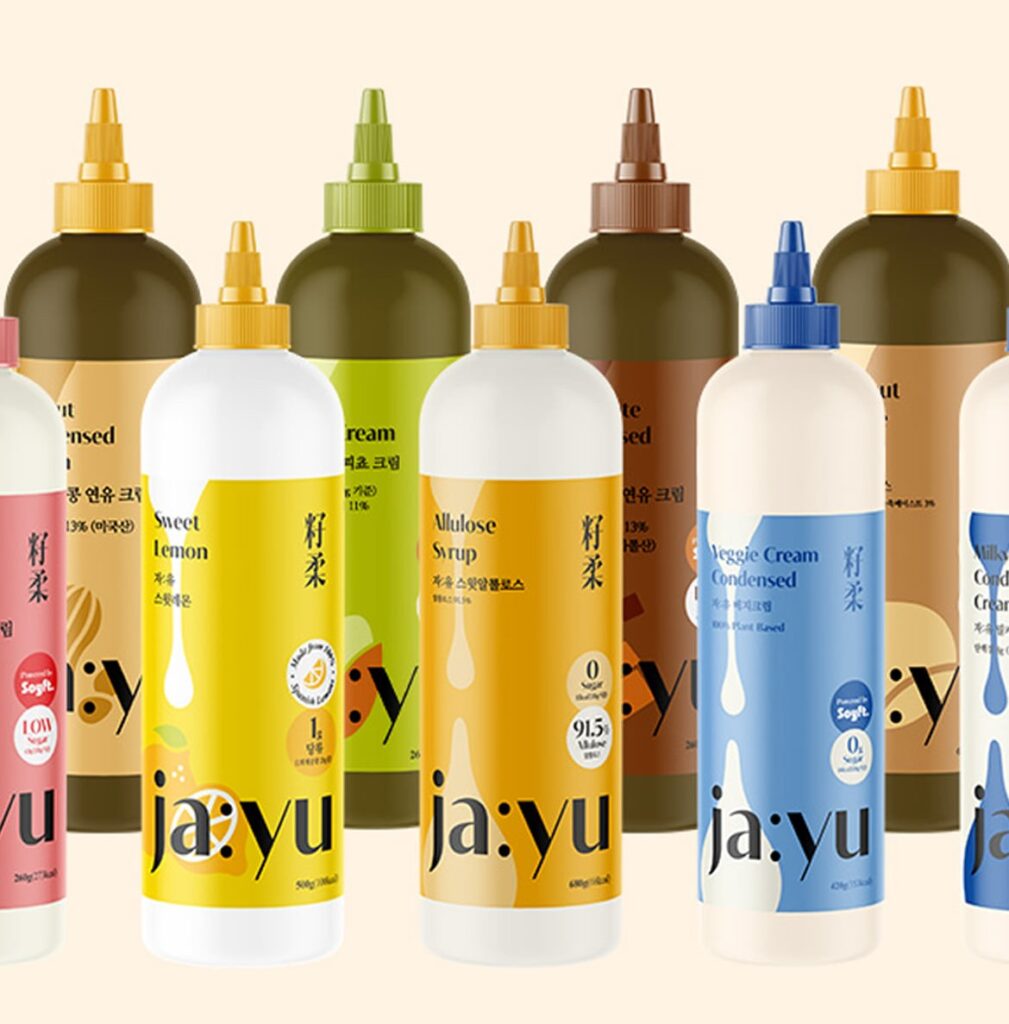
The new capital will be directed toward increasing the competitiveness of its cream and sauce formulations and broadening supply to café and bakery franchise operators, a B2B segment where demand for dairy-free, low-sugar alternatives has grown alongside the broader premiumization of plant-based foodservice offerings in East Asia.
Accelerator backing and international ambitions
Alongside the funding, SOYFT BIOME has been selected for the 2026 EMA AGRIFOOD program, a government-backed accelerator organized by MYSC and overseen by the Korea Institute of Agriculture Technology Promotion under South Korea’s Ministry of Agriculture, Food and Rural Affairs. The program provides support for business model development and global market validation.
The company is positioning itself as a technology platform rather than a food brand alone, with longer-term expansion planned into cosmetics and medical nutrition on the basis of its fermentation-derived ingredient infrastructure.
CEO Seoyeon Yoon said: “This investment will allow us to strengthen both our product competitiveness and production infrastructure, and to bring healthy plant-based alternatives to more consumers and business customers. We’re building toward becoming a technology platform company that goes beyond food, expanding into diverse industries on the foundation of a sustainable food system.”