German food producer Rügenwalder Mühle is expanding its plant-based focus with the takeover of sister company Endori’s consumer brand and the launch of a Functional Veggies segment.
There’s a plant-based shakeup at The Nature’s Richness Group, the novel food business unit of German holding company Pfeifer & Langen.
Its subsidiary, meat and plant protein player Rügenwalder Mühle, is expanding its plant-based operations by taking over the retail business of sister brand Endori.
The latter will remain a separate company with a focus on the foodservice and industrial sectors, while Rügenwalder Mühle will be responsible for the revamped Endori brand in the consumer market. This will entail the launch of a new suite of products under a Functional Veggies segment.
Two-brand strategy sharpens focus
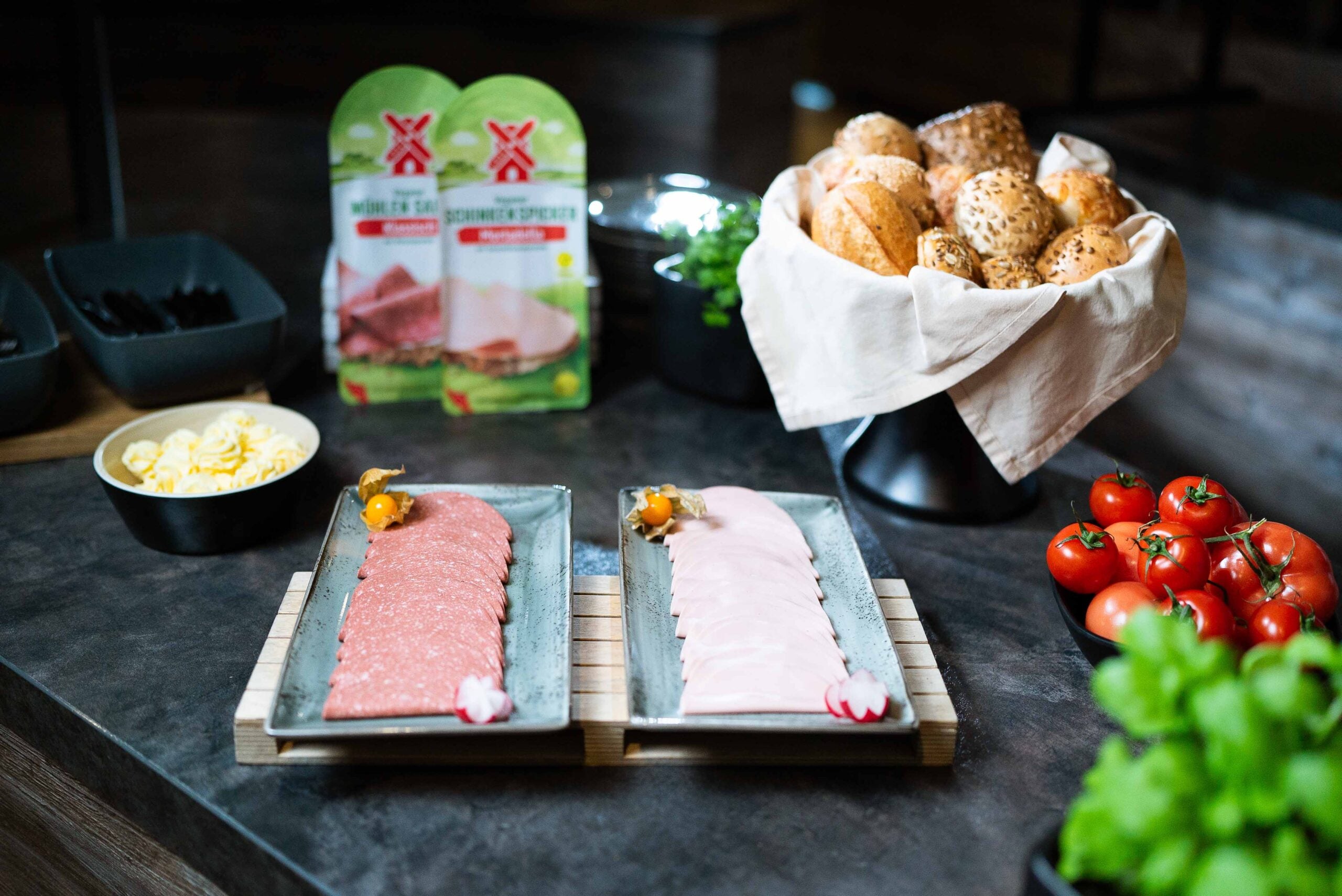
Formerly called Amidori, Endori was founded in 2015 with a range of pea protein products for professional kitchens, foodservice operators, industrial clients, and retail. Rügenwalder Mühle, meanwhile, has been around for nearly two centuries, making its name as a sausage producer. Today, the majority of its sales come from its meat-free portfolio.
Pfeifer & Langen secured a majority stake in Endori in 2019, followed four years later by an investment to acquire a 45% stake in Rügenwalder Mühle.
Now, the latter is assuming responsibility for the development, production, marketing and distribution of Endori-branded products in grocery stores, which will involve a complete relaunch with a new positioning, a modern brand identity, and an innovative product range.
“By entering the vegetarian market in 2014, we not only fundamentally developed our company, but also helped establish a new category and bring it to the forefront of society,” said Rügenwalder Mühle CEO Jörg Pfirrmann.
“Today, meat alternatives are a key growth driver for our company. With endori, we are now shaping the next stage of development and unlocking additional potential in the plant-based market. This is a major and logical step for us, with which we are further developing the plant-based category in its entirety.”
Both brands will assume clearly defined roles, with Rügenwalder Mühle representing meat and plant-based alternatives, and Endori focusing on whole-food options centered on vegetables, legumes, and functionality. The latter aims to attract additional consumer segments and occasions with plant-based products, complementing Rügenwalder Mühle’s existing range.
“The new division of responsibilities allows us to focus more strongly on our core business in the foodservice and industrial sectors, which is experiencing double-digit growth, and to expand it further in a targeted manner,” said Axel de With, managing director of Endori.
“At the same time, Endori gains a strong partner in Rügenwalder Mühle for the next phase of development in the consumer market. This creates a win-win-win situation for everyone involved: not only for the company, but also for consumers.”
Rügenwalder Mühle bets on functional plant-based products

Following the development, Rügenwalder Mühle will introduce four new products under the Endori brand: spinach and basil balls, carrot and ginger balls, Mediterranean vegetable sticks, and stir-fried vegetable sticks. These can be used in salads, wraps and bowls, or as standalone snacks.
Rolling out in early 2027, they will follow a new brand identity, with more eye-catching colours, clear typography, and prominently displayed ingredients, and will gradually replace Endori’s existing retail range.
The veg-forward approach is part of Rügenwalder Mühle’s new Functional Veggies segment aimed at combining food enjoyment with functionality. The company says around half of consumers are buying functional foods, and it’s a category particularly relevant for Gen Z and millennials.
Here, vegetables and legumes rich in fibre and protein play the main role, and the products are further supplemented with magnesium, calcium, or ALA (an omega-3 fatty acid). This ensures that Endori products deliver targeted nutritional benefits and can help Germans follow a balanced diet without completely restructuring how they eat.
A swathe of alternative protein producers have diversified from meat analogues to embrace whole foods across Europe. This month alone, fermentation firm Infinite Roots launched a mushroom-based Umami Block in Germany amid its mycelium protein development.
Germany is Europe’s leading market for plant-based food. However, last year, sales of meat alternatives only rose by 0.2%, compared to a 29% increase for whole-food proteins like tofu, tempeh and seitan (albeit from a much smaller category).
“Many people want to eat more consciously in their everyday lives, but don’t want to fundamentally question every food item and every meal. This is precisely where Endori comes in: our products combine delicious taste and easy preparation with targeted functional added value,” said Rügenwalder Mühle CMO Steffen Zeller. “This makes plant-based enjoyment more varied and easy to integrate into everyday life.”