
2
The year 2023 dealt a heavy blow to several African currencies. Many watched their local currencies slip further against the dollar up to 2024.
It did not take long for the effect to reach ordinary homes. Food as we know, is one of the first places a weak currency shows and the effect is seen in the price of every meal.
The blow also landed on farmers and founders alike. When a currency has been shaken this badly, investors have little certainty about what their returns will be worth in dollars. Years later, the shock still plays a part in funding decisions.
A Colossal Shock: The 2023–2024 Currency Crisis
Some of Africa’s top exports saw their currencies drop even though global prices for their commodities went up like Nigerian oil and Ghanaian cocoa.
But the trouble began far from home when aggressive interest rate hikes by the U.S. Federal Reserve drew capital away from emerging markets and triggered a powerful surge in the dollar.
Investors moved their money into safer assets in the United States and African currencies lost value as capital flowed out. The 2023–2024 currency crisis rippled across the continent, but countries with thin foreign reserves, heavy reliance on commodity exports and domestic policy challenges bore much of the pressure.

We are excited to share with you
This FREE E-Book of 50 Agritech Pioneers & Their Game Changing Innovations.
Download the Ebook now
Nigeria was hard hit as the naira lost nearly half its value in 2023 and ended the first half of 2024 as the worst-performing currency in the world.
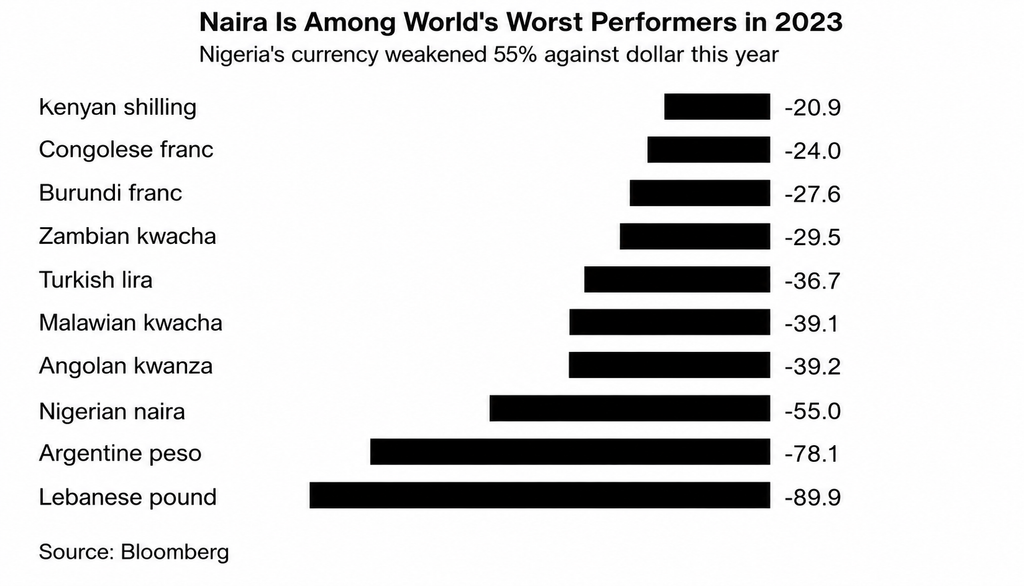
In Egypt the pound had already lost more than two-thirds of its value since early 2022 when the government allowed another sharp devaluation in March 2024.
For Zimbabwe, it was cataclysmic. As reported by International Finance, the local dollar lost over 70 percent of its value on the official market after January 2024 and the central bank responded with a new currency called the ZiG anchored on gold reserves.
The IMF notes that because most African imports are priced in dollars a weaker currency makes the fight against inflation harder. When a currency falls the things people buy cost more, and that is how a shock in the exchange market ends up in everyday prices.
Investors were not spared too. Someone who puts in dollars and is paid back in naira finds that the naira now buys fewer dollars, so even a business that grows can leave them with less. It is no surprise then that many foreign companies began to rethink their investments in Africa.
Then, There is Agritech
This period changed the continent’s venture capital delivery and agritech felt the blow more than most. Coming from a period of strong momentum, African agrifoodtech investment fell from an all-time high of $776 million in 2022 to $275 million in 2023 and the pressure carried into 2024 when funding stayed at about $192 million as analysed by AgFunder. So much that many called it the “funding winter.”
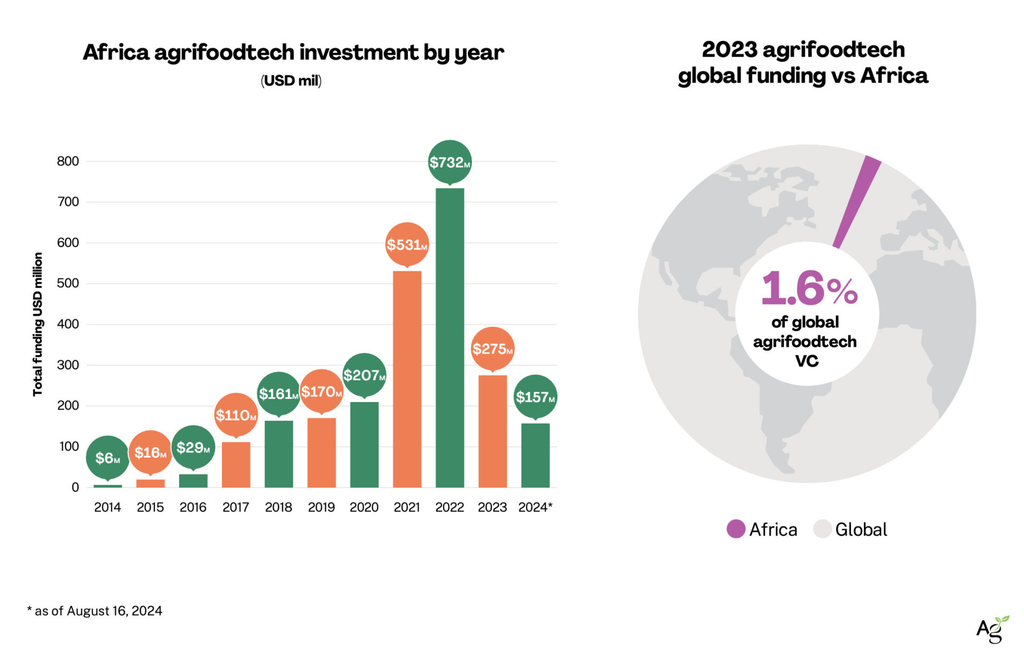
The biggest reason was what the crisis did to the way agritech startups make their money. Their margins are thin and they depend on transport, storage, equipment and imported inputs such as hardware and fertiliser. As local currencies weakened, the cost of these imports rose along with the cost of running a business. Passing those extra costs on to smallholder farmers was difficult because higher food and energy prices had already reduced what many could afford.
The Investor’s Arithmetic
At the same time the swings shook the confidence of investors. Foreign venture capitalists feared that their returns in dollars would shrink once converted back and many pulled away from equity investments.
Take an investor who puts in $100,000 when one dollar buys ₦500. The startup receives ₦50 million and grows by half to ₦75 million. If the naira has weakened to ₦1,500 to the dollar that stake is worth $50,000 when converted back, so the business grew and the investor still lost half.

As funding became harder to secure, some startups turned to debt and convertible notes. These offered another route to capital but could also put pressure on young businesses with limited cash. Traditional venture capital gave way to development finance institutions such as Proparco, British International Investment and the IFC who wanted to protect food security networks from collapse.
Some money also found its way to climate-smart ideas such as solar-powered cold chains because climate tech grew from 24% of upstream agrifoodtech funding in 2023 to 40% in early 2024.
In the end, the crisis made investors more cautious about speculative growth and put greater pressure on agritech businesses to build models that could earn steady margins. Gaining users was no longer enough on its own; startups also had to show that their businesses could withstand rising costs and currency swings.
Today’s Investment Climate: Lessons from the 2023–2024 Shock
Funding has not returned to its 2022 level. African agritech startups raised less than $170 million in 2025 and for the first time equity made up less than half of the total. What the money looks like now carries the marks of the currency shock and it holds three lessons for anyone raising capital today.
- Borrow in the currency you earn. If your business earns money in naira, taking a loan in dollars can become expensive when the naira loses value. Your revenue may stay the same while the amount you owe rises. An instance is Apollo Agriculture financing its farmer loans in Kenyan shillings while Tomato Jos secured a naira facility, which shields both from the swings that hurt others.
- Prepare for funding that comes with repayment terms. Investors are not only offering equity in exchange for a share of the business. More funding now comes through loans and structured deals, sometimes with development finance institutions sharing the risk. Founders who understand these options will be better placed to secure funding than those who rely solely on raising equity.
- Reduce your dependence on imported inputs. When the local currency weakens, imported machinery, equipment and other inputs become more expensive. Sourcing locally where possible and finding ways to reduce these costs can protect your margins and make your business less vulnerable to exchange rate changes.
The founders who read the shock well have stopped waiting for the currency to settle and started building for a world where it may not.
What Could the Coming Years Hold?
The picture looks calmer than it did in 2023 but it is far from settled. The next currency shock could arrive at any time and the founders and investors who learned from 2023 are better prepared for it.
Currency movements will keep shaping who gets funded and on what terms, and the agritech companies that plan for them early will be the ones still standing when the next wave arrives.