
A researcher at Norway’s Nofima institute has proposed combining sidestreams from the fish industry with plant proteins to develop hybrid seafood products to valorise waste and offer more sustainable options.
Blended meat is embedded in supermarkets in several countries now; however, seafood products that mix fish with plant-based ingredients are still in their infancy.
The latter category has the potential to reduce food waste and seafood-related emissions while delivering products with high sensory and nutritional attributes, according to research conducted by Nofima, an applied research institute in Norway, and the University of Bergen as part of the HybridFoods project.
Novima researcher Liv Helene Sickel has proposed using fish industry by-products – such as heads, bones, and skin – and mixing them with plant proteins to develop hybrid seafood products.
The innovation could address several pain points: it would help reduce food waste, cut seafood-related emissions, and address consumers’ dissatisfaction with the taste and texture of 100% plant-based fish alternatives.
Texture the main focus for hybrid seafood project
Salmon and cod are popular in Norway; that said, when they’re being processed into fillets, up to 60% of the fish is discarded. These sidestreams are mainly used for animal feed, fertiliser or biofuels.
As they contain valuable proteins, minerals and healthy fatty acids, they can be repurposed into food. Sickel’s PhD project explored whether these marine byproducts can be combined with plant-based proteins to make nutritious, more sustainable products, and how such ingredients affected their overall quality, with a particular focus on texture.
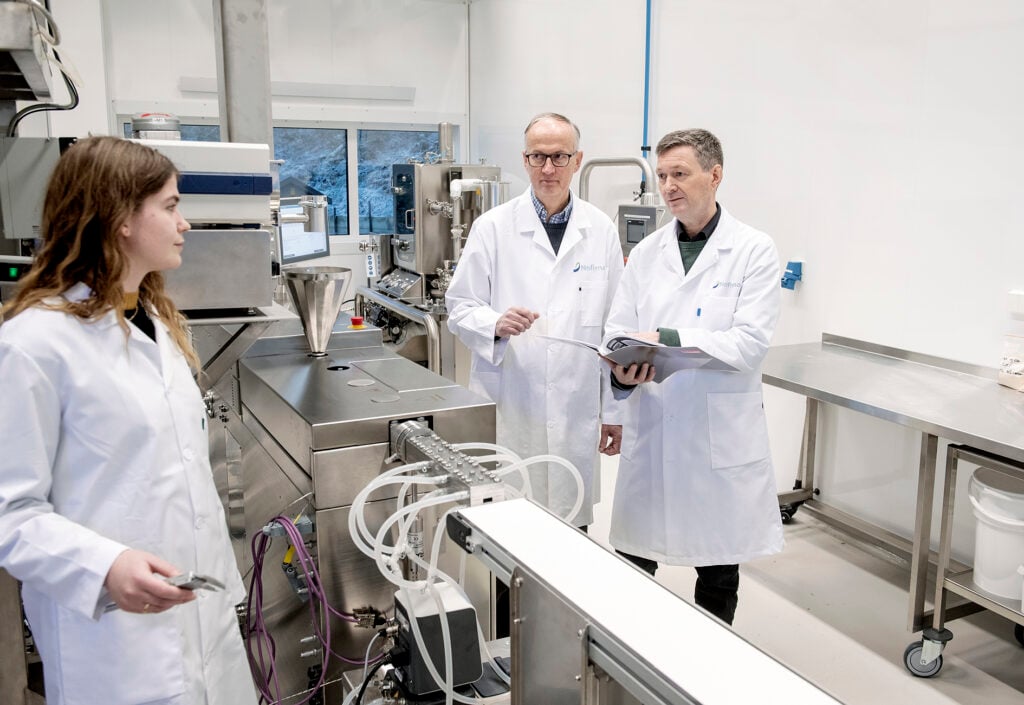
In her project, she combined salmon and cod byproducts with pea protein and wheat gluten, processing them with extrusion to produce a meat-like, fibrous texture and better mouthfeel.
Her research showed that a higher proportion of fish resulted in a softer texture, though this depended on both the type of ingredient and the processing conditions.
For instance, in a salmon protein hydrolysate, this effect was attributed to the processing method, in which the proteins were broken down into amino acids and small peptides with properties similar to those of water molecules. That gave an effect comparable to adding water to a dough.
This indicates that water can be partially replaced with protein concentrate without significantly changing the texture, while boosting the nutritional value. Likewise, a softer texture was observed upon the addition of cod protein powder. Sickel compensated for this by using a higher processing temperature, so that the resulting hybrid seafood contained 25% fish and had a texture similar to that of a plant-based reference sample.
Blended proteins can boost marine resource utilisation

Nofima suggests that the research could help companies develop new food products, like blended fish burgers and nuggets, and help make better use of marine sidestreams in food production.
For Sickel, resource utilisation was a key motivation for the research. “By creating opportunities to use more protein from fish we have already harvested, we could give the fishing industry an incentive to take better care of the raw material and use it in food,” she said. “These sidestreams consist of valuable marine nutrients that can bring positive health benefits.”
That is crucial, too. Norwegian salmon is notorious for being overly dependent on global fish feed supplies – the sector’s feed footprint makes up 2.5% of global marine fisheries catch, and the forage fish targeted by the industry contain key micronutrients that are critical to healthy populations in West Africa, leading to experts accusing the sector of ‘food colonialism’.
Hybrid seafood is slowly making its way into the market. Despite consumers viewing fish as a healthier, more sustainable alternative to other meats, plant-based versions can still be lacking in protein and omega-3s – so blended versions can fill this gap.
In the Netherlands, for instance, Lou Foods (formerly Vegan Visboer) last year launched a hybrid salmon fillet combining salmon sidestreams with mycoprotein and plants, before adding burgers and pulled formats to the lineup.
This blended salmon contains 14g of protein and 2.5g of fibre per 100g, and is rich in minerals like selenium, magnesium and potassium, and omega-3 and omega-6 fatty acids.
And earlier this year, it expanded the range with blended pollock and cod products, which contain fish certified by the Marine Stewardship Council. They’re available as fillets, kibbeling, and fried formats, featuring 40% plant-based ingredients.