
Japanese cellular agriculture pioneer IntegriCulture and Singapore’s ImpacFat have joined forces to develop planet-friendly marine cosmetics for Asians using the latter’s cultivated omega-3 fish fat.
Cell-based marine cosmetics are riding the clean beauty wave in Asia.
Startups like Umami Bioworks and Avant have already come out with skincare ingredients made from cultivated fish cells, and now, two more are working together to expand this burgeoning space.
Japan’s IntegriCulture, which specialises in cellular agriculture technologies, has signed an MoU with ImpacFat, a Singapore-based alternative fat maker, to develop and commercialise cosmetics using the latter’s cultivated fish fat.
The partnership will combine ImpacFat’s cell culture platform with IntegriCulture’s product development and cosmetics manufacturing expertise to create new sustainable beauty ingredients for the Asia-Pacific market, starting with Japan and Singapore.
It comes a year after ImpacFat bagged a fresh tranche of funding and expanded into Japan, setting up research and operational infrastructure in Tokyo and eyeing skincare launches for 2026.
Partnership aims to create new value for personal care industry
ImpacFat isolates cells from premium fish species (like eels and pangasius catfish) and develops cell lines to help them proliferate in controlled bioreactor environments. These mature into healthy fat cells, which are then harvested. The resulting ingredient is high in unsaturated fat and omega-3 fatty acids. In fact, it outperforms wild-caught bluefin tuna on omega-3 levels.
ImpacFat is currently producing its fat in five-litre bioreactors and has been working to expand to a 10- to 50-litre scale, and has been working on stem-cell-conditioned media and exosome-based active ingredients for its first personal care application.
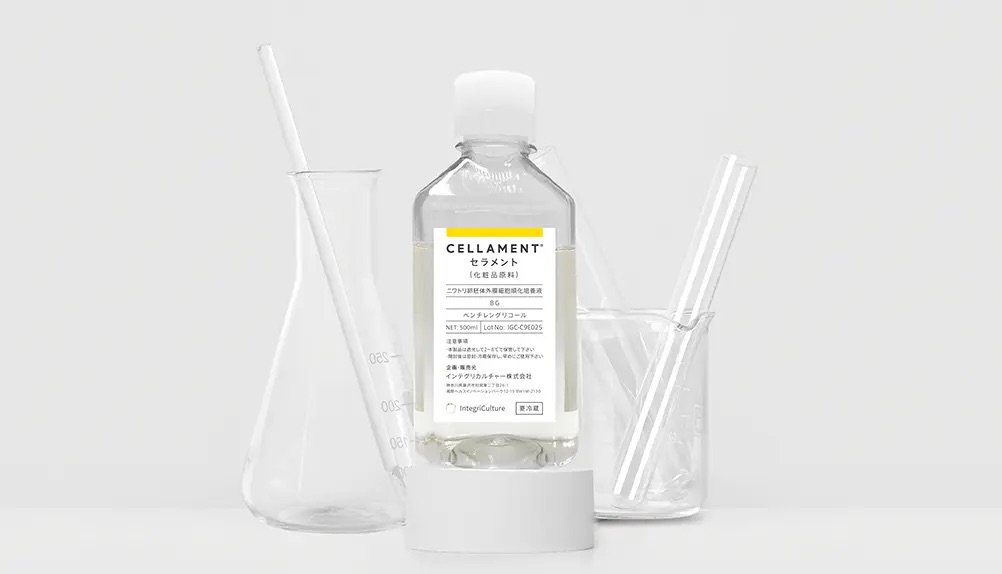
IntegriCulture, meanwhile, operates across cellular agriculture infrastructure and products, with cosmetic ingredients the main focus among the latter category. The startup has developed Cellament, a cell-cultured serum “rich in nourishing proteins and rejuvenating growth factors” to revitalise the skin at the cellular level.
It’s made by the selective cultivation of egg cells, such as the amnion, yolk sac, and plasma membrane, which amplify the potency of the nutritional elements in chicken eggs. The skincare ingredient can reduce the enzymatic activity that degrades skin elasticity by 10-70%, as well as accelerate skin cell turnover, which increases smoothness and helps prevent wrinkling.
It’s also linked to an increase in moisture retention of keratinocytes, cells that make up 90% of the skin’s outermost layer, and targets free radicals to help slow signs of ageing. These properties are why Umami Bioworks partnered with IntegriCulture last year to develop novel cosmetics with Cellament and its own cultured fish cells.
The collaboration with ImpacFat comes as two-thirds of Southeast Asian consumers cite natural ingredients as the top purchase driver for clean beauty products, with 43% prioritising sustainability as well. “At the same time, the cosmetic market increasingly values raw materials that offer not only sustainability but also brand differentiation, novelty, compelling narratives, and functionality,” ImpacFat noted.
The two companies say their technologies and business platforms can create new value for cosmetics and beauty brands. They will work with cosmetics manufacturers, brand owners, aesthetic clinics and salons, ingredient distributors, and others to support product planning, ingredient proposals, original equipment development, and market introduction.
They plan to produce novel ingredients with a market appeal not found in conventional cosmetics, and with sustainability and traceability baked in and formulations tailored to product concepts and applications.
Alternative fats lube up cosmetics space
The MoU will see ImpacFat and IntegriCulture seek to help companies looking to source novel, differentiated cosmetic ingredients, develop cell-cultured or bio-based products, combine science with sustainability, and co-develop products for the Japanese and broader Asia-Pacific markets.
As a first step, they will explore joint development opportunities by combining ImpacFat’s cell-cultured cosmetics ingredients with IntegriCulture’s cellular agriculture tech and cosmetic expertise.
They will focus on evaluating materials for personal care applications, designing product concepts that utilise their distinctive characteristics, developing prototypes, and proposing ingredients and development opportunities to cosmetics manufacturers and brands.
By leveraging the novelty and sustainability of these bio-based ingredients, the companies aim to help cosmetics brands differentiate their portfolios with products that clearly communicate to consumers why a specific ingredient has been chosen, leaning into the demand for ingredient transparency.
Going forward, ImpacFat and IntegriCulture are looking to “drive innovation across the industry, accelerate cross-border open innovation, and contribute to the development of a more sustainable beauty and personal care industry”.
More and more biotech startups are using alternative fats to supercharge the sustainable beauty sector. Savor, for instance, has launched four carbon-derived fats for use across skincare, haircare, over-the-counter formulations, and therapeutic care, while Clean Food Group leverages industry waste and yeast fermentation to make palm oil alternatives for a range of industries, including personal care.
Similarly, Äio makes use of waste to make microbial fats that have been used in a skin serum and a face cream, C16 Biosciences sells four yeast-derived fats and oils for cosmetics and beauty use, Melt&Marble‘s precision-fermented fat has been cleared for sale in the global personal care market, and Checkerspot has unveiled a microalgal oil for personal care in partnership with La Fabrique Végétale.