
Japanese biotech startup Spiber has launched a contract service for strain development and fermentation manufacturing, targeting next-gen proteins for use as food ingredients, industrial enzymes, and more.
Spiber, a firm known for its fermentation-derived Brewed Protein materials for the fashion industry, has kickstarted a contract biomanufacturing platform to help companies scale up sustainable proteins across a wide range of applications.
The service builds on the Japanese company’s expertise in commercialising Brewed Protein, which is used by more than 40 fashion, personal care and automotive brands in over 200 products.
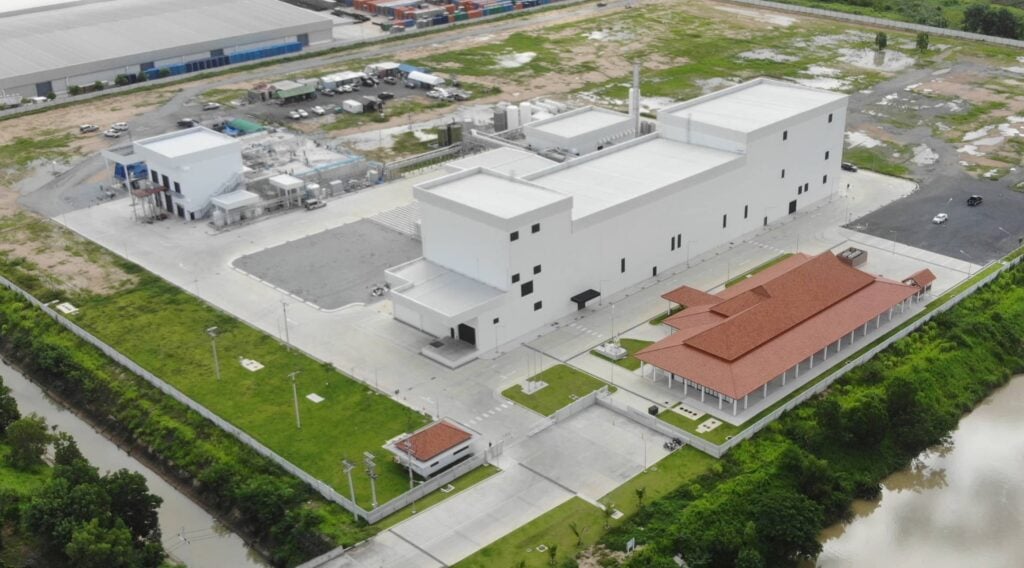
It will leverage the pilot- and commercial-scale fermenters at Spiber’s facilities in Japan and Thailand, offering strain engineering and fermentation capabilities.
“Developing diverse structural proteins has enabled us to build the technology, expertise, and facilities needed to scale fermentation from the lab to commercial production,” said CEO Maya Kawana.
“Through Spiber Biofoundry, we are making these capabilities available to other companies to shorten their time to market. Faster commercialisation reduces the burden of ongoing costs and improves a business’s chances of success.”
Services span strain engineering and fermentation process development
The biofoundry tackles three familiar problems for fermentation companies: yields that will not improve, projects that are stalled at scale-up, and a lack of contract manufacturers able to take genetically modified microbes from lab to commercial volumes.
In fact, the startup notes that contract fermentation capacity at pilot and commercial scale remains scarce globally, and few providers have taken a recombinant protein of their own from lab yields to routine commercial production. With Brewed Protein, Spiber is an outlier here.
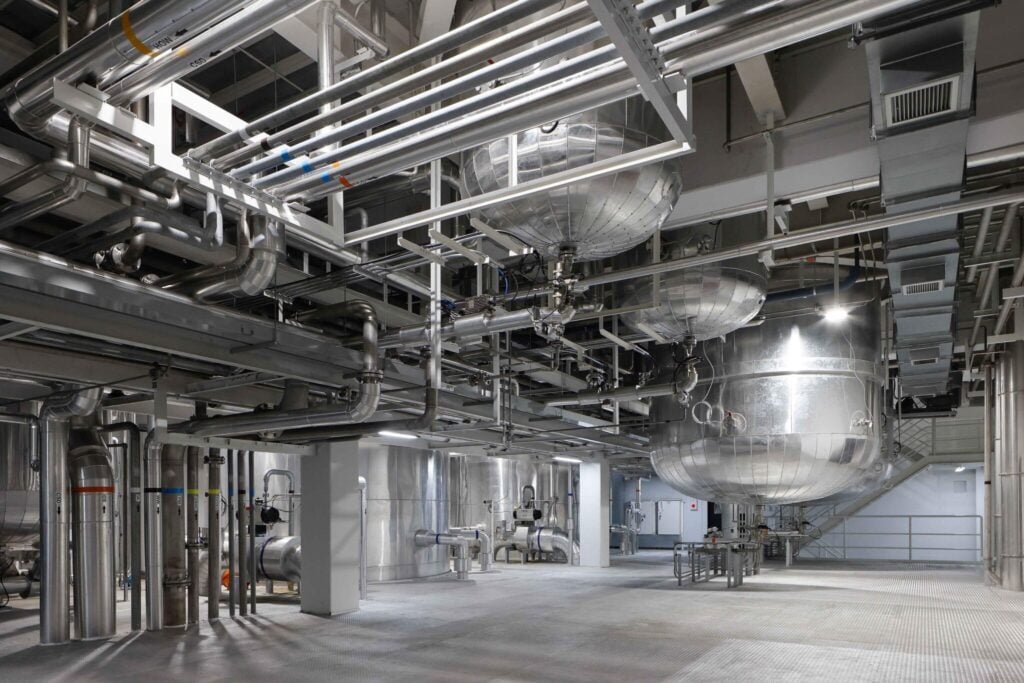
Its biomanufacturing service offers high-yield strain engineering for companies’ target proteins and provides process development and contract manufacturing at every scale, from one-litre fermentation tanks to commercial facilities of over 100,000 litres. The target elements include research reagents, industrial enzymes, diagnostic raw materials and food ingredients, alongside other proteins and fermentation products.
With the strain development service, Spiber optimises the gene sequence for the target proteins, introduces it into its proprietary microbial host strains, and evaluates expression in culture.
In case studies, the firm designed five sequences for each protein and tested them against a control, delivering 5.9 to 9.4 times the yield of a commercially optimised version of human FGF-2, and 1.1 to 2.6 times the output of human interferon-gamma. Broader tests showed that Spiber-optimised sequences outperformed the benchmark in 90% of the proteins analysed, with yields improving fourfold on average (the highest reaching 40x).
Meanwhile, the fermentation and purification process development and manufacturing service can be done at scales from one-litre bench fermenters to 2,000-litre vessels at Spiber’s R&D site in Tsuruoka, Japan, or commercial fermenters upwards of 100,000 litres at its facility in Rayong, Thailand.
Each stage can be commissioned individually, from a single lab-scale evaluation to full production runs, with the service covering proteins, fermentation products and microbial biomass for the food, materials, and chemical industries.
Spiber goes beyond textiles and eyes cross-industry collaboration
Spiber, founded by Kazuhide Sekiyama, Hideya Mizutani and Junichi Sugahara, is nearly two decades old and has raised $489M in funding on the back of its synbio and material science platform to produce Brewed Protein.
The innovation is made by feeding microbes on agricultural waste, with the fermentation process leading to the creation of a protein that can be spun into fibres for textile applications. It can replace cashmere, fur, leather, wool, and silk, as well as plastic-based synthetic fabrics.
The production platform is fully bio-based and biodegradable, requiring much fewer resources and thus resulting in a much smaller climate footprint. Its Brewed Protein fibres, for instance, generate up to 75% fewer greenhouse gases and use 94% less water and 86% less land than cashmere.
Spiber claims it was the first company to produce a structural protein material at commercial scale. This involved building an entire chain in-house, from gene sequence design and strain construction to fermentation and purification at production scale. With optimised gene sequences and culture conditions, its own strains now reach titers of 50g per litre in its commercial facilities.
The company says its most valuable asset isn’t a single material like Brewed Protein, but the fermentation platform that produced it, encompassing the strain engineering, the fermentation and purification capabilities, and the commercial plan.
Spiber Biofoundry is designed to open up that platform to customers as a new service, complementing the company’s existing materials business to extend the value the fermentation system delivers to a much wider range of industries.
“Our work with strategic partners already extends beyond apparel textiles. This service may also create new opportunities for collaboration across industries,” said Kawana. “By helping more companies bring their technologies to market, we aim to accelerate progress toward a world where we no longer compete for finite resources.”