12
It started in the days when the mobile phone was one of the greatest things to happen to Africa. The neighbours came to see, the whole street wanted a SIM.
Somewhere between the calls and text messages, something interesting happened. Farmers began receiving market prices on the same basic phones in their hands.
Soon, the idea of using technology to connect farmers to markets began taking different forms across the continent. And so, the digital farm market was born.
Twenty years on, phones are in almost every hand and digital platforms have spread across much of Africa. There has been progress, but perhaps the hardest part has been achieving scale.
Twenty Years Later
As phones spread and digital tools got better, more people began building for agriculture, and the range of solutions widened.
In Sub-Saharan Africa, active digital agriculture services went from just 50 in 2009 to over 700 in 2019 as reported by GSMA. What began as simple price alerts had become a crowded and far more sophisticated landscape.
We are excited to share with you
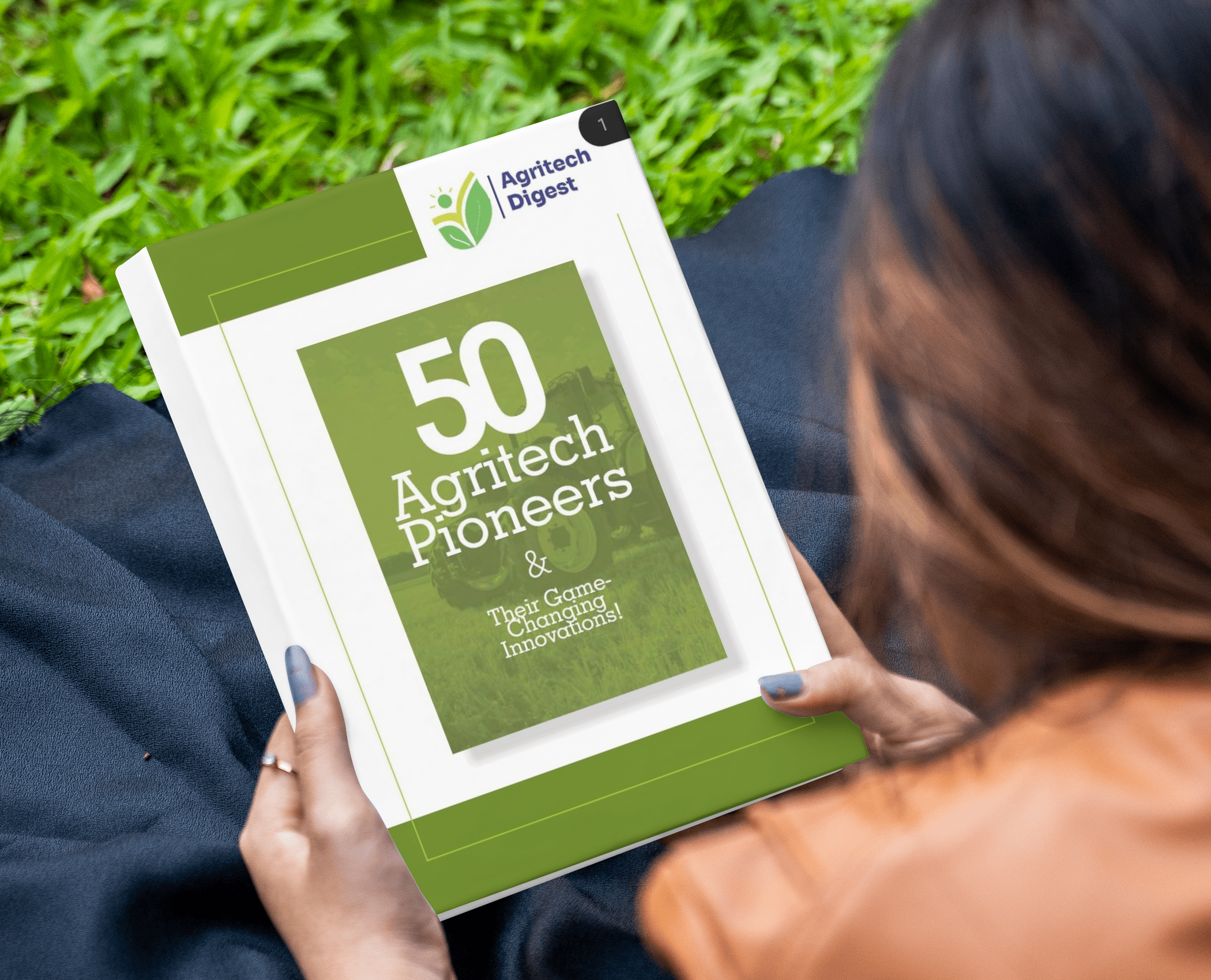
This FREE E-Book of 50 Agritech Pioneers & Their Game Changing Innovations.
Download the Ebook now
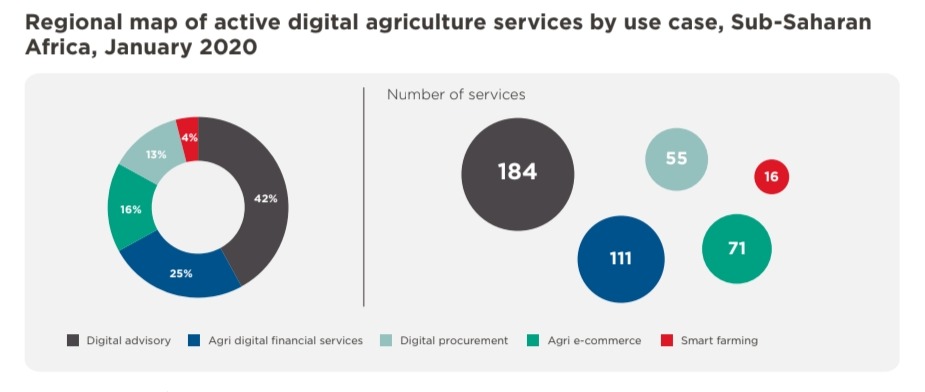
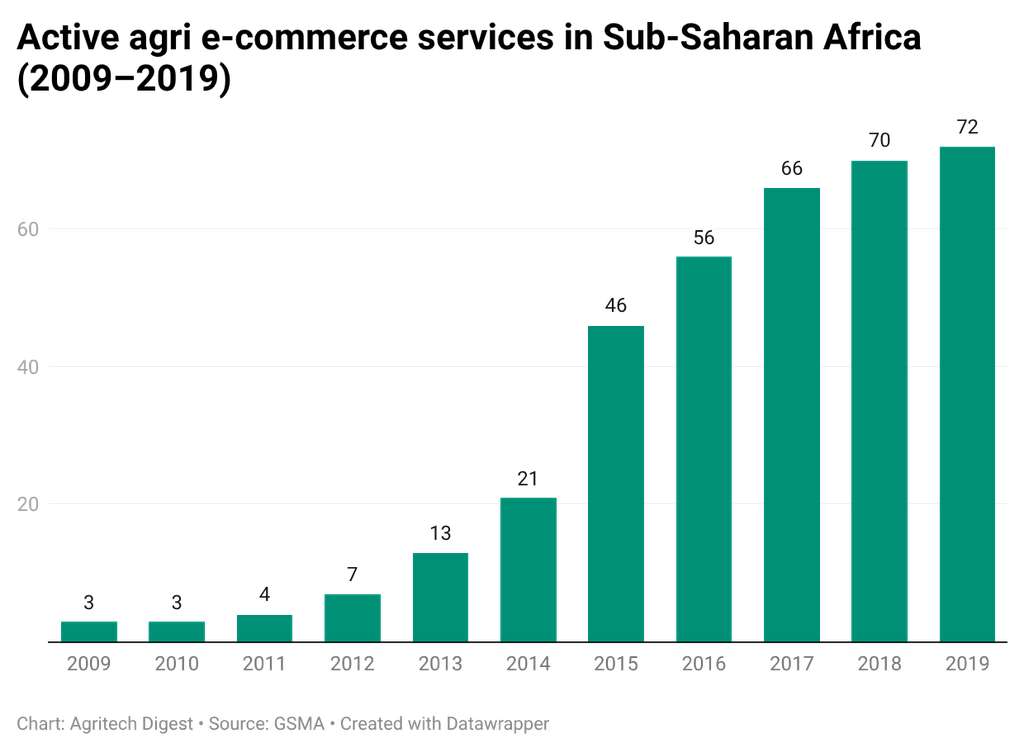
Agri e-commerce moved even faster. Active farm digital market services grew from 3 in 2009 to 71 in 2019.
It looked like a small number beside the rest of the field, but a long way from where it started. Information, advisory and financial services took much of the early attention, while digital marketplaces gradually found their place.
Seeds sown in Maputo
While the GSM boom was transforming communication in many Sub-Saharan countries, such as Nigeria, Ghana, Kenya and Tanzania in the early 2000s, there were echoes from the top as well.
In 2003, African Union heads of state and government adopted the Comprehensive Africa Agriculture Development Programme (CAADP) as the continent’s framework for agricultural transformation. It aimed for 6% annual growth in agriculture, with member states allocating at least 10% of their budgets to the sector.
So while phones were spreading from the bottom up, ambition was being set from the top down.
The Maputo Declaration was not a finish line. Eleven years later, the 2014 Malabo Declaration renewed the commitment and set goals for 2025. These included eradicating hunger and tripling intra-African trade.

Image Credit: FAO
During this time, the African Union (AU) has also prioritised digitalisation, with renewed investments and the creation of the Digital Transformation Strategy for Africa, which aims at building a digital single market by 2030.
By then, the two stories had met. Agricultural markets were going digital at almost the same time that Africa was trying to make them more integrated. One road was built by startups, the other by summits. So, did it deliver?
Not quite, and the paperwork says so. Nobody writes a third declaration when the second has been fully met. In February 2024, the African Union Assembly itself expressed concern that the continent was not on track to meet the Malabo goals by 2025.
Ten percent of the budget, it turns out, is easier to promise than to find, and only a handful of countries have met that target consistently.
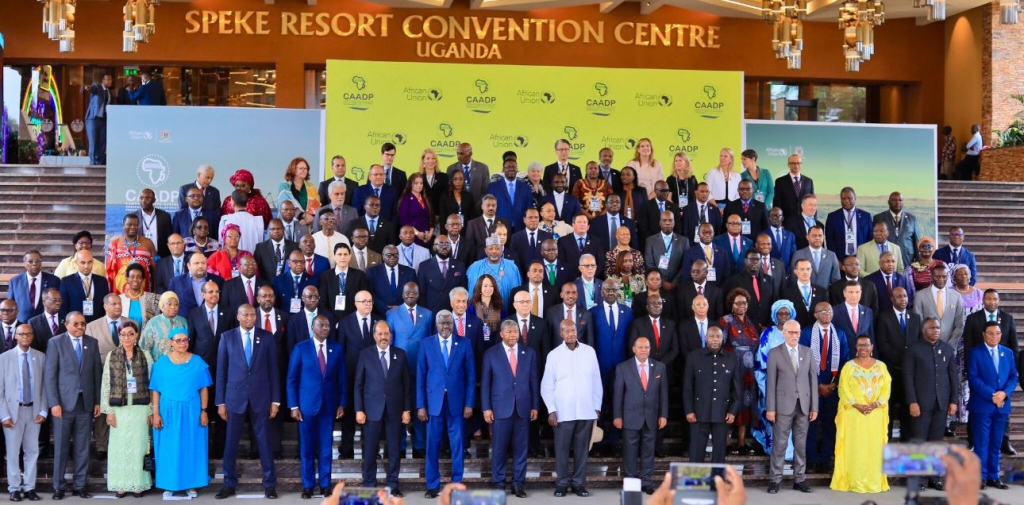
Hence Kampala. Same goals with a new decade to get it right, with the Kampala Declaration setting out a vision for transforming Africa’s agrifood systems from 2026 to 2035.
The Money That Followed the Idea
As it is said, money talks. But what is a promise without its purse?
Once digital markets began to show they could work, investors took notice. In 2024, AgFunder reported that Ag Marketplaces & Fintech attracted 41% of African agrifoodtech funding, the largest share of any category at the time.
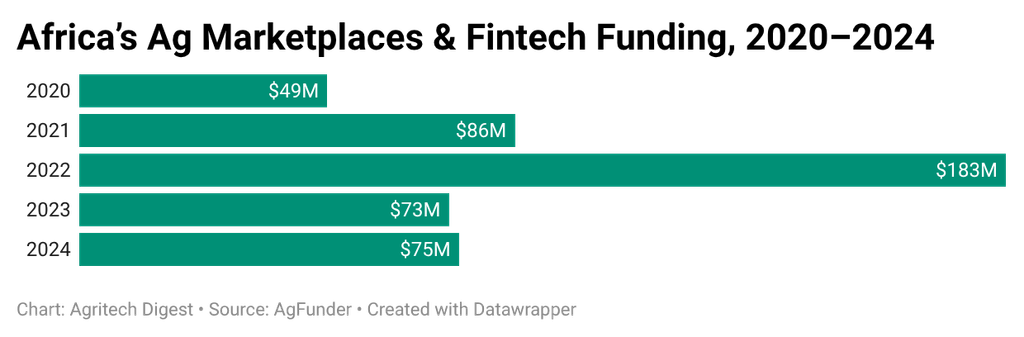
Several companies shared in this investment. Nigeria’s ThriveAgric secured a $56.4 million debt round in 2022, while Kenya’s Pula Advisors raised $20 million in 2024. Funding also went to Complete Farmer and WARC Group in West Africa, and Apollo Agriculture in Kenya (AgFunder).
Looking at the last five years, funding climbed to a high in 2022, before felling back the following year. Since then, it has held at a much lower level.
Have Farmers Benefited?
For farmers, the promise was never really about technology, but an innovation that could change who they could sell to, what price they could get and how much of that value they could keep.
Mercy Corps studied 11 digital agricultural marketplaces in 2018 and found some evidence of that promise. These platforms opened farmers to a wider pool of buyers and reduced dependence on middlemen. This could mean better prices and lower transaction costs.
A successful sale could also open another door. More reliable market access gave farmers greater confidence to invest in their farms, while digital transactions could help improve access to credit.
Farmer-centric research in Kenya showed that farmers wanted more than access to buyers. They wanted to know what the market needed before planting and have better information on when to sell. Perhaps more crucially, they needed to trust the platforms themselves.
In many ways, farmers have benefited, but the bigger task is getting those benefits to more farmers and making sure they last.
The Hardest Test: Scaling
For all the growth, scale has remained a stubborn problem.
By 2019, Africa had at least 390 active digital agriculture solutions with more than 33 million registered farmers. The reach, however, was far from evenly spread. Nearly 80% of those registrations belonged to just 20 platforms.
There is another side to scale, too.
Connecting farmers and buyers digitally does not move the produce. Logistics, storage, payments and aggregation still have to work. It is little surprise that many platforms have moved beyond the marketplace model to offer finance, inputs, insurance and other services.
Getting farmers onto a platform is only one part of the job. Keeping them there, serving them well and building a model that can travel beyond one market remain the harder test.
Digital Future, But the Road Is Not
Twenty years on, from the GSM boom to the age of AI, the idea has grown, stumbled and reinvented itself. However, the promise still holds. Farmers should be able to reach markets and get better value for what they produce.
Private players cannot carry this alone. It takes many hands in government, business and development. For greater impact, the reach must go further, to the farmer in the village who has never downloaded an app.
Until then, we keep building. Until the price a farmer sees is the price a farmer gets, the job is not done.