
A three-year government-backed project led by the VTT Technical Research Centre of Finland shows that creating value from every sidestream is crucial for plant-based companies to build a profitable business.
Achieving profitability in the plant-based sector needs a new way of thinking, one revolving around valorising the sidestreams from protein production for a whole host of use cases.
That’s the conclusion made by the three-year Rethink project, which involved the VTT Technical Research Centre of Finland and seven local food companies and was backed by a €3M grant from Business Finland.
The initiative culminated last month with the development of several ingredient processing solutions that demonstrate the value of using up byproducts from plant protein manufacturing in companies’ bid for profitability.
The team – made up of Anora, Apetit, Fazer, Helsingin Mylly, Raisio, Valio, and Viking Malt – argues that value should be created from every sidestream, new ingredients need to be developed for their targeted end use, and companies and other operators must cooperate more closely.
“Our collaboration is based on a shared goal: to maximise the value of Finnish plant-based raw materials by drawing on Finnish expertise and our best practices,” Susanna Kallio, VP of plant-based arm at Valio, and Xin Huang, group R&D manager at Viking Malt, said in a joint statement.
“Viking Malt’s experience with germination and Valio’s commercialisation know-how made it possible to create an entirely new kind of food product,” they added.
Project spotlights waste utilisation and closer collaboration
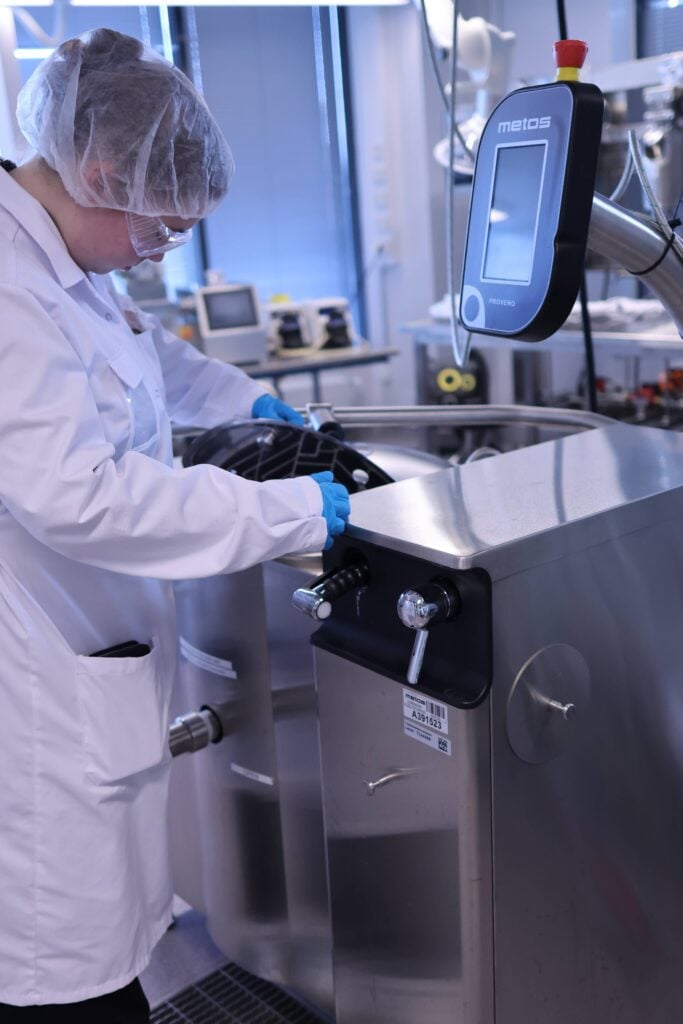
Plant-based ingredient production involves processing raw materials such as oats and fava beans into various ingredients for food manufacturing. Current business models focus purely on plant proteins, leaving a significant share of the raw material value unused.
For instance, while protein is extracted from peas for meat alternatives, their carbohydrate-rich side streams often end up as animal feed with considerably lower economic value. The Rethink team argues that profitable models require value creation from every fraction of the ingredients produced.
“It is especially critical to find the high-value use cases for carbohydrate-rich fractions, as they often comprise the largest share of the raw material,” said VTT’s Emilia Nordlund, who led the project. “We should be boldly looking for uses beyond the food sector too. In cosmetics, for example.”
Further, the experts say growth requires close collaboration between food system actors, including farmers, ingredient producers, food companies, investors and decision-makers. These stakeholders need to build shared practices to reduce supply risks and enable production to scale.
Investment-ready, the researchers note, enables planning for raw material availability, quality, processing, end-use applications, and commercial routes as a unified whole. That’s why the shared development work by Viking Malt and Valio is a good example – together, they produced an ingredient from germinated fava bean protein granules for plant-based and blended meat products.
“Globally, food production is shifting towards more local and distributed production models, as companies and societies strive to strengthen their resilience,” said Nordlund.
“Finland is in a great position to create new plant-based production chains and profitable business, leading to growth in the industry. We have plenty of active farmers and capacity for regional raw material production, as well as growing interest in plant-based products from the food industry and retail sector.”
Project rethinks grain- and legume-based proteins and fibre
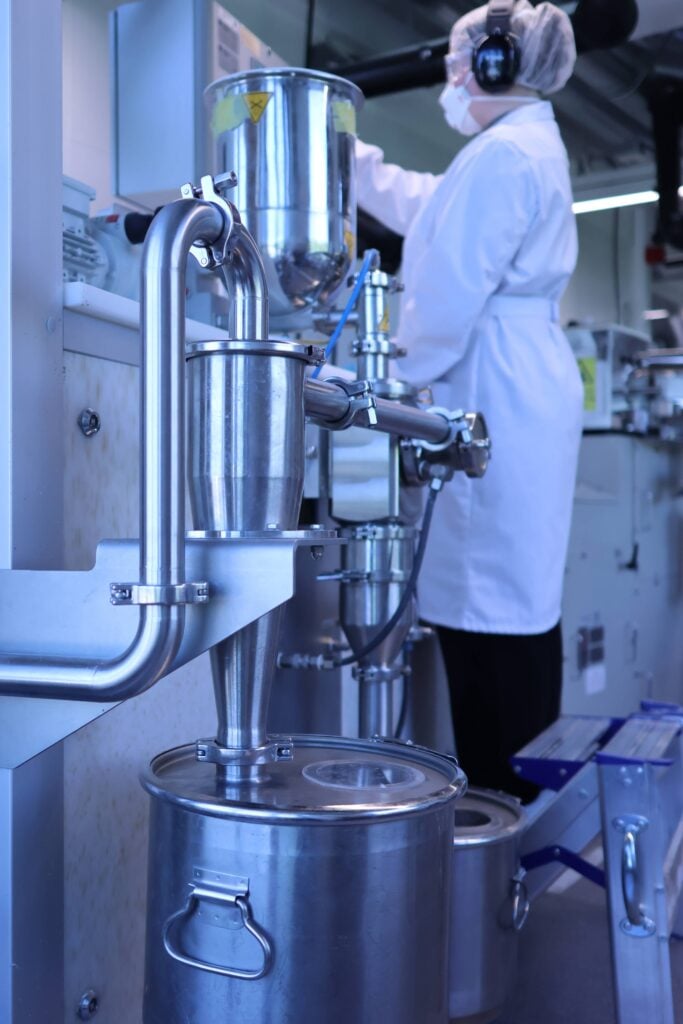
The new solutions developed by VTT are geared towards securing locally profitable production, as well as manufacturing nutritionally valuable ingredients and end products without complex processing. For instance, enzyme-assisted processing methods can reduce chemical use and boost ingredient functionality.
“We patented an entirely new way to concentrate and apply oat dietary fibre, beta-glucan,” said Nordlund. “This invention makes it possible to add fibre to liquid products so that the fibre stays intact while the liquid remains pourable and without a paste-like texture.”
As part of Rethink, VTT researchers created a new pre-treatment technique for protein separation, helping prevent the unpleasant off-flavours typical of legume-based ingredients and expanding the possibilities of using these whole foods in new products.
Research carried out under the innovation project also helped advance the tech commercialised by VTT spin-off Happy Plant Protein, which last year unveiled a dry-extruded textured vegetable protein ingredient made from fava beans.
The tech separates proteins from carbohydrates and texturises them using only a single step. This year, Happy Plant Proteins raised $7M to help build a first-of-its-kind facility to process local crops into high-value proteins in Latvia, before striking a deal with Crespel & Deiters to deploy this process at its Dutch industrial-scale facility.
“Happy Plant Protein is reshaping the market with its production process. It’s also an excellent example of a company with international ambitions making use of existing food industry infrastructure and local raw materials,” Nordlund noted.