Californian plant-based meat pioneer Impossible Foods is making its long-anticipated debut in UK supermarkets, launching a reformulated burger, a beef kofta, whole-muscle chicken pieces, and chicken fries at Tesco.
The Impossible Burger is finally coming to the UK – a version of it, anyway.
After a years-long wait for regulatory approval of its genetically engineered heme ingredient, a key flavour and colour component of its signature burger, Impossible Foods has tweaked its recipe for the UK launch.
The move follows the suspension of its application with the Food Standards Agency (FSA), thanks to the newly signed Sanitary and Phytosanitary (SPS) agreement between the UK and the EU. The trade deal would require novel food ingredients to be approved by the European Food Safety Authority for sale in the UK.
For Impossible Foods, that EU process is ongoing for its precision-fermented heme. “We remain confident they will arrive at conclusions similar to those of regulators in the US, Singapore, Canada, Australia, and New Zealand, where our products have received all necessary approvals to be sold,” a company spokesperson tells Green Queen.
“In the meantime, we’ve deployed our unparalleled expertise in plant-based recipe development to create an all-new patty for the UK and Europe that leverages other methods and ingredients to achieve the mouthwateringly meaty taste that consumers expect from our brand,” they add.
The revamped Impossible Burger is being rolled out in the freezers at Tesco, as part of a suite of never-seen-before products from the company, spanning beef kofta, whole-muscle chicken pieces, and chicken fries.
The launch comes months after the firm introduced a range of chicken, pork and heme-less beef alternatives at restaurants and Jumbo supermarket in the Netherlands, including a pre-cooked burger akin to the one Impossible Foods sells at Whole Foods Market in the US.
How (and why) the UK Impossible Burger is different
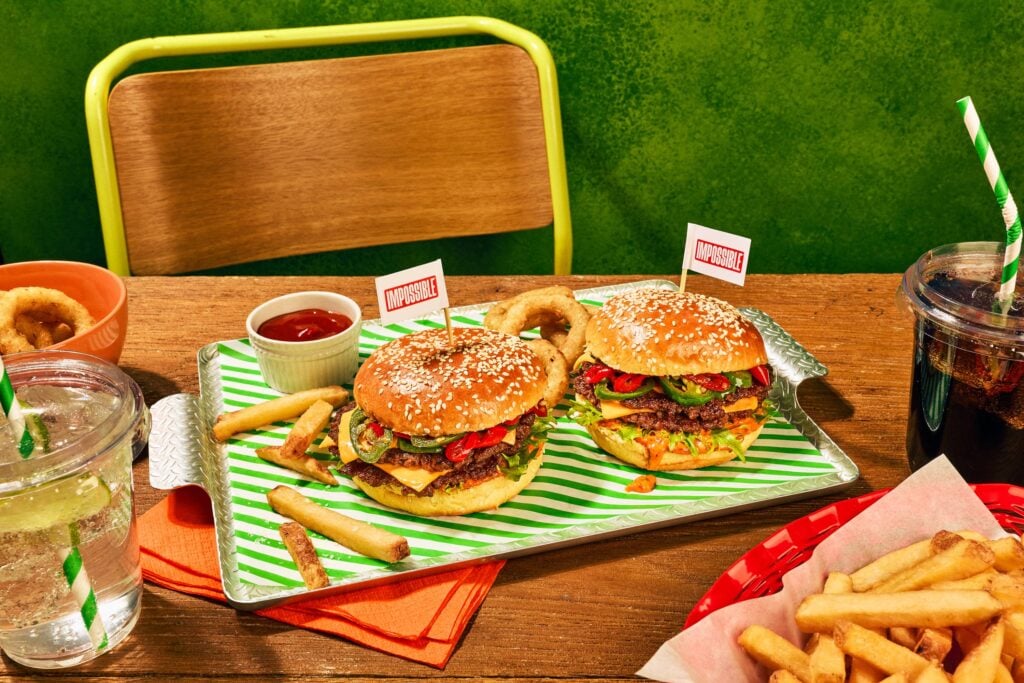
Impossible Foods has already been selling its fare in the UK since 2022, but its presence has been restricted to chicken and sausage alternatives in restaurants. Retail and its flagship beef portfolio have been elusive so far.
That’s due to its use of soy leghemoglobin, a heme-containing protein produced by inserting the DNA from soy plants into yeast, which is fermented in a process similar to Belgian beer brewing. Since the microbes are genetically modified, the process is considered novel in the UK and the EU, and thus needs regulatory clearance.
Heme gives its products the characteristic meat-like flavour, and is the reason why its burgers ‘bleed’ the way beef does. The company received positive assessments from the EU’s food additives and GMO panels in 2024, and was set to enter a consultation period before a final vote in the European Commission. It also saw a patent for its heme-containing meat alternatives reinstated last year.
The FSA process was ongoing simultaneously. But the SPS agreement – already causing a ruckus for cultivated meat makers – has changed things for Impossible Foods. “We’re pleased with this development and look forward to continuing the regulatory approval process in the EU, which would automatically grant approval in the UK under the proposed agreement,” the spokesperson says.
The company suggests that heme is only one of the proprietary tools it has at its disposal for recreating that meat-like experience. “While it would widen the range of options we could eventually offer in the European market, it’s not our only solution to making incredibly delicious products,” the representative explains.
The European burger, in its current form, contains a base of 20% soy protein and sunflower and coconut oils, but differs from its US counterpart with the addition of ingredients like vinegar and apple juice, and gets its colour from beetroot red and anthocyanins.
It has 18g of protein and 4.6g of fibre per 113g patty, with 6.8g of saturated fat (much like the US version), while also containing iron, zinc, and vitamin B12. Plus, this iteration of the Impossible Burger requires 97% less water and 94% less land than 80/20 beef in the UK, while also producing 90% fewer greenhouse gases.
Impossible Foods talks up whole-muscle chicken innovation
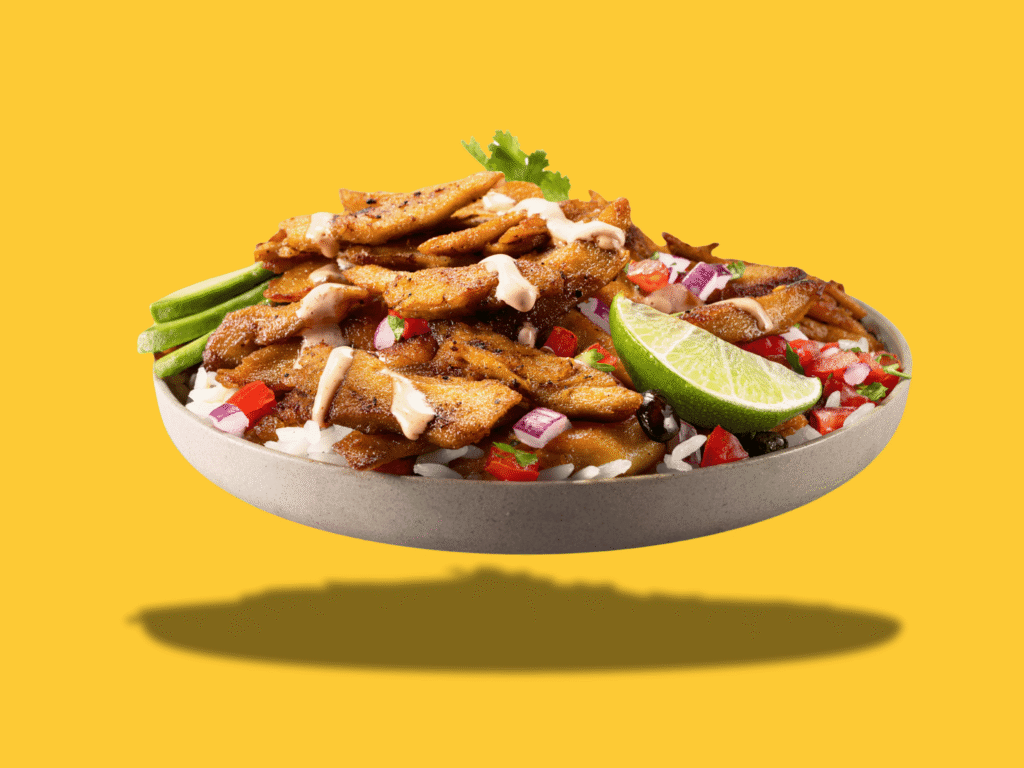
The other beef product making its debut in Tesco is a pre-cooked kofta, which is infused with Mediterranean-inspired herbs and spices, and can be used in meals like mezze platters or grain bowls. It delivers 16g of protein and 5g of fibre per 90g serving of two, and reduces emissions by 87%, water use by 90% and land use by 93% compared to conventional beef.
Meanwhile, Impossible Foods is targeting texture fanatics with its first-ever whole-muscle protein. Made from a mix of soy and wheat protein, the chicken pieces come in a smoky chipotle marinade with 21g of protein, 4g of fibre and 0.5g of saturated fat per 100g. They need 78% less water and 76% less land to produce than a British chicken breast, while generating 46% lower emissions.
“Our R&D team developed a proprietary formulation and extrusion process that delivers a tender, fine-grain texture similar to whole-muscle chicken breast with the juicy bite that chicken-lovers crave,” the company representative says.
“This is underpinned by a proprietary flavour base that replicates the familiar, savoury taste of white chicken meat, enhanced by a smoky, chipotle seasoning blend. The product brings a new, unique flavour to the UK market and we look forward to hearing what consumers think.”
Rounding out the new range are the spicy chicken fries, a convenience-first take on breaded chicken tenders. They contain 13g of protein and 4.4g of fibre per 100g, and are designed for occasions such as parties or late-night snacking. Like the other products, this SKU also delivers significant environmental savings, with 48% less water, 41% less land, and 33% fewer emissions than conventional chicken fries.
Tesco launch will boost revenue after UK foodservice sales double
All of Impossible Foods’s UK products are being produced at its new co-manufacturing facility in the Netherlands, although the company isn’t disclosing its capacity or details about its proprietary production processes.
Its launch in the country comes at a divisive time for plant-based meat, sales of which dipped by 7% in 2025, with volumes falling by over 9%. In the first half of this year, this contraction continued with a 4.3% decline in units and 2.7% in value sales.
Polling shows that up to 78% of Brits are worried about ultra-processed food (UPF), driving them towards whole foods like legumes and vegetables instead. It’s why meat alternative makers like This, Juicy Marbles and La Vie have come out with non-meat-mimicking proteins in the UK.
Impossible Foods, however, echoes the sentiment of many a nutritionist, outlining the lack of nuance in the UPF discourse. “Processing alone doesn’t determine whether a food is good for you or not, nor does the length of an ingredients list. The clearest place to start is by looking at the nutrition label,” the spokesperson points out.
They add that the company’s products provide “well-rounded nutritional value” alongside the “craveworthiness and convenience” people are after: “We’re confident that [when] consumers are able to experience these products for themselves, they’ll see the inherent value we’re bringing to the table.”
James Hemmings, VP of EMEA commercial operations at Impossible Foods, concurs. “We’re coming into this retail market with some fresh new energy,” he says. “There’s already a strong base of plant-based shoppers in the UK, but there are even more consumers out there who are curious to try products that deliver on taste, convenience and versatility.”
Foodservice is a good gauge for the brand’s performance here. “Our sales have more than doubled in the last 12 months, and we’re on the menu at popular restaurants like Greene King, BrewDog, Gordon Ramsay Street Burger, Meatliquor, and Punch Taverns,” the spokesperson tells Green Queen. “This success is why we believe our entry into Tesco will help further boost the market by making great-tasting plant-based foods more accessible.”
The company has been without a CEO since the departure of Peter McGuinness in January (he remains on the board), but Impossible Foods’s C-suite is working together as a “cohesive leadership team” to execute its priorities. That core group includes Meredith Madden, who was hired by McGuinness as chief demand officer in February 2025.
“Launching in UK retail is a meaningful step forward for our company,” she said. “We’re confident we’re putting our best foot forward with a range of products designed around the flavours and formats people already love.”